
Time on the Job
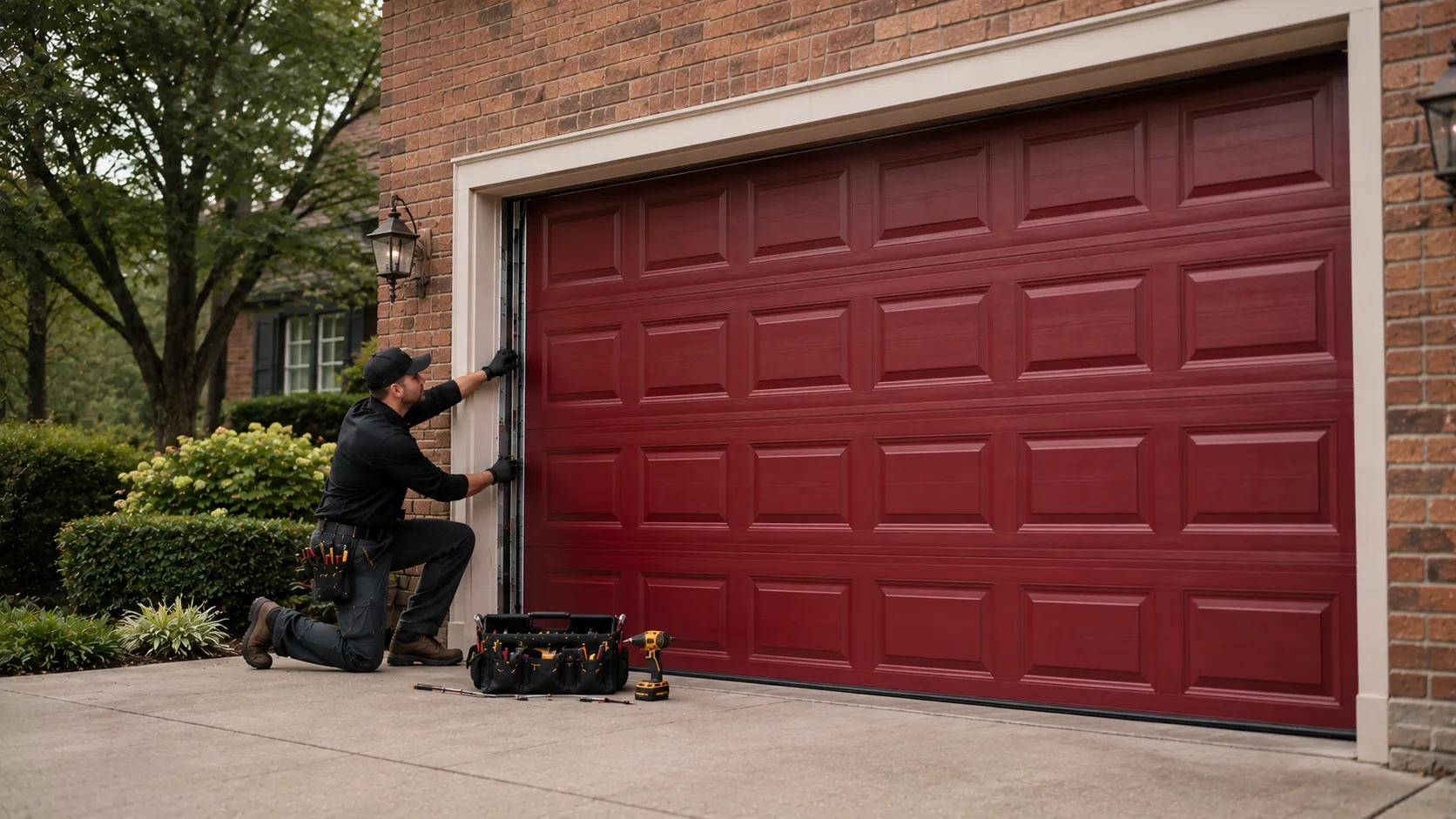
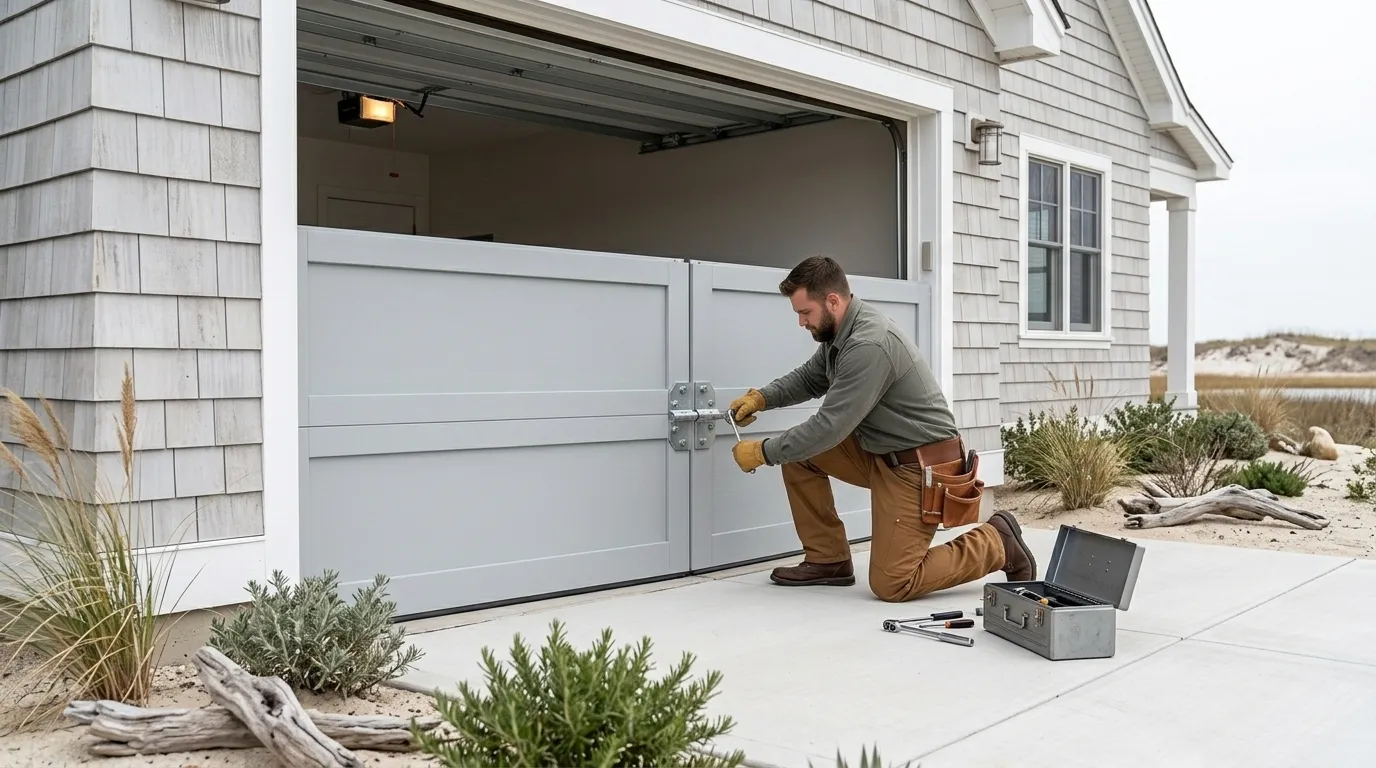
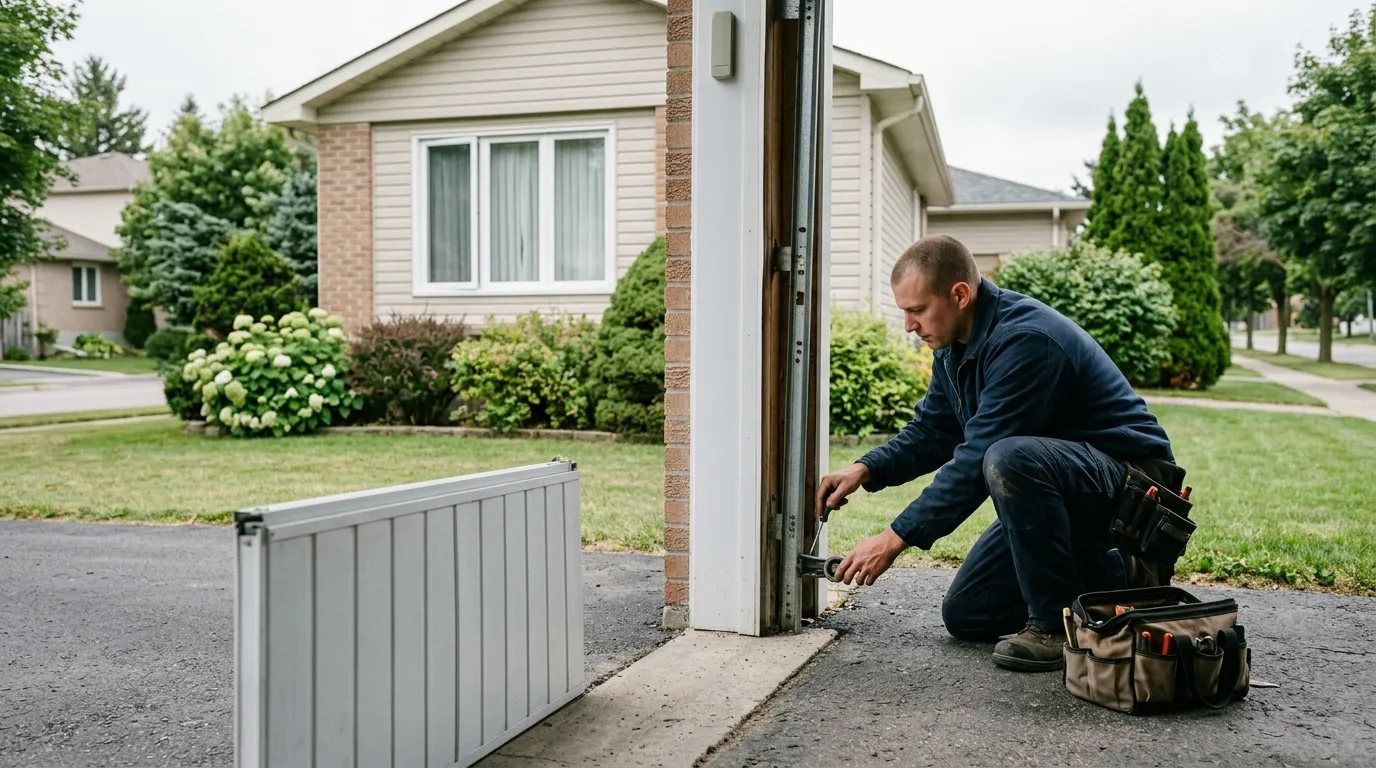
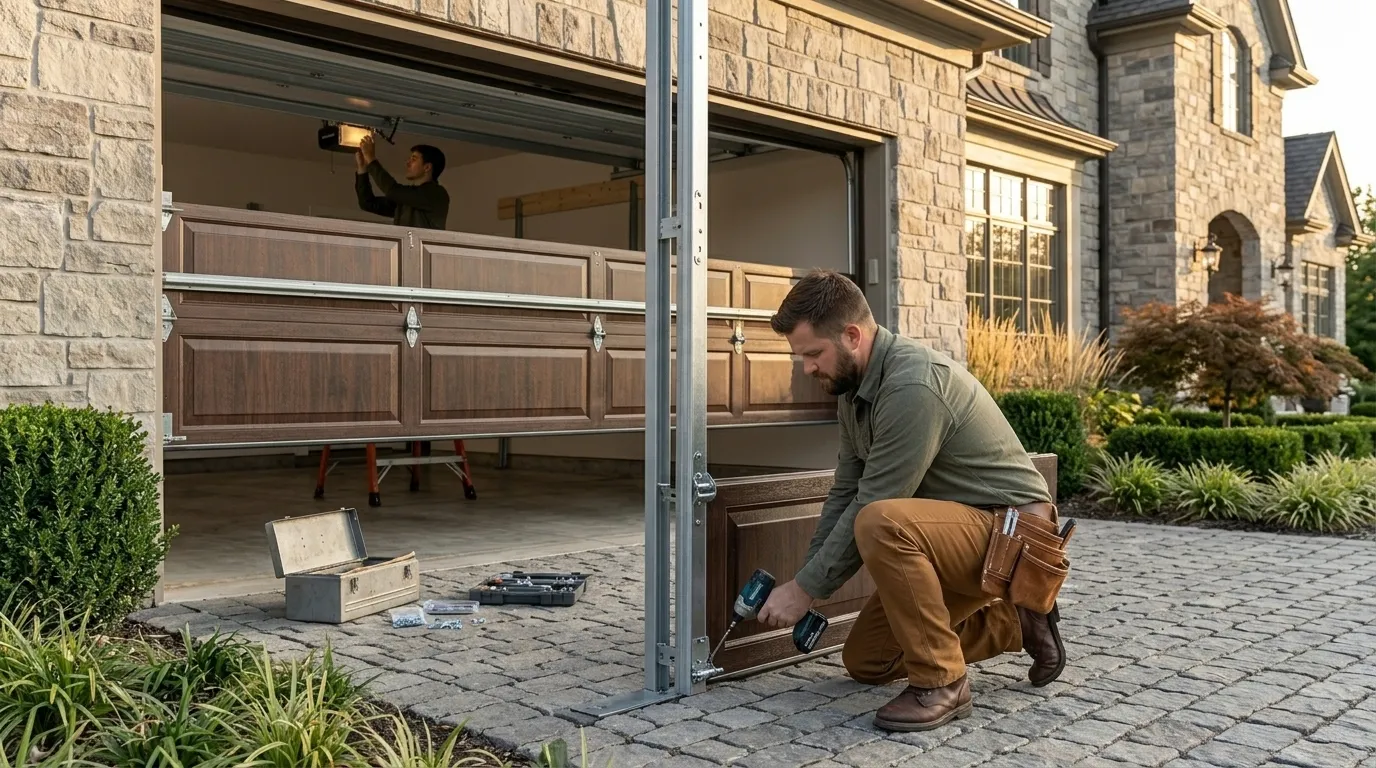
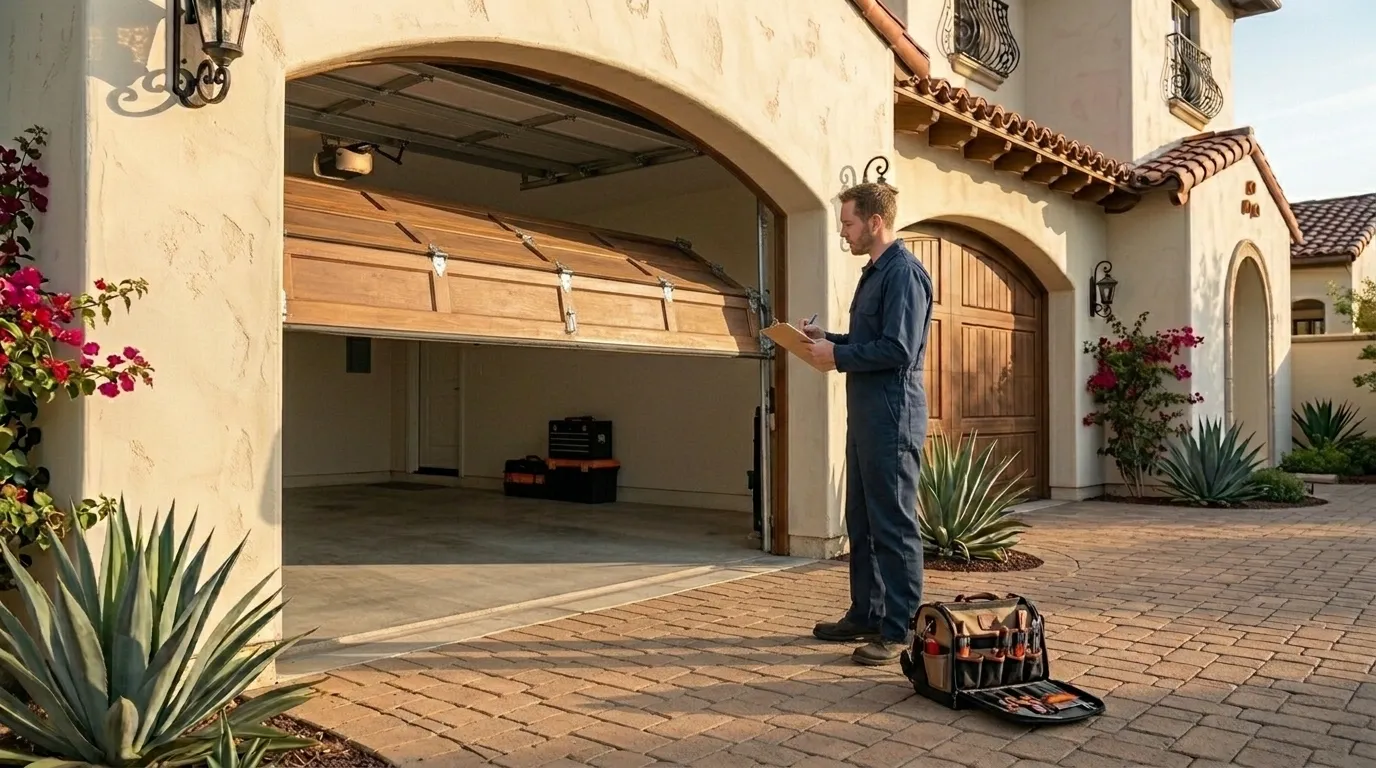
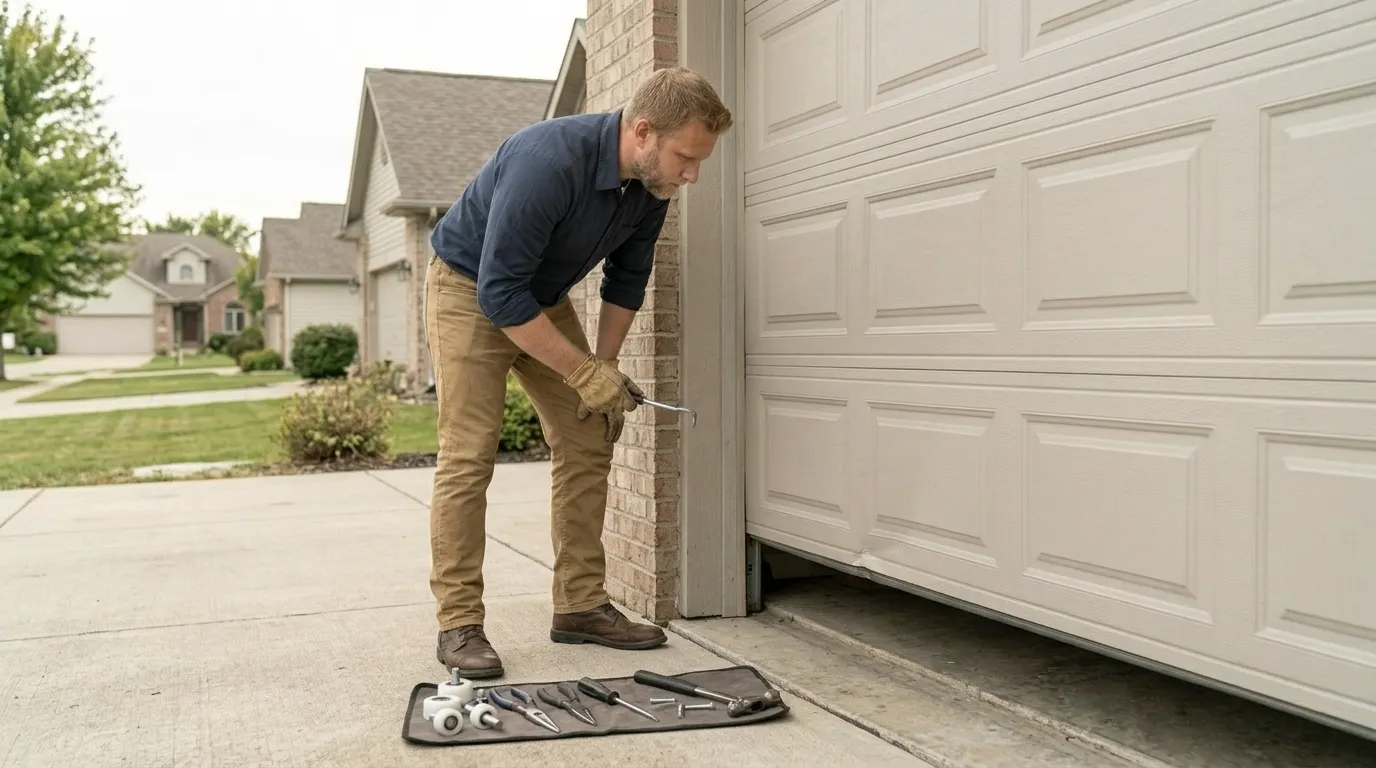
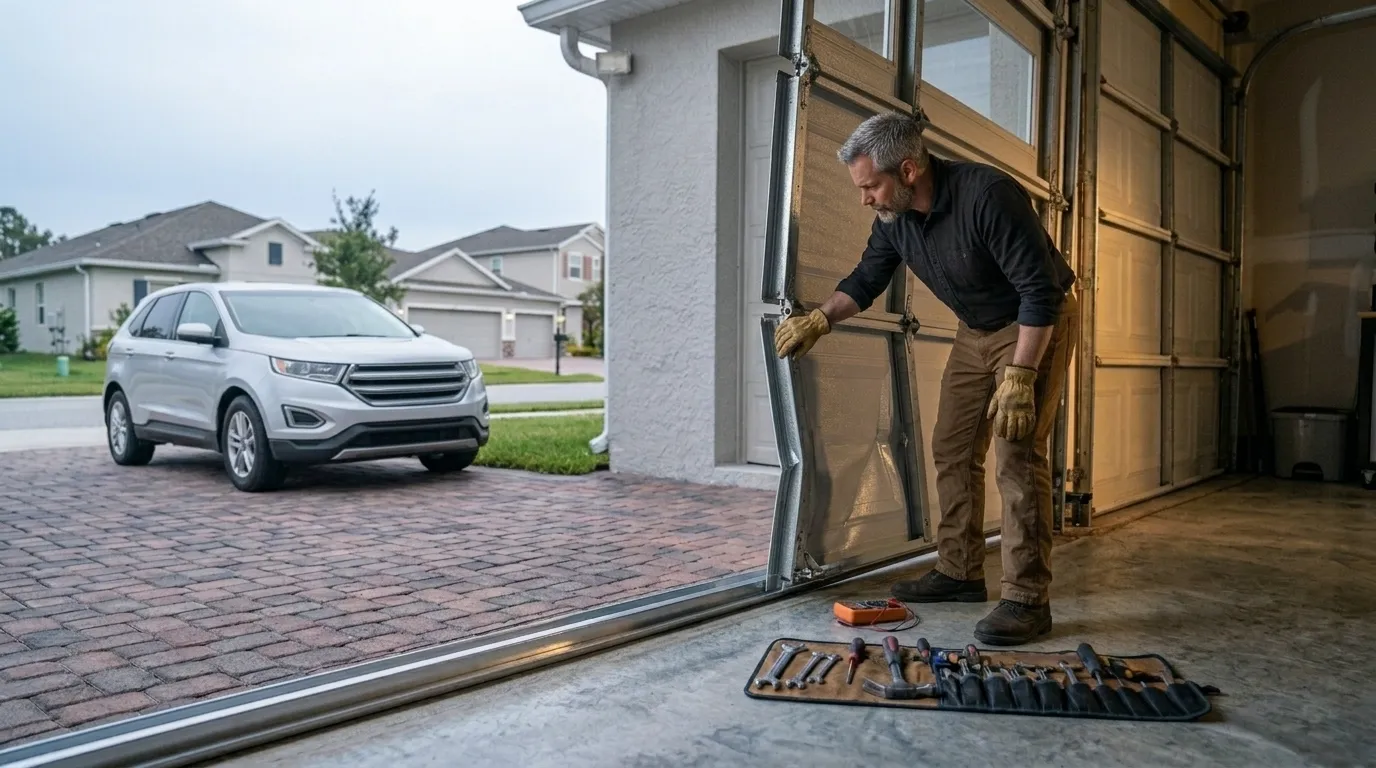
An off-track door isn't a one-look problem. The crew starts by checking whether the door came off the track because a roller snapped, a cable jumped its drum, or the track itself pulled away from the framing at the mounting brackets. Each of those has a different fix, and guessing wrong means a second trip.
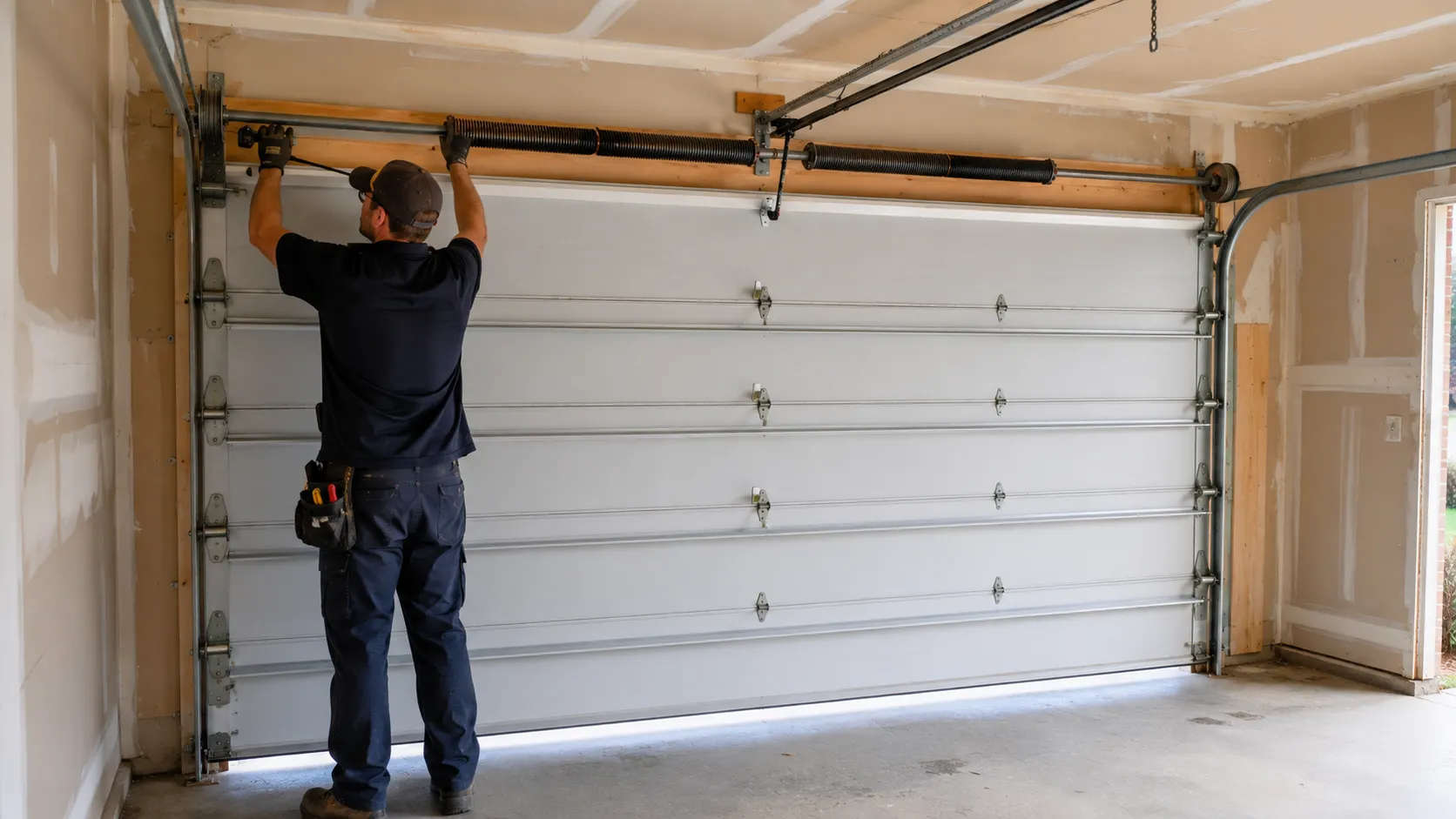
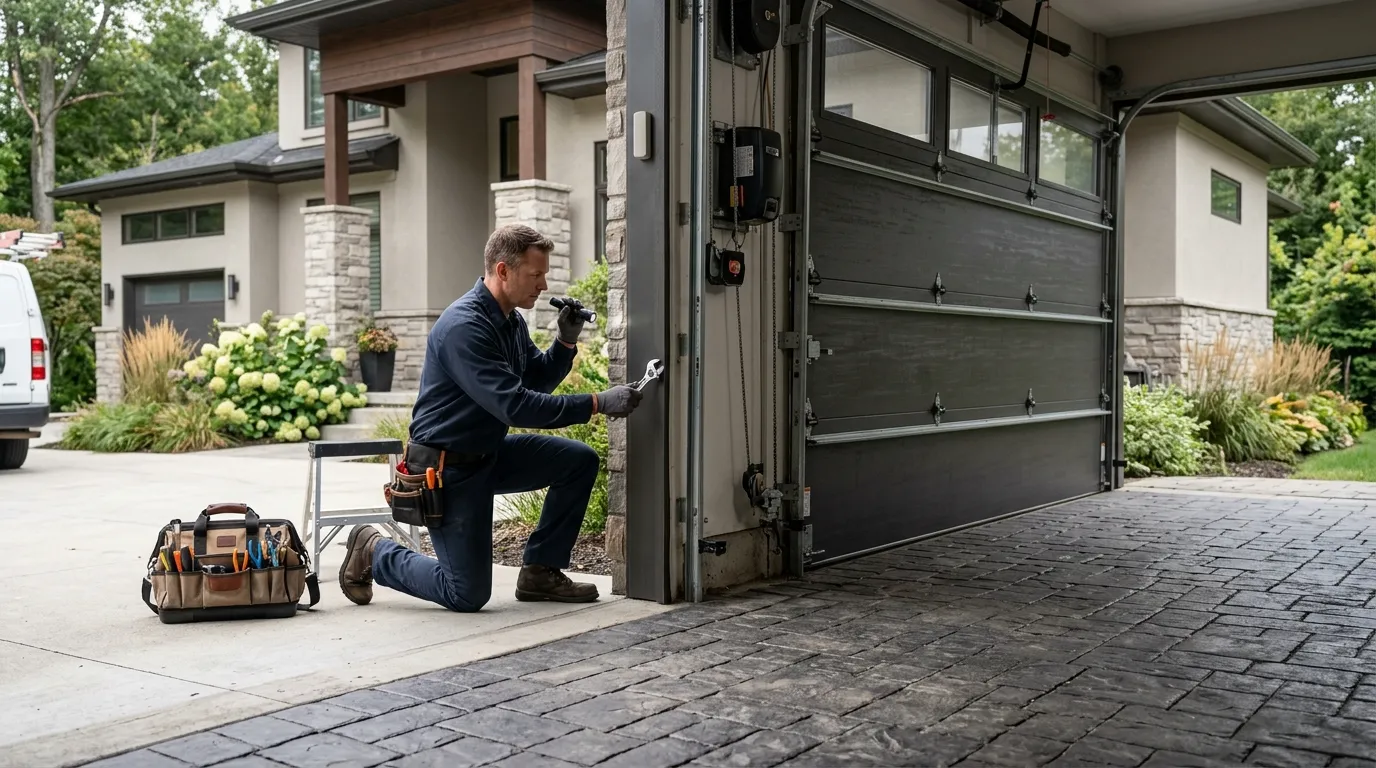
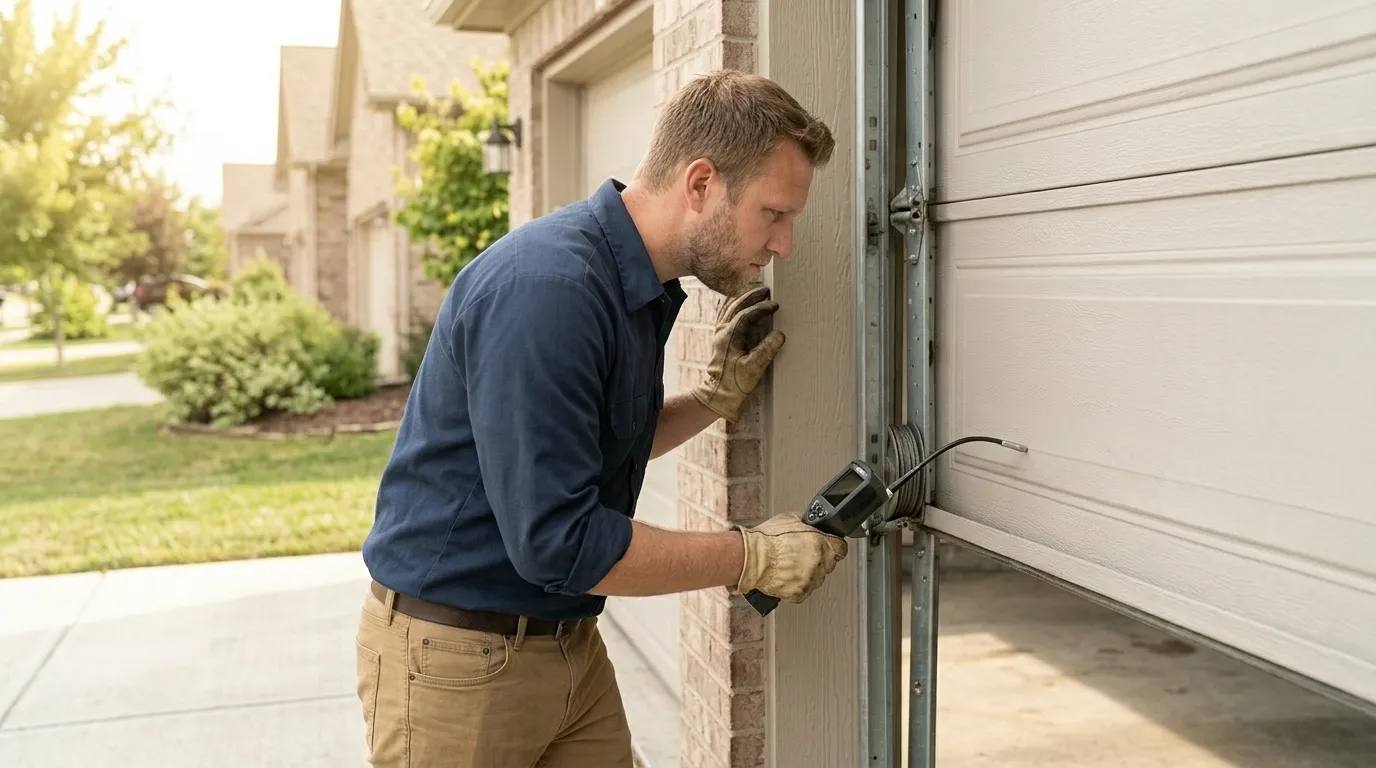
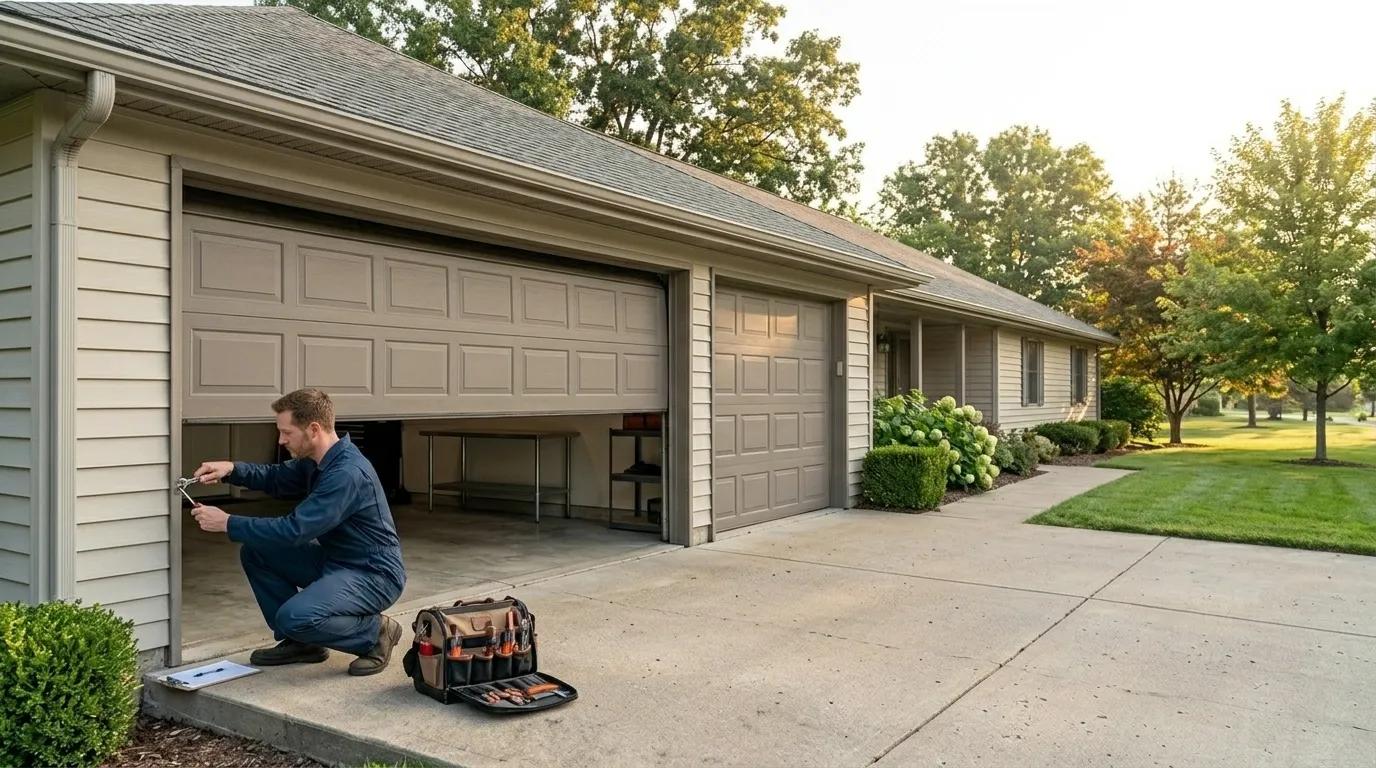
First step is always safety - if a spring is under load with the door hanging at an angle, nothing gets touched until that tension is controlled. Then it's a walk of the full track run on both sides, top to bottom, checking for the bent section, the stripped bracket, or the roller that's worn down to the pin. On most jobs that's where the actual cause turns up.
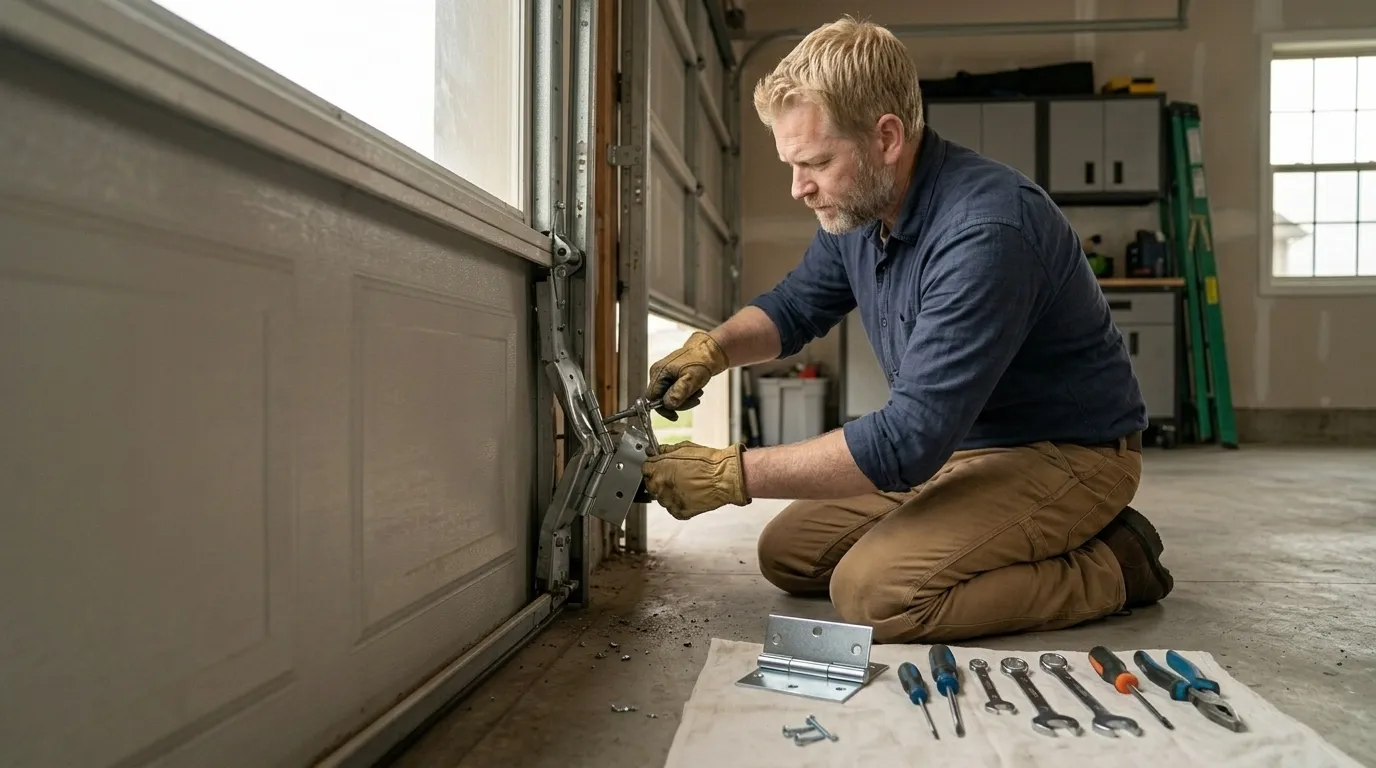
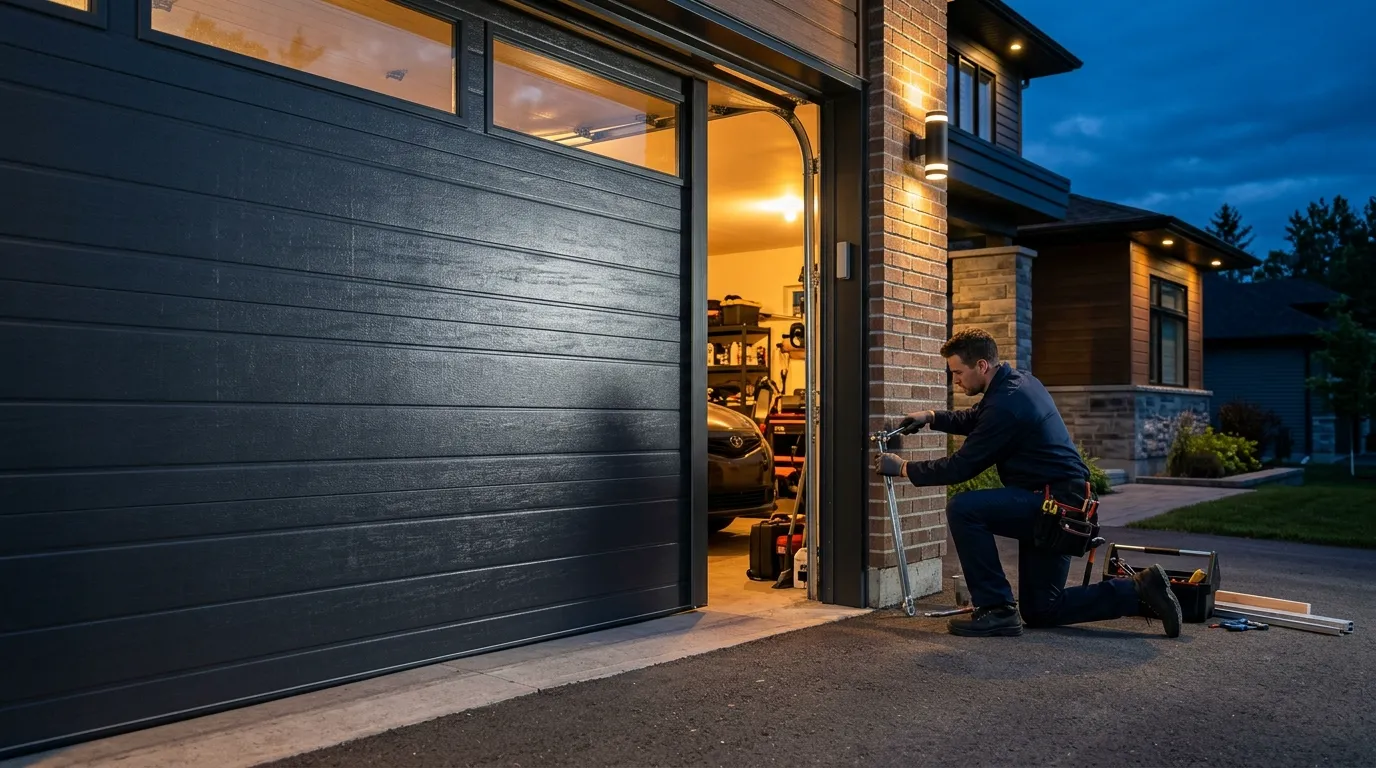
Once the cause is confirmed, the fix itself is usually the fast part - realign or replace the damaged section, reseat the door, run it through a full cycle by hand before ever hitting the opener button. If something looks off on that hand-cycle, it gets addressed before power goes back on. A door that goes back on track wrong just comes off again, usually worse.
What the Fix Involves
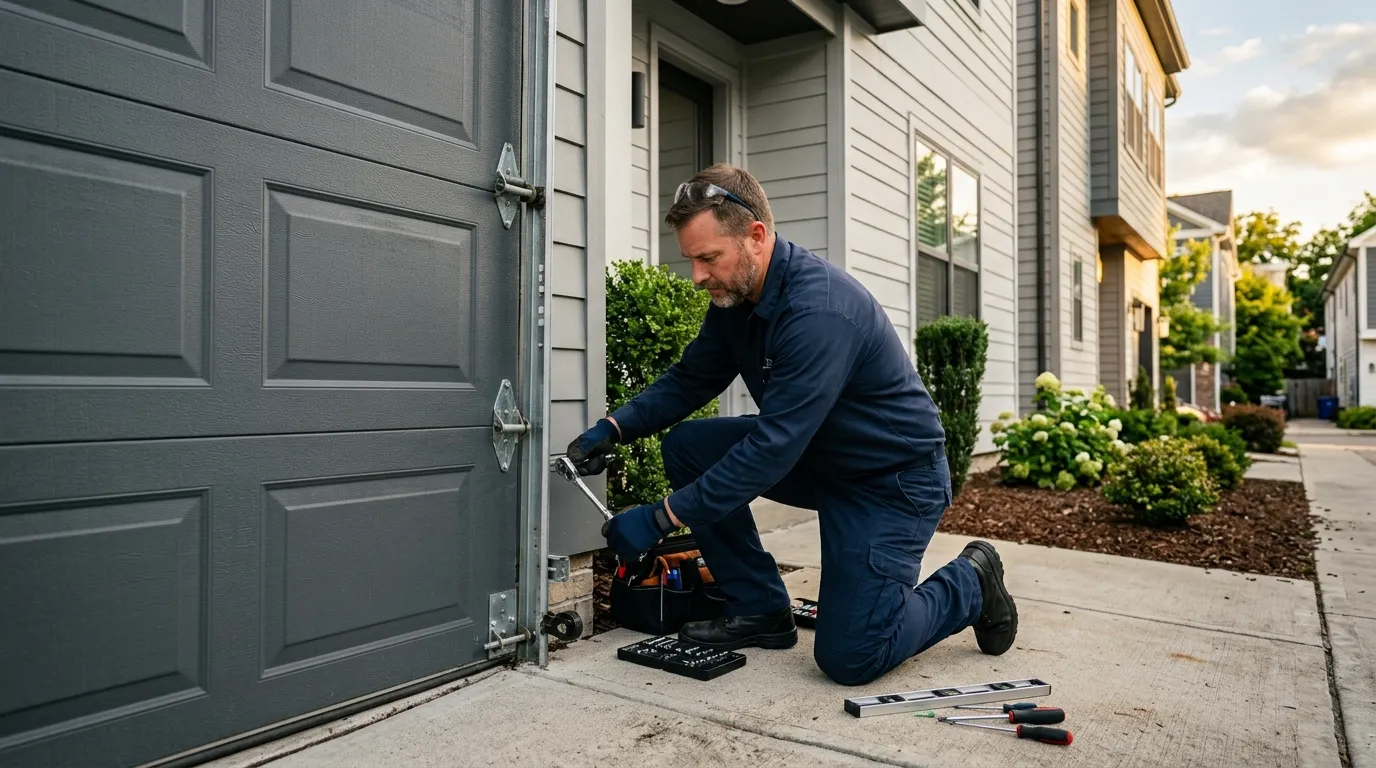
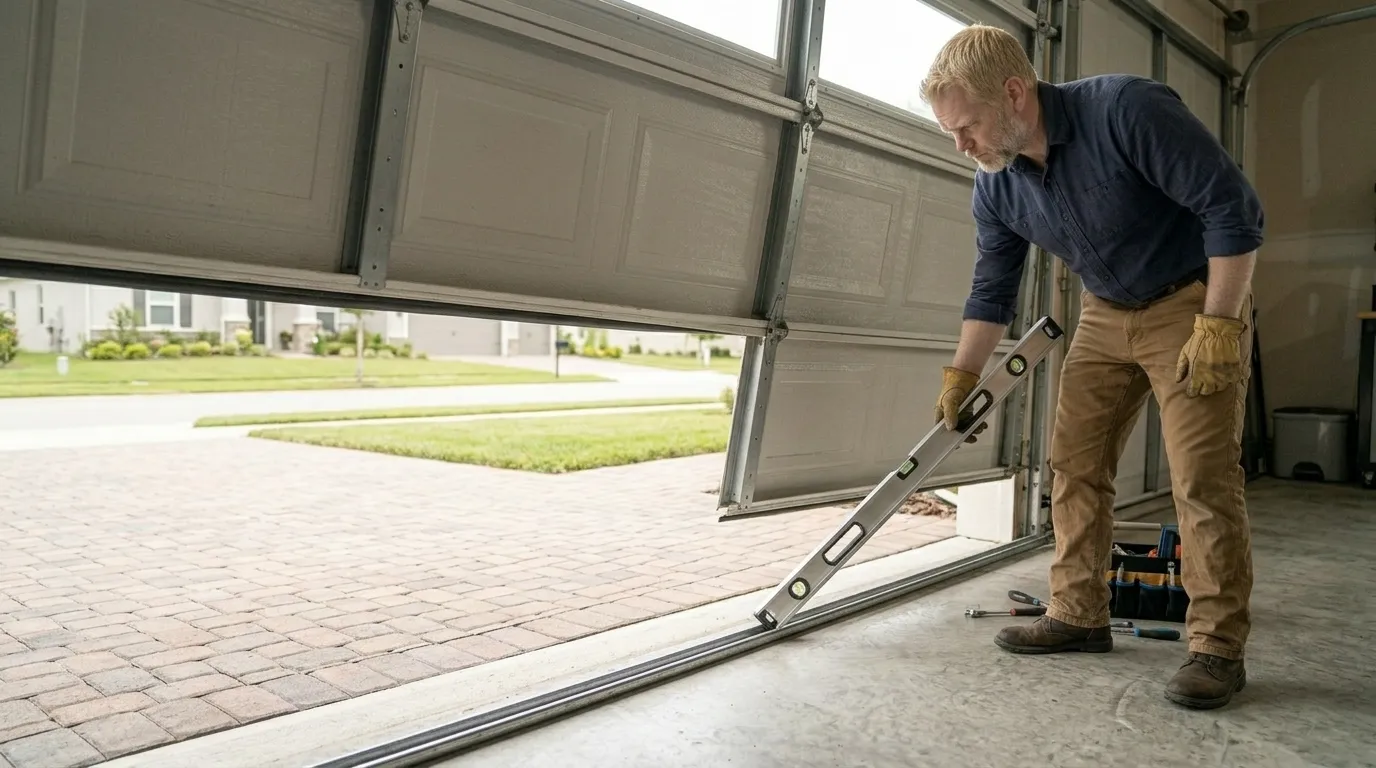
Getting a door back on track means more than shoving it back into the channel. The track has to be checked for square against the jamb, because a track that's even a little bowed will walk the rollers right back out again within a few weeks.
Rollers get inspected one at a time - nylon rollers crack and chip, steel rollers wear an oval flat spot, and either one will bind in the track and eventually jump it. On houses in this area, where median build year sits around 1986 per local housing records, it's common to find the original roller spec still installed, which is narrower than what's commonly stocked today. That mismatch alone causes some of the off-track calls this crew answers.
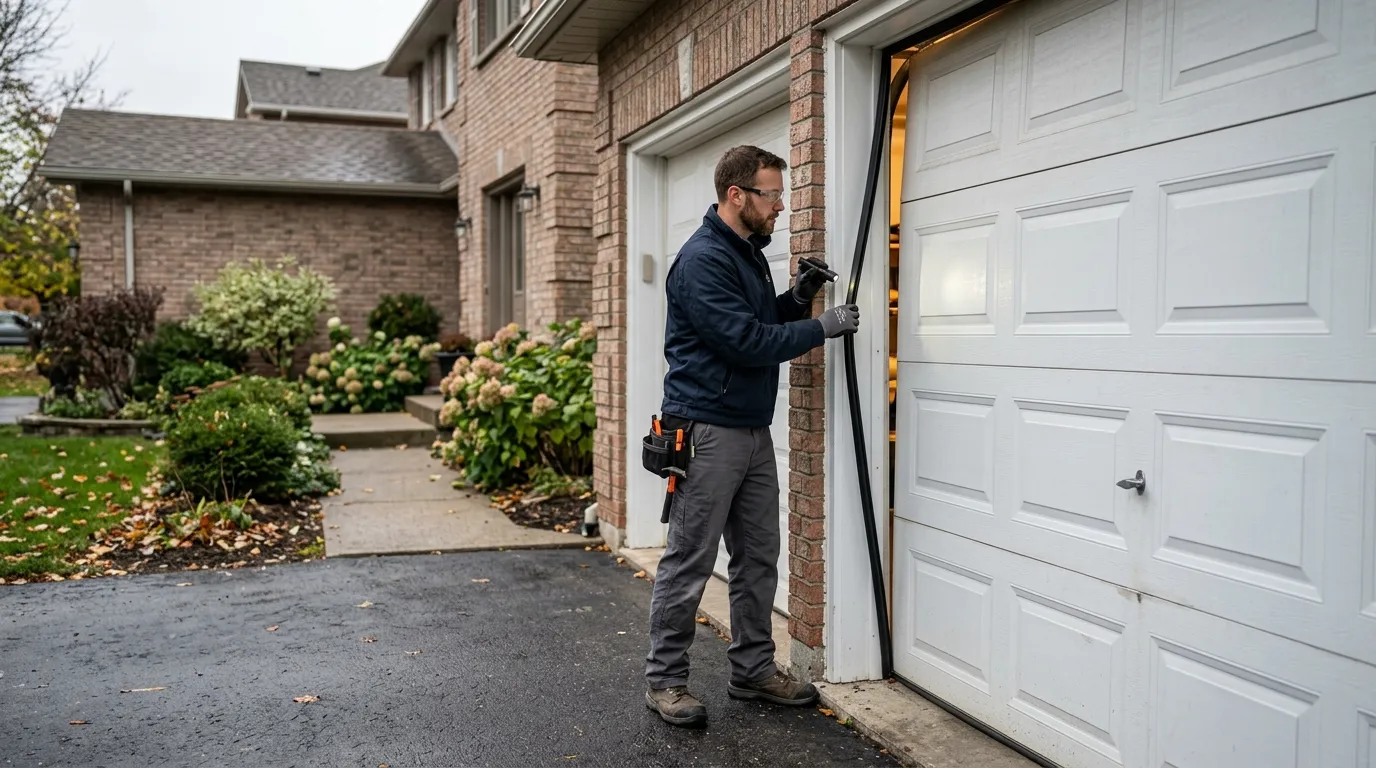
Cables and their drums get checked too. A cable that's frayed or has jumped its drum groove will pull the door unevenly, which drags one side of the door off the track while the other side stays seated - that uneven pull is often what a homeowner describes as the door 'jumping.'
One honest limit: if the track is bent badly enough, or the jamb behind it has shifted, patching the track section is a temporary fix at best. Full track replacement is the honest call there, not a repeat of the same patch.
What Causes It Around Here
Hesperia's housing stock runs mostly 1958 to 1997, with the median build landing around 1986, and that build era matters for this specific fault. Track and roller hardware from that period was sized to a different standard than what ships on doors installed in the last decade or so. When one roller finally fails and gets swapped with a modern part, the mismatch in width or wheel diameter is enough to walk the door off track within a season.
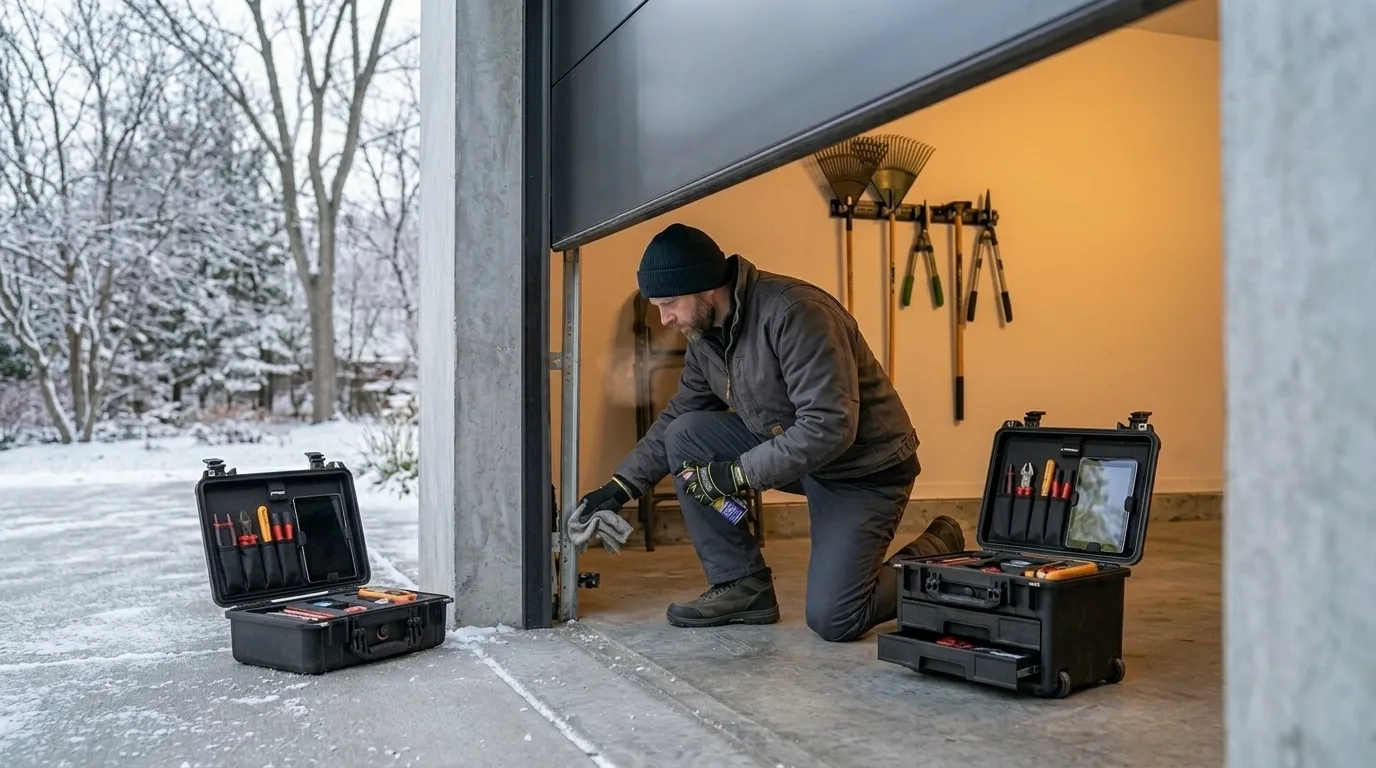
The area's climate band runs moderate heat rather than extreme desert heat, but even moderate swings between hot days and cool nights work steel track loose at the mounting brackets over years of expansion and contraction. A bracket that's backed out a quarter inch doesn't look like much, but it's enough for a track to flex under a heavy door and drop a roller out of the channel.
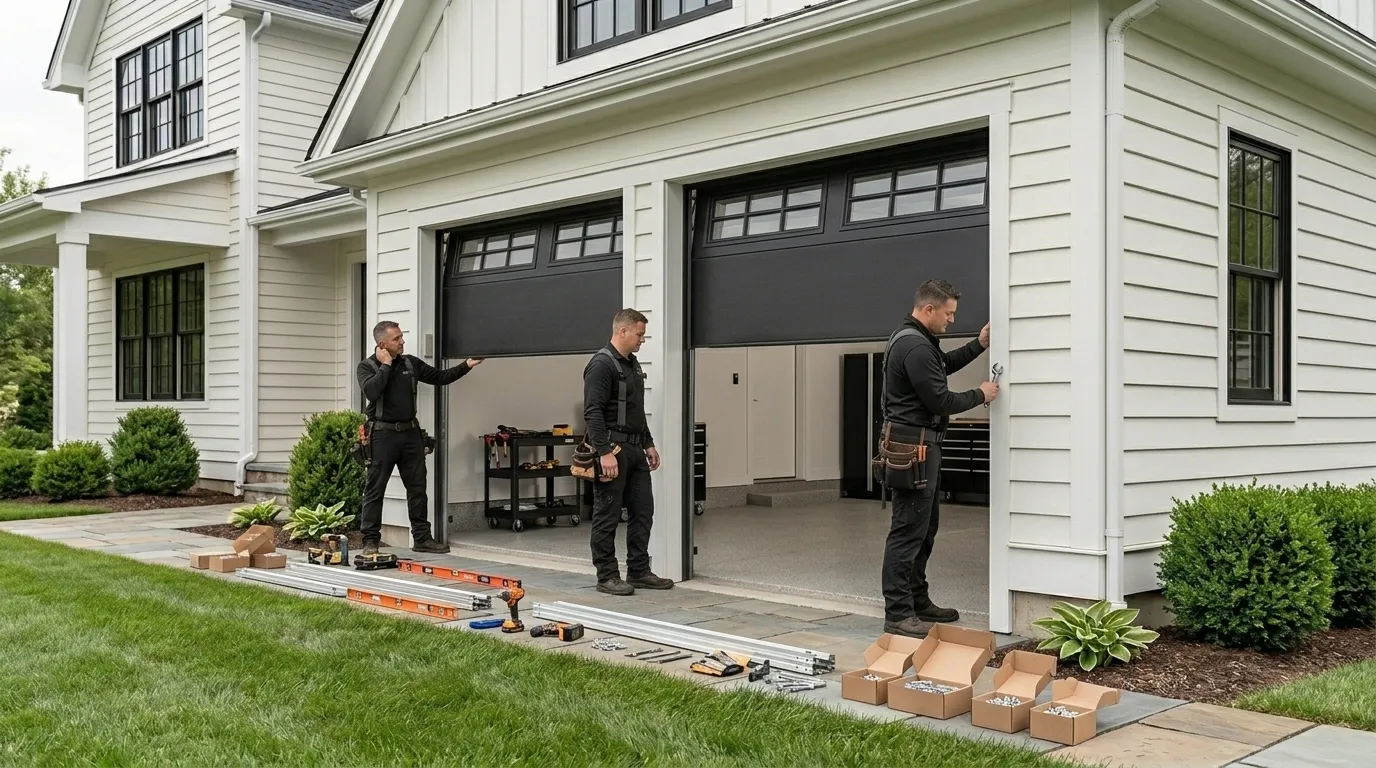
Across the wider service area - communities like Oak Hills among the thirteen this crew covers - that same 1980s-90s hardware shows up house after house. It's less an individual home's bad luck and more a shared trait of when this part of the High Desert got built out.