Time on the Job
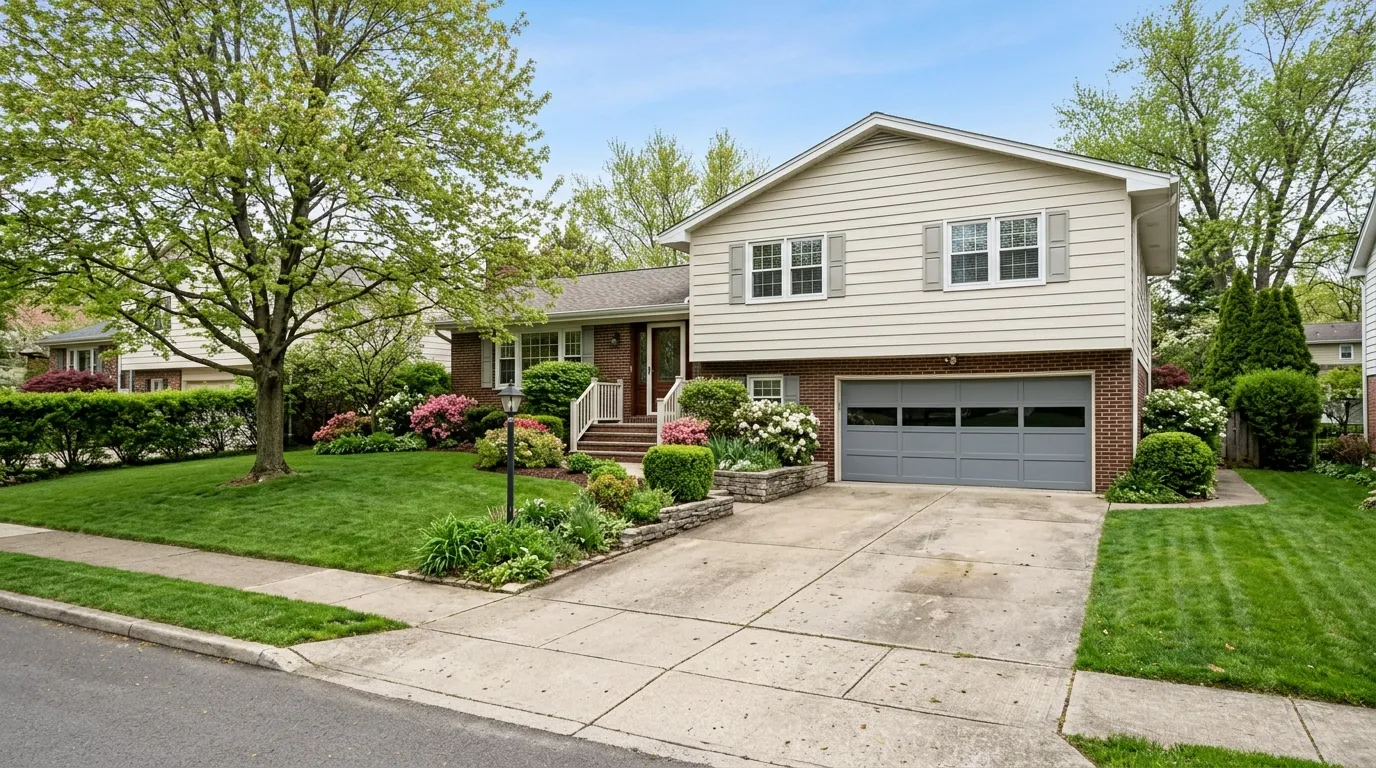
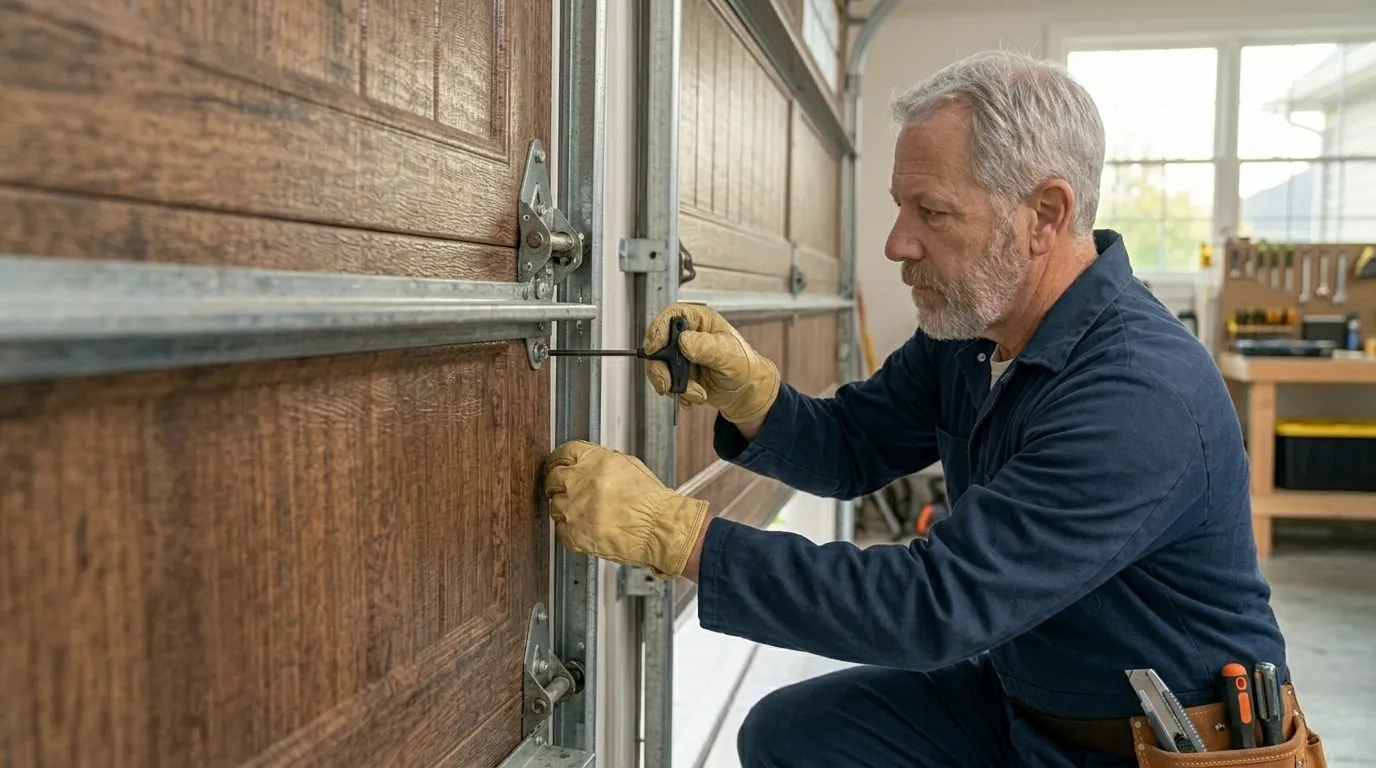
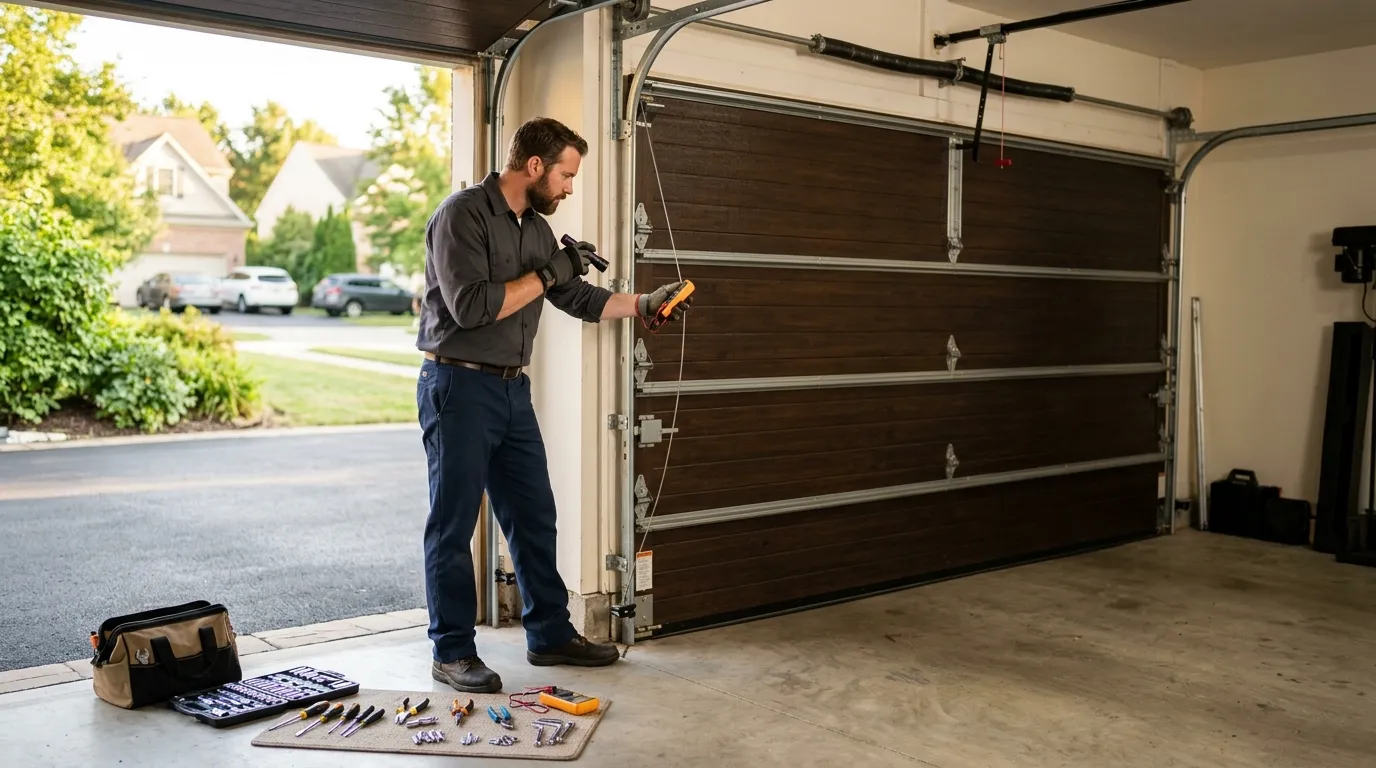
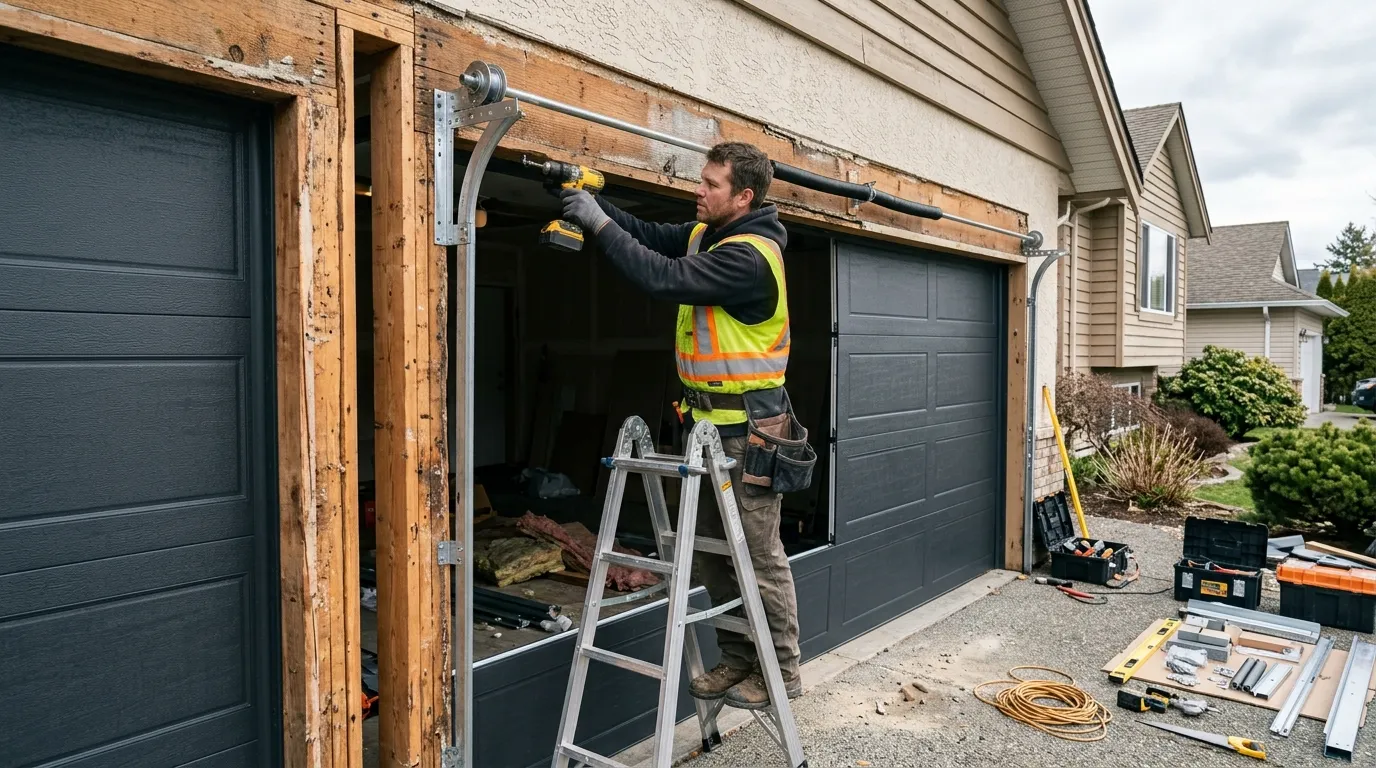
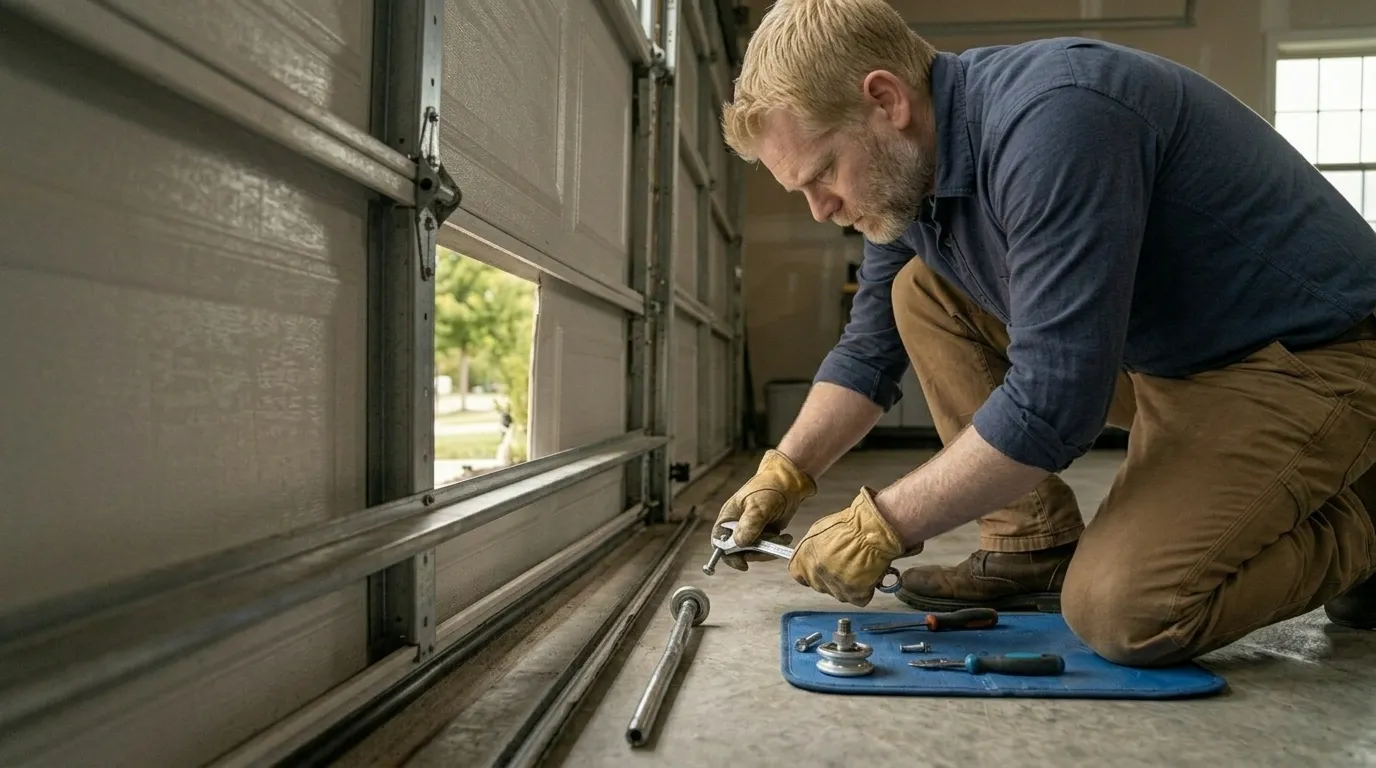
Wrightwood's housing stock centers on 1974, which puts most garage doors here a full generation ahead of anything you'd find at a big-box store today. These are steel single-layer doors, often on 16-foot double openings or the older 9-foot single, hung on roller tracks that were bolted straight to the jamb rather than the floating vertical track setups used now. A lot of them still run extension springs stretched along horizontal track instead of a torsion bar over the header. None of that is a problem on its own - it's just old hardware doing what it was built to do. The problem starts when a roller wears down, a track bracket loosens, or a hinge cracks, because that original alignment has no tolerance built in. A door from this era doesn't drift off track gently. It pops a roller, binds against the frame, and stops. We see this pattern often enough on the 1970s stock up here that it's usually the first thing we check, before we even open the panel to look at cables or springs.
Getting It Booked In
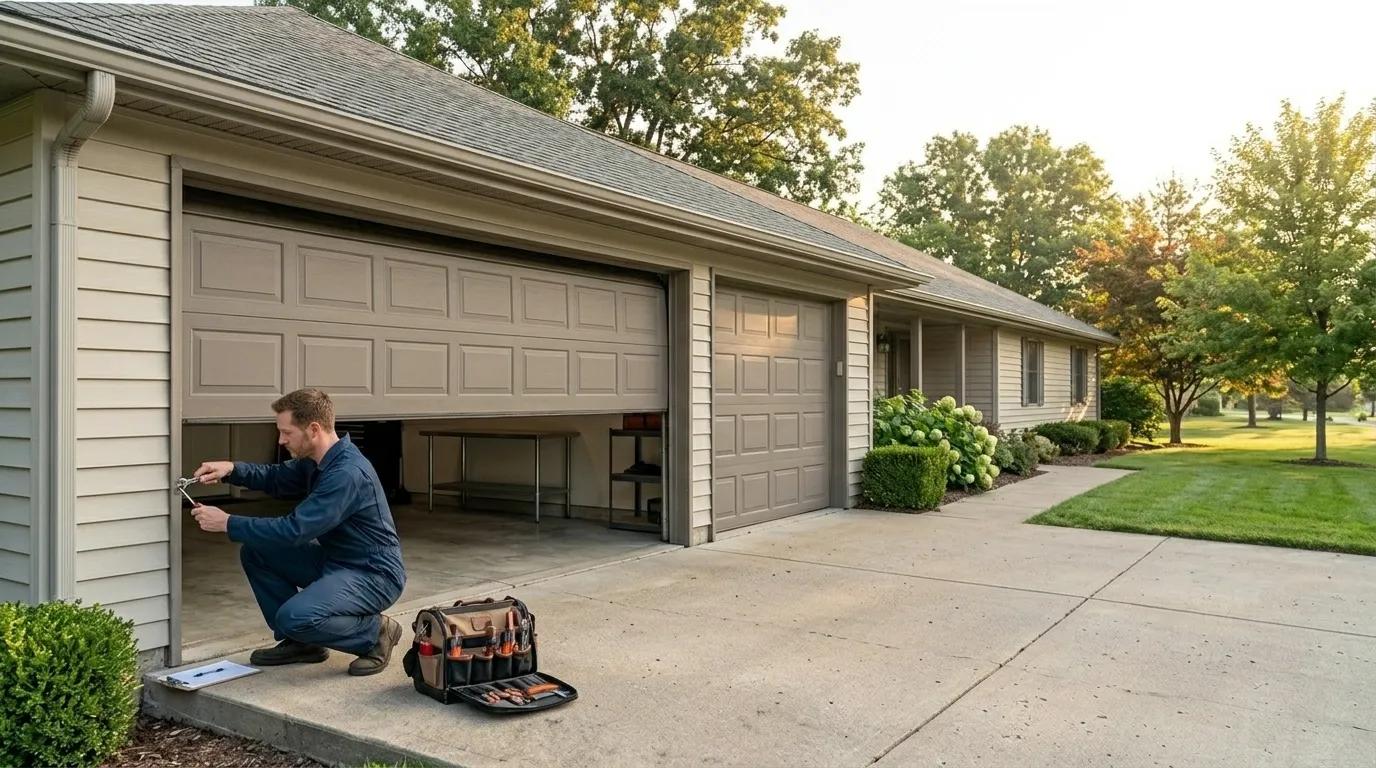
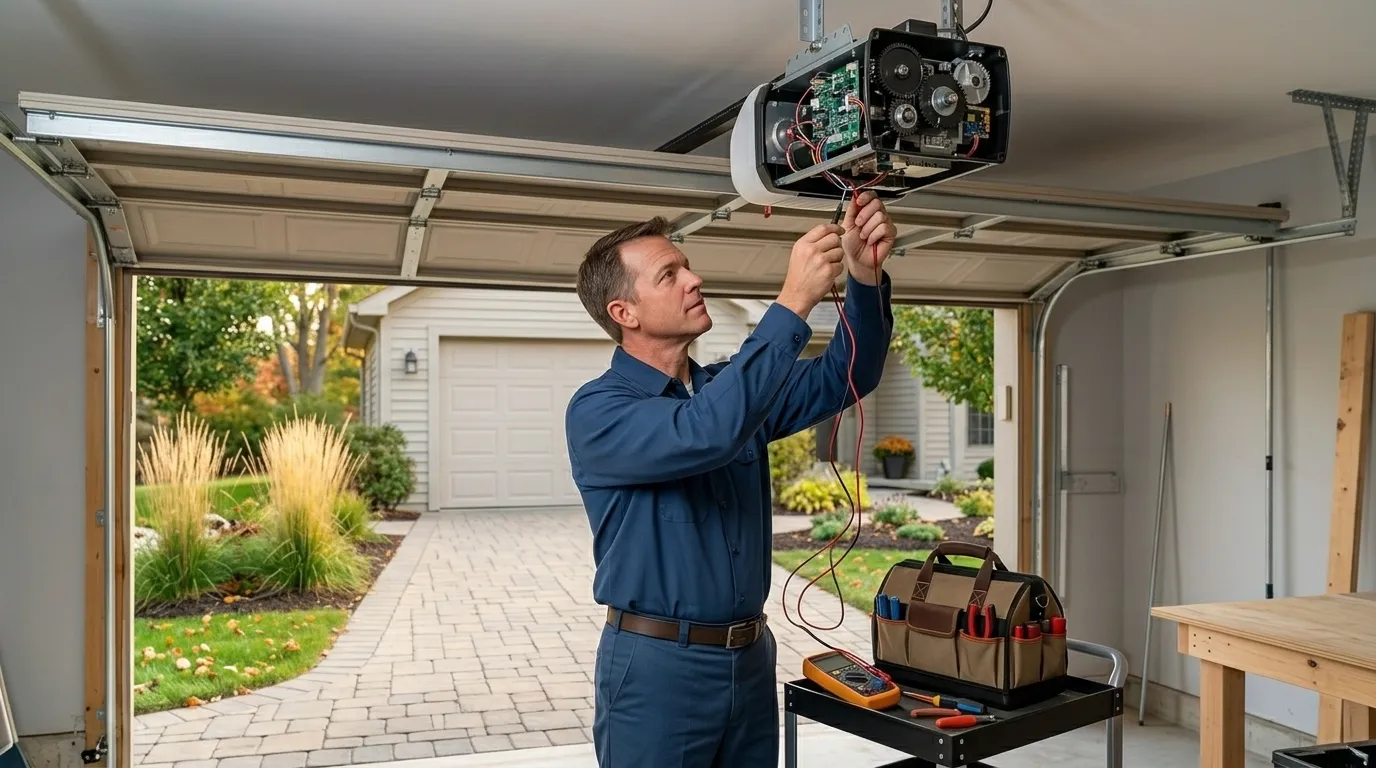
Wrightwood is 18 miles from our shop in Hesperia, which puts it toward the far end of the calls we run. We don't keep a truck stationed up the hill - with 2,325 households in Wrightwood, there isn't the call volume to justify it, so every job here gets folded into the day's route rather than dispatched on its own. That means we ask a few more questions on the phone before we come: whether the door is still moving at all, whether anything is visibly bent, whether the opener is still trying to run the door on a track it's no longer sitting in. Running an opener against a jammed track is how a bent panel becomes a cracked one, so if you can safely reach the manual release and disengage the opener before we arrive, do that. We're honest that same-day service up here depends on where else the truck is scheduled that day - it's not a same-town call, and we won't pretend otherwise.
What Can Go Wrong
Left alone, an off-track door on this kind of older hardware tends to get worse, not better. Each cycle the opener runs against a misaligned track puts more stress on the same bent bracket or worn roller, and what starts as a scrape can end as a cracked stile or a torn panel seam. On these 1970s-era doors, the bigger issue is parts - tracks and roller brackets from this vintage aren't stocked the way current sizes are, so a repair sometimes means fabricating a bracket to fit rather than ordering one off a shelf. We'll always tell you straight when a door has reached the point where realigning the track is just delaying a bigger failure. If the frame is bent badly enough, or the door's taken enough stress that a second panel is likely to go next season, replacement is the honest answer, even though it costs more up front than a track adjustment. We won't run up a bill patching a door that's done.