What Causes It Around Here
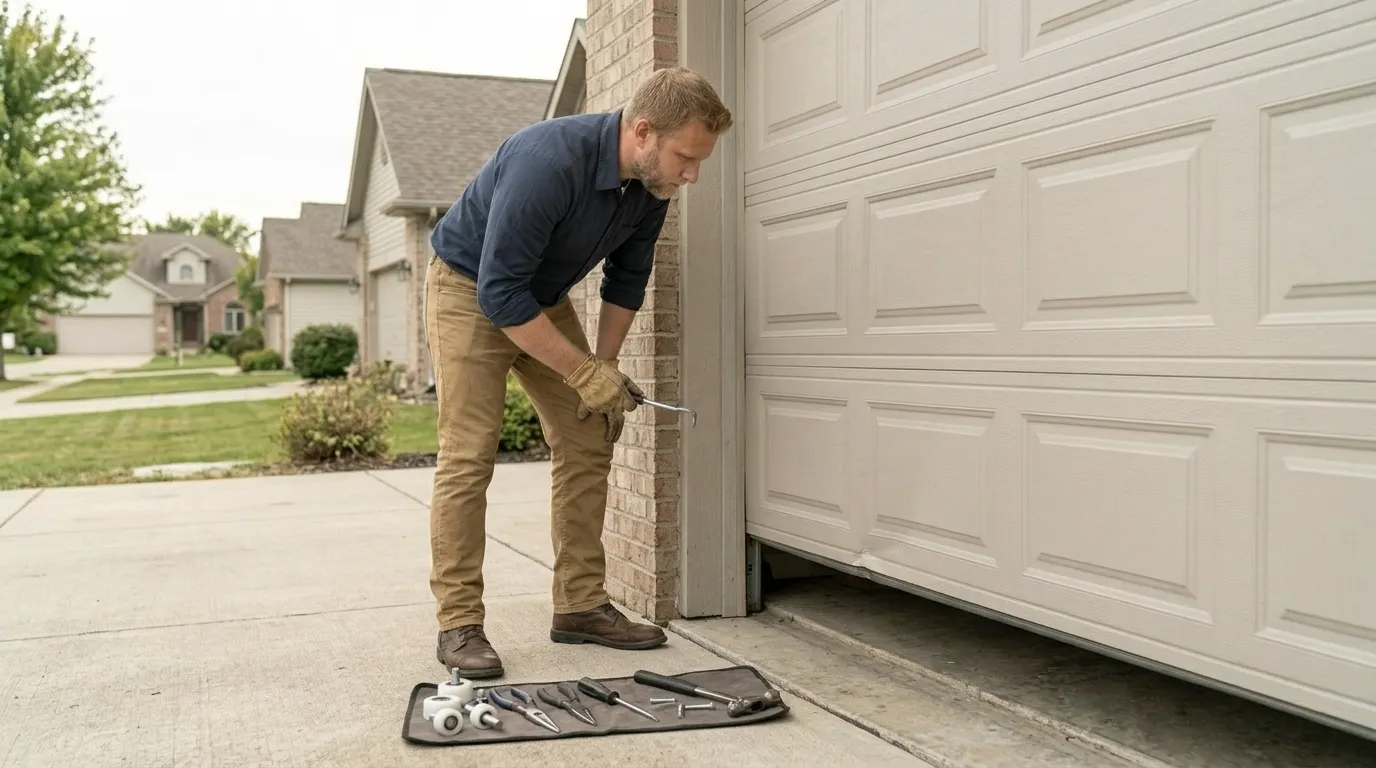
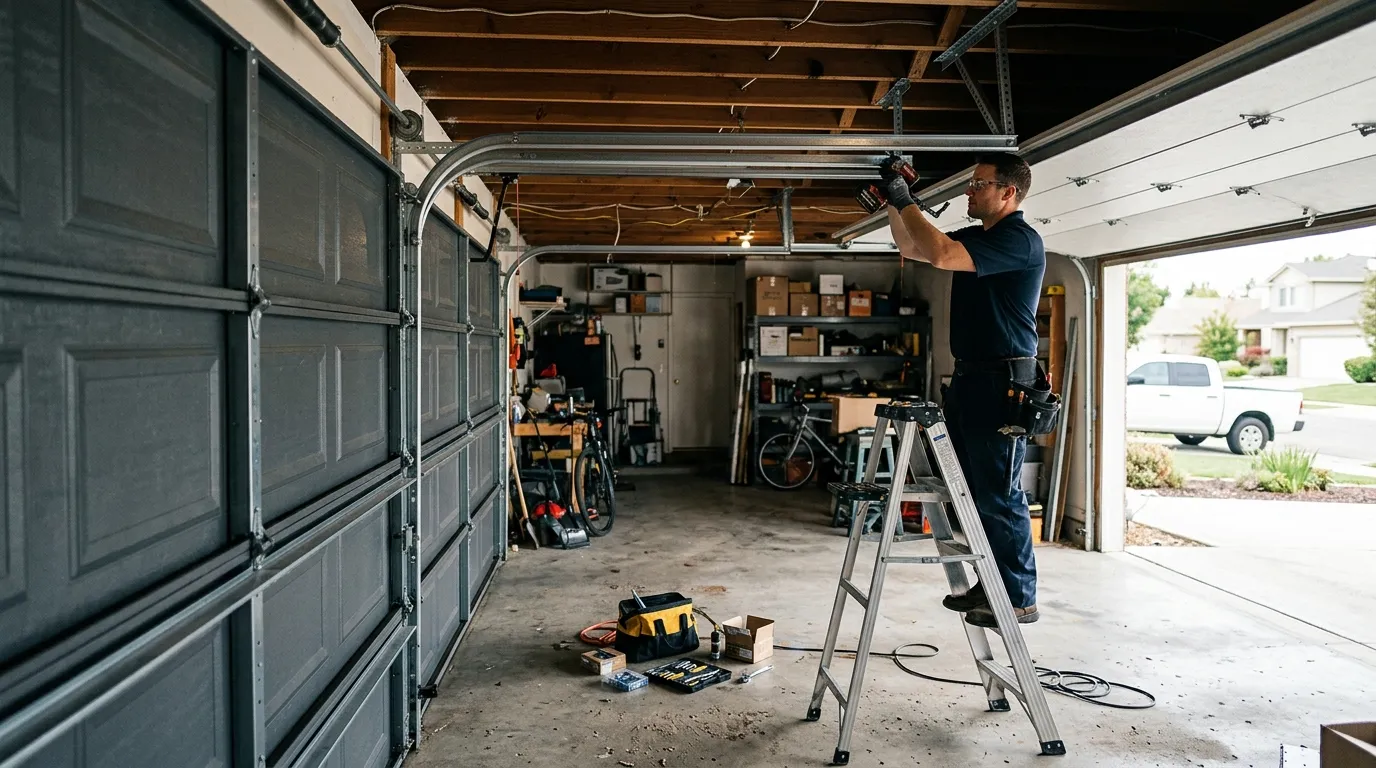
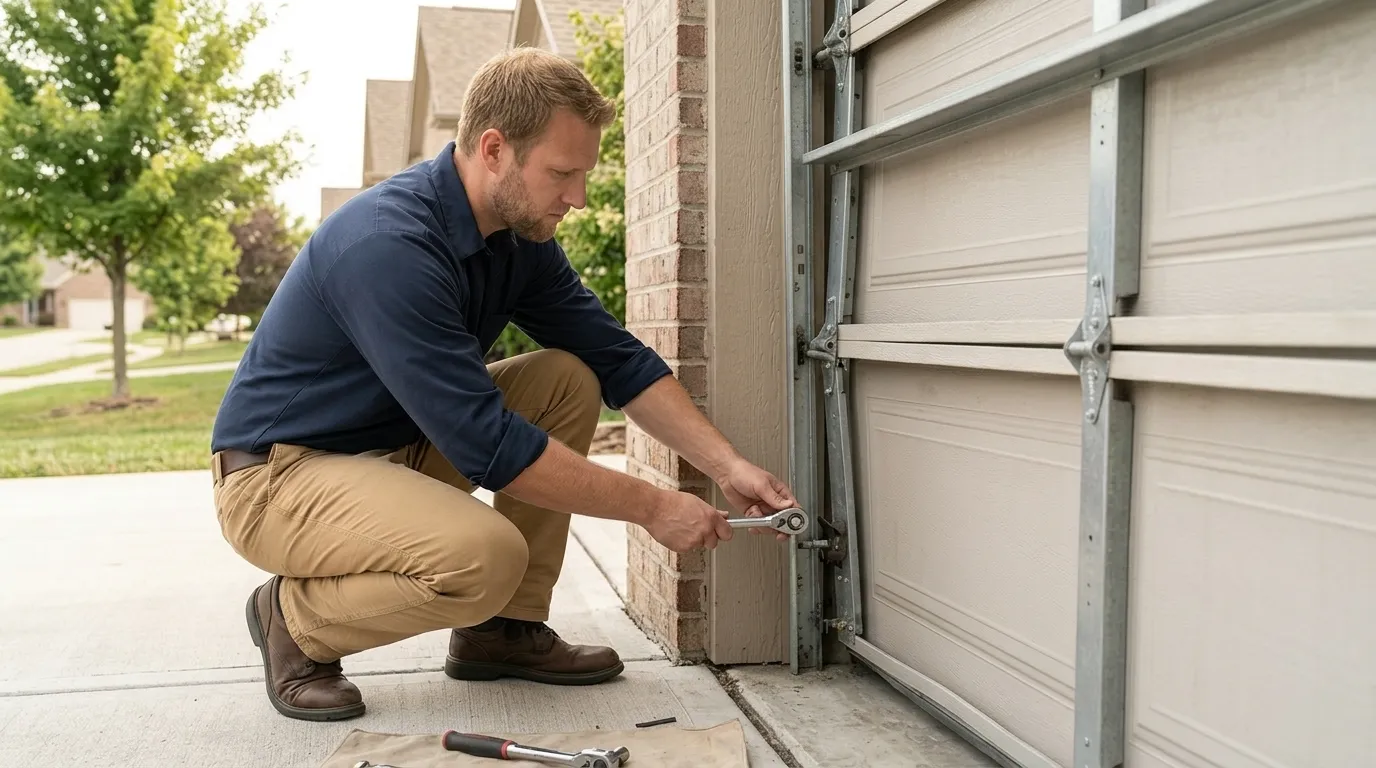
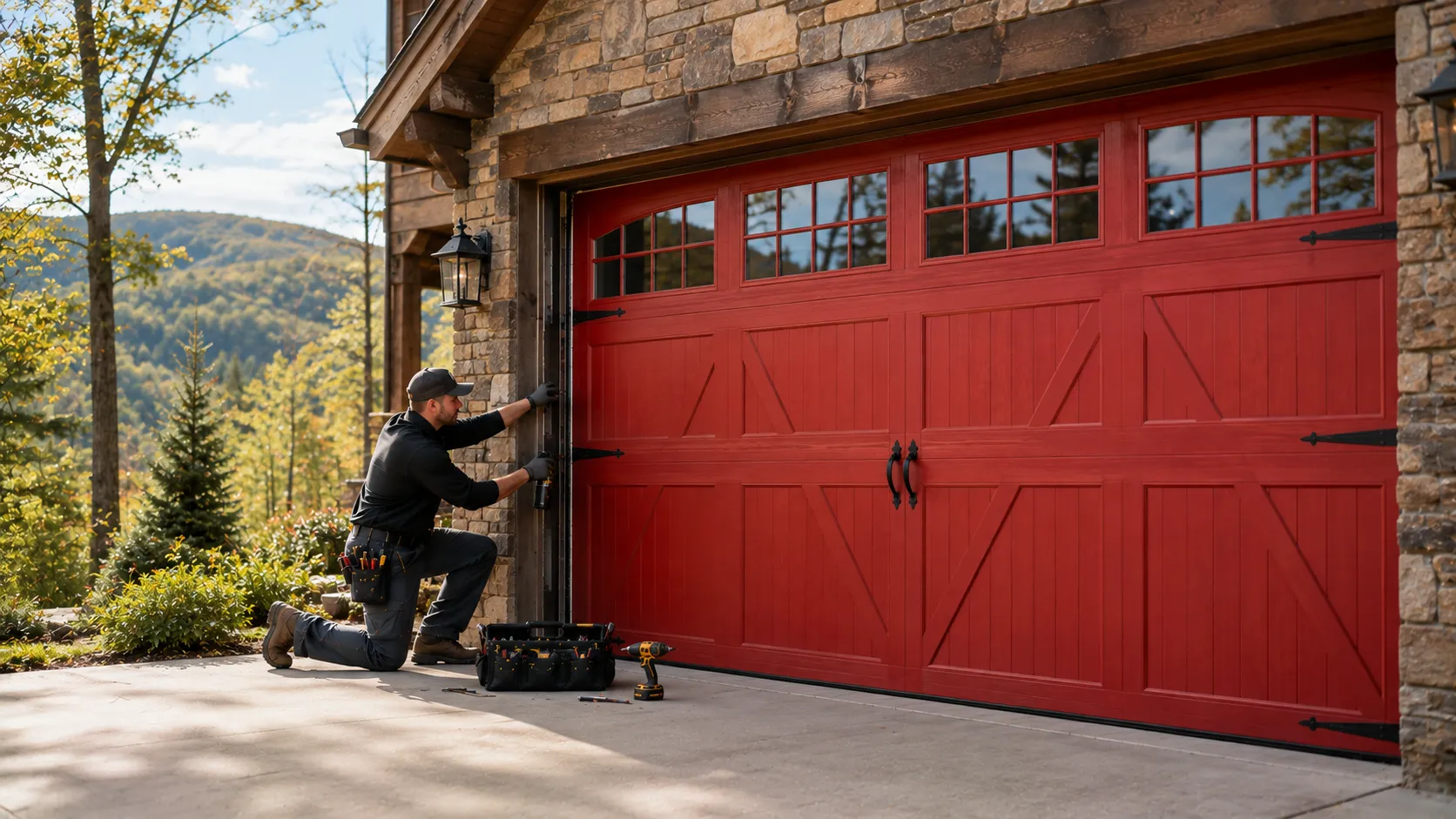
Most of the fault we see in Phelan starts the same way: a roller works loose from the track at the bend where the horizontal rail meets the vertical, and the door either binds halfway or drops crooked in the opening. It's not random. Phelan's housing stock is mostly 1980s and '90s construction, and the median build year here lands around 1991 - newer than a lot of the towns we cover from Hesperia, but old enough that the original track brackets are thirty-plus years into a job they weren't built to do forever.
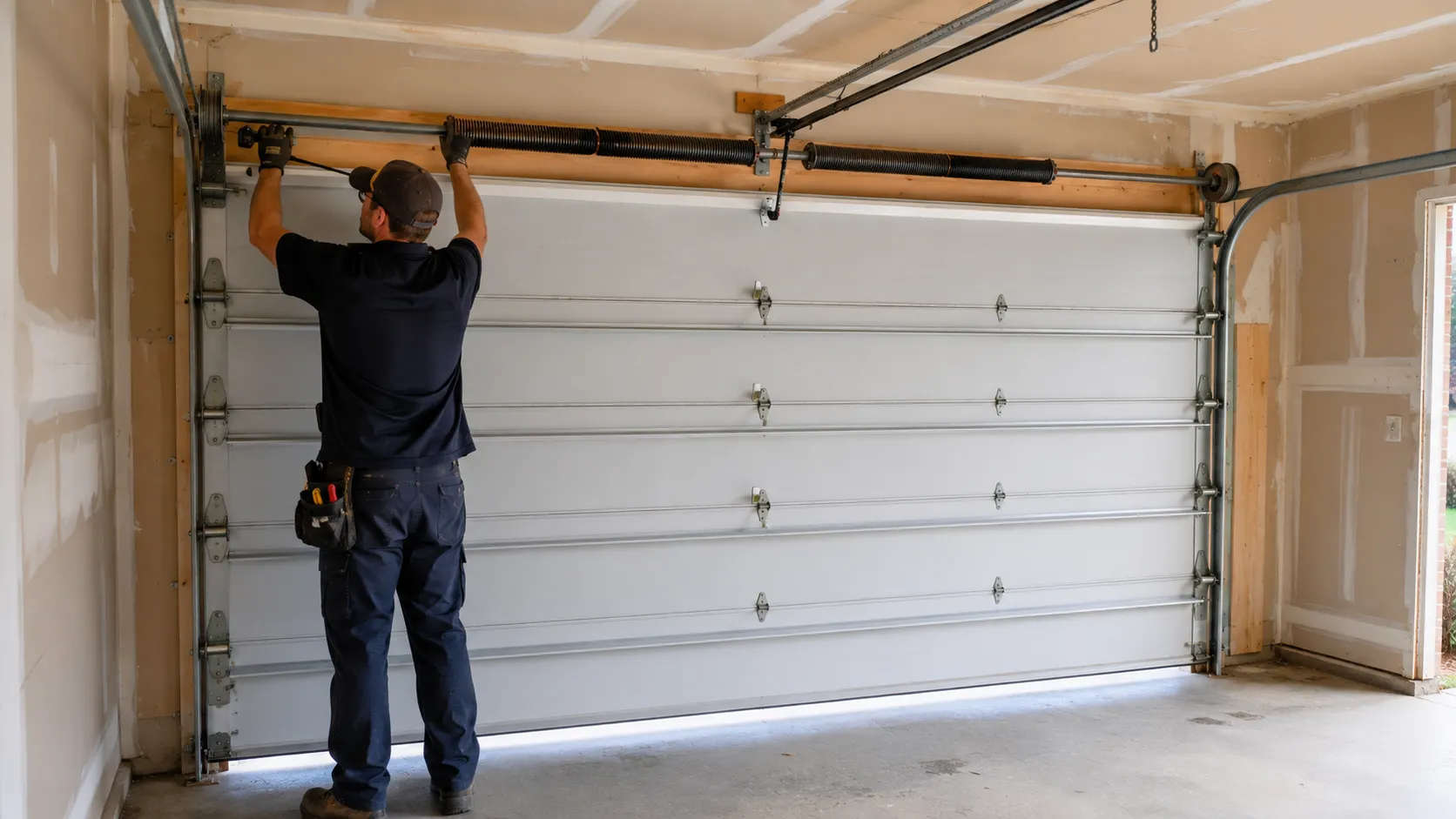
Doors from that era commonly went in with lighter-gauge steel brackets fastened to jamb studs, not the heavier reinforced mounts you'd see in a house built after 2000. Thirty years of daily cycling - opening, closing, thermal expansion in a high desert climate that runs hot for a good stretch of the year - and those brackets flex just enough that the track edges shift out of true. Once that happens, a roller doesn't need much of an excuse to jump the rail. A slightly bent panel, a cable that's lost a little tension, or just an opener pulling the door up unevenly can do it.
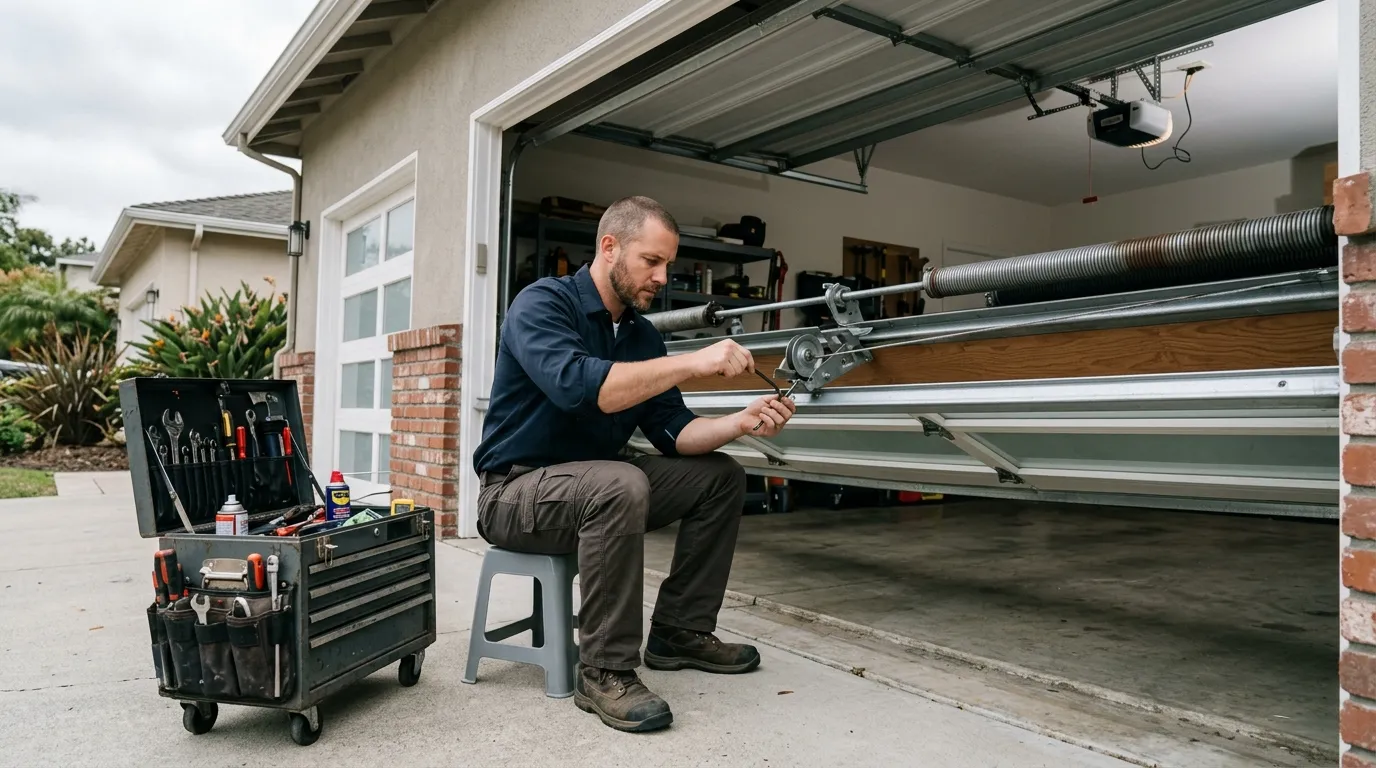
We also see off-track calls tied to extension-spring setups, which were still common on garage doors through the early '90s. If one side's spring stretches or the pulley wears, the door racks sideways as it travels, and that side's rollers walk out of the track over a few cycles instead of failing all at once.
Getting It Booked In
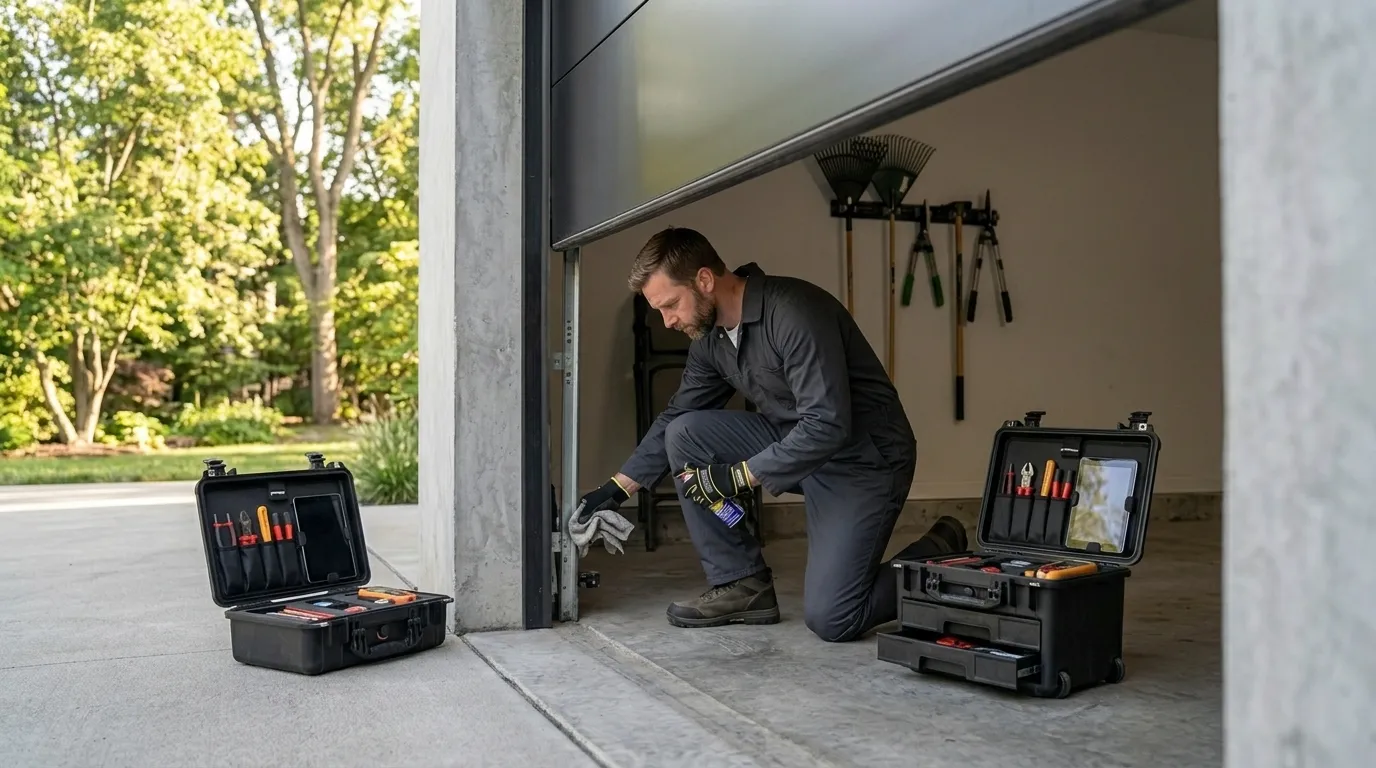
We're based in Hesperia, about 12 miles from Phelan, so a booked call here isn't a same-block visit - it's a drive out, and we plan the truck's day around that. When you call, tell us whether the door is stuck open, stuck shut, or hanging at an angle, since that changes what we bring on the truck. A door that's fully derailed on one side needs different gear than one that's just binding at the bend.
Don't try to force the door up or down once it's visibly off the track. Every cycle it runs crooked stresses the opposite roller and the opener's drive gear, and that's how a one-track problem turns into a two-track problem plus a stripped gear. Kill power to the opener, leave the door where it sits, and call.
How It Shows Up
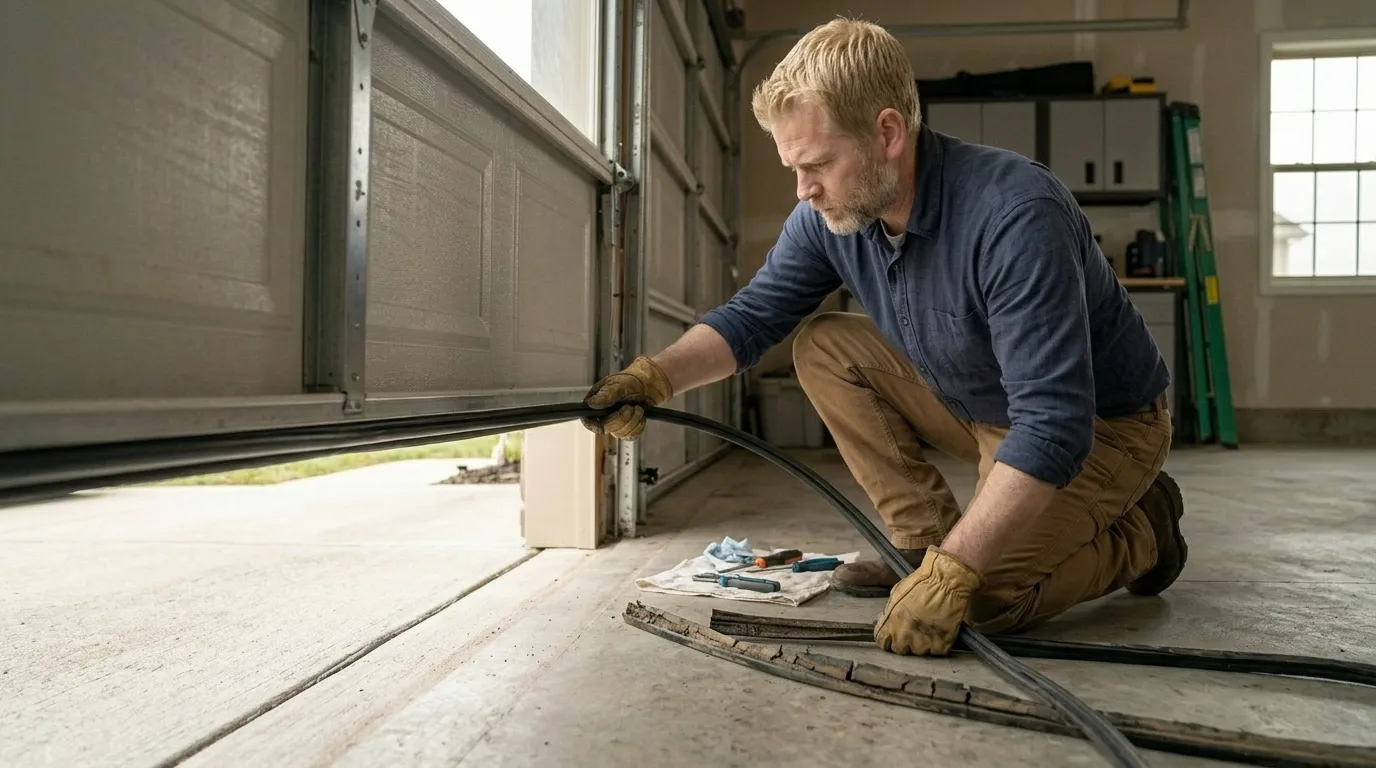
The tell in Phelan homes is usually a scraping or grinding sound right at the point where the track curves, followed by the door hesitating or stalling a few inches off the ground. Some owners notice a visible gap between the roller and the rail before anything actually derails - that gap is the bracket flexing under load, and it's worth a call before the roller finishes the job and jumps clear.
On the older end of the local stock, where extension springs are still original equipment, the giveaway is a door that closes unevenly, dropping faster on one side than the other. That's the spring or pulley losing tension on that side, and it's usually a matter of weeks, not months, before a roller walks out of the track completely.