Parts We Carry
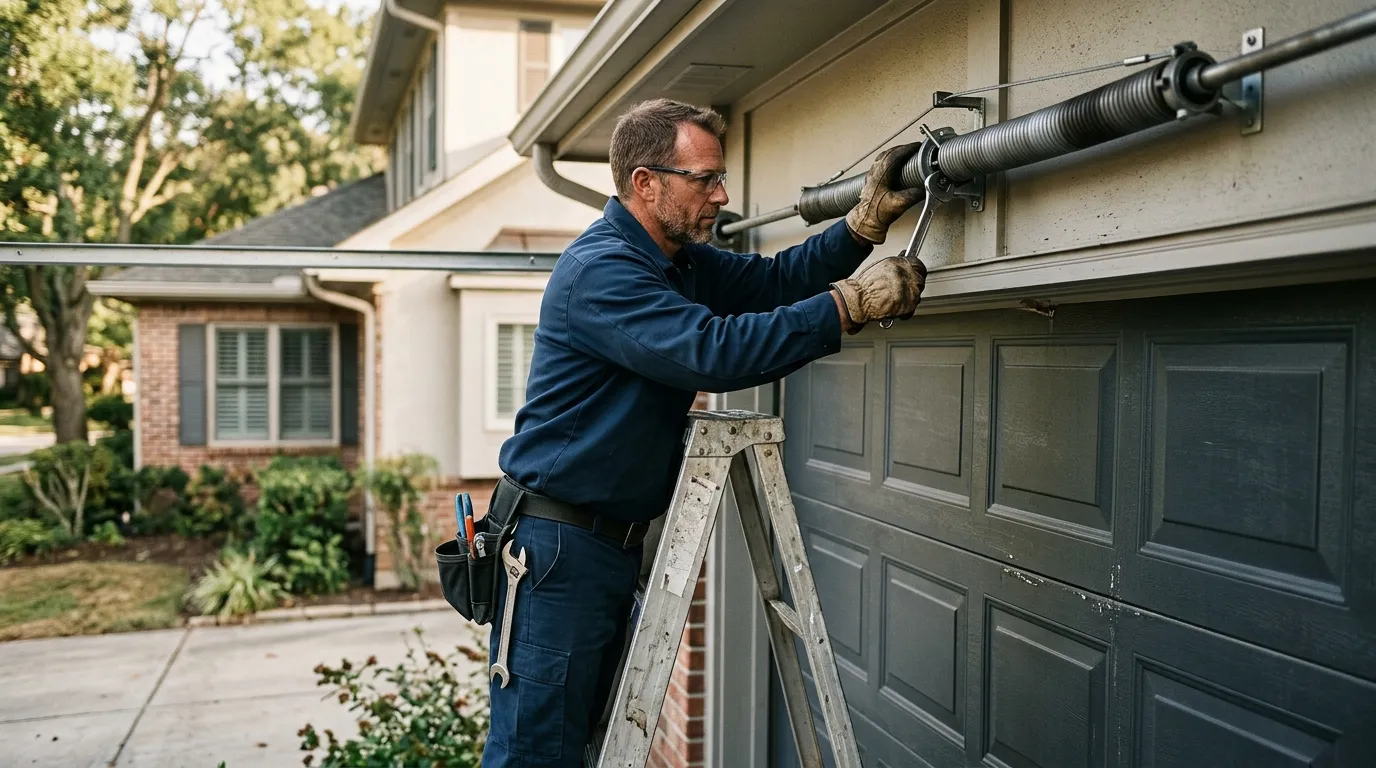
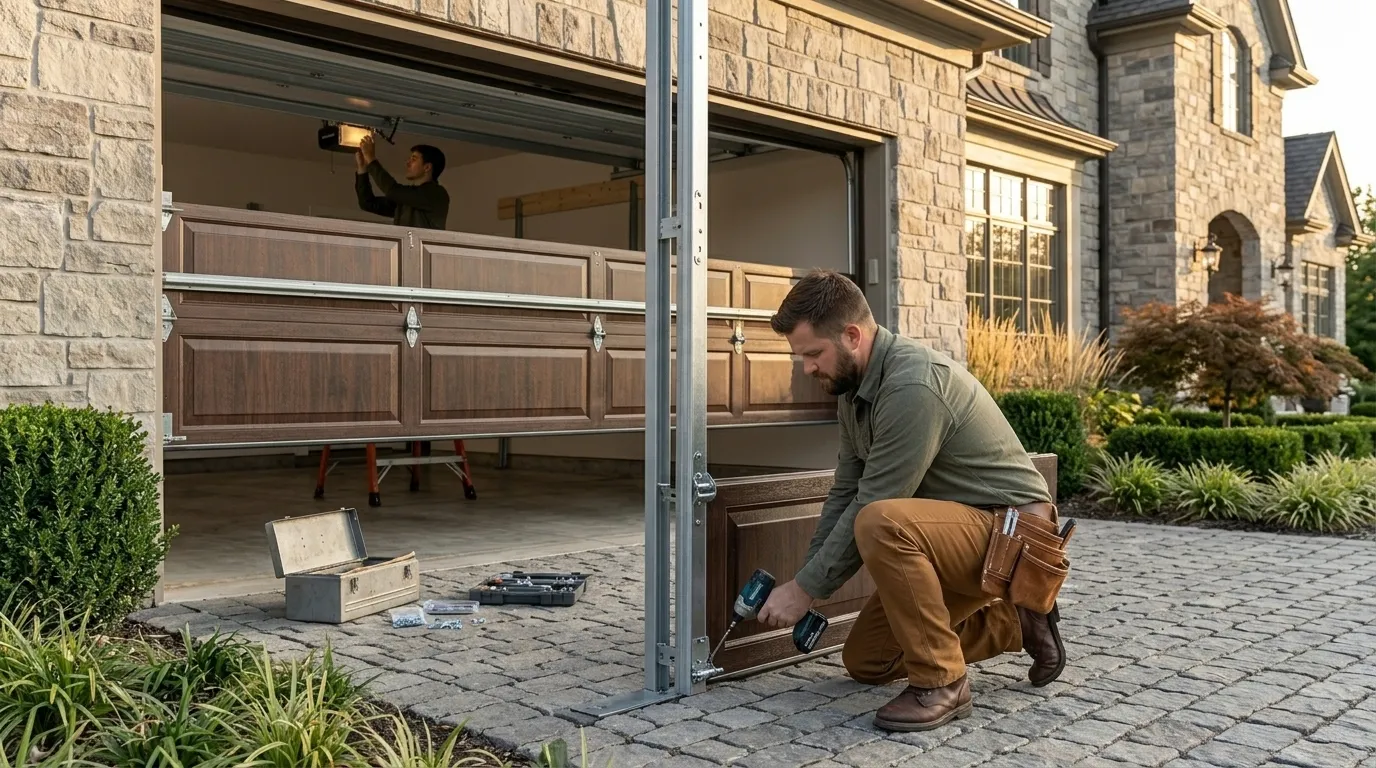
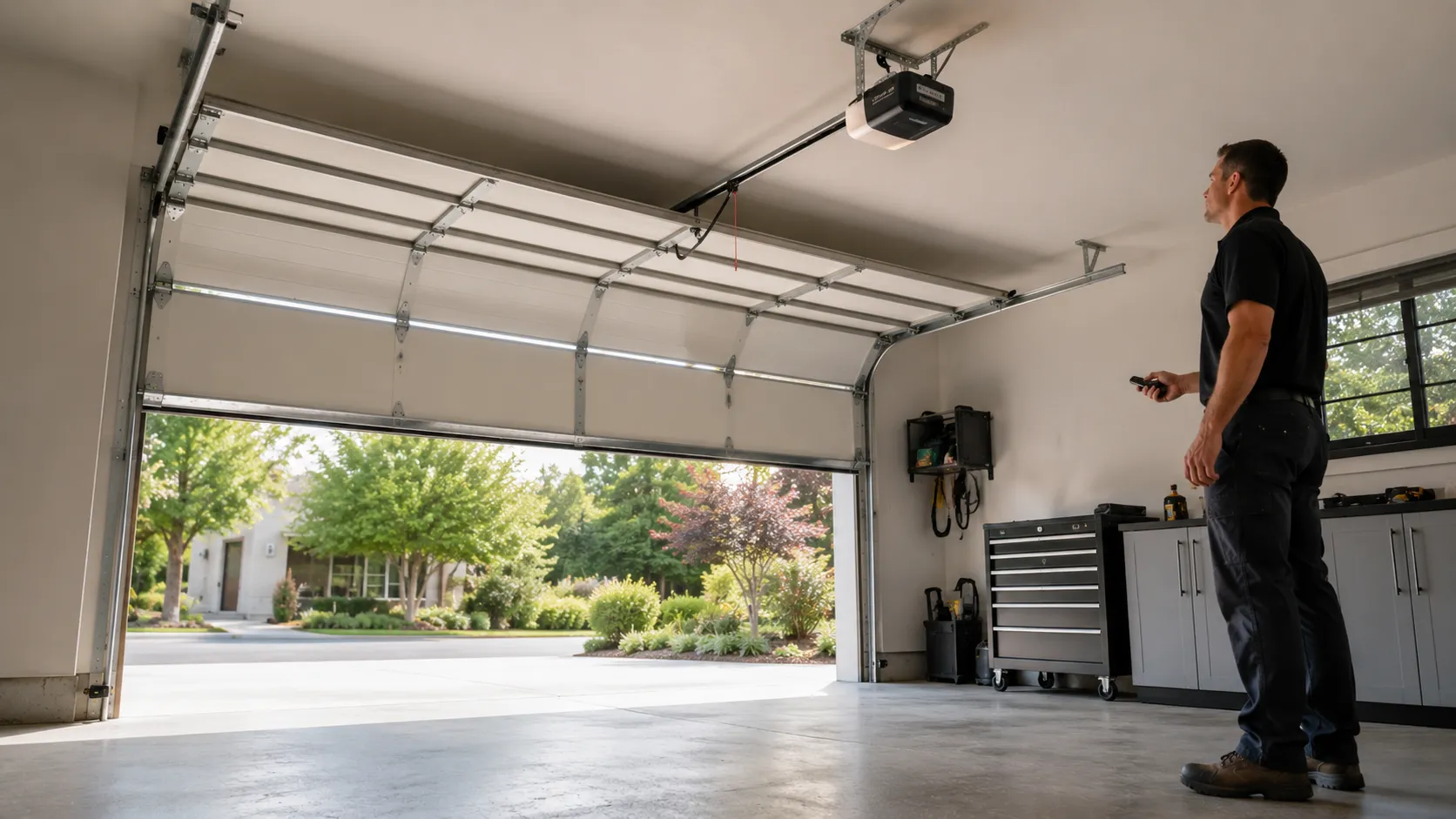
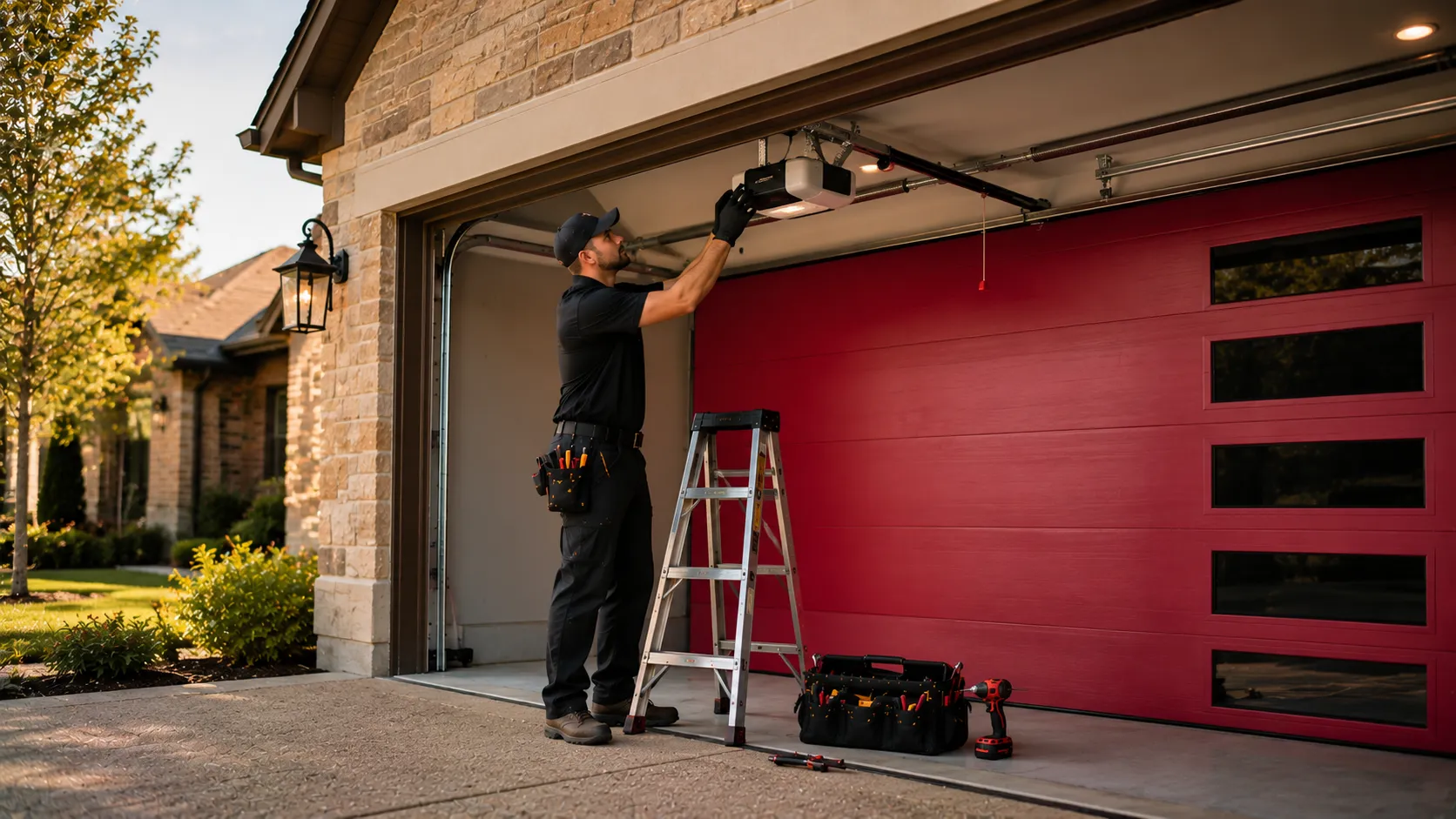
We stock torsion springs, standard steel and insulated panel sections, nylon and steel rollers, and openers in the belt and chain-drive styles that fit garage doors built for houses from the 1970s through the newer builds mixed into the area. Running Springs sits inside a service area where the broader housing stock runs 1958 to 1997, but the local median build year of 1970 means we bring hardware sized for that era's stock openings more often than the newer 1990s sizes. That matters because a lot of those older openings were framed a few inches narrower than what's standard today, so we carry adapter track and jamb kits on the truck rather than making a homeowner wait on a special order. We don't carry every custom size - wood-clad carriage doors with non-standard widths sometimes need a factory order, and we'll tell you straight if that's the case before we quote the job.
How It Shows Up
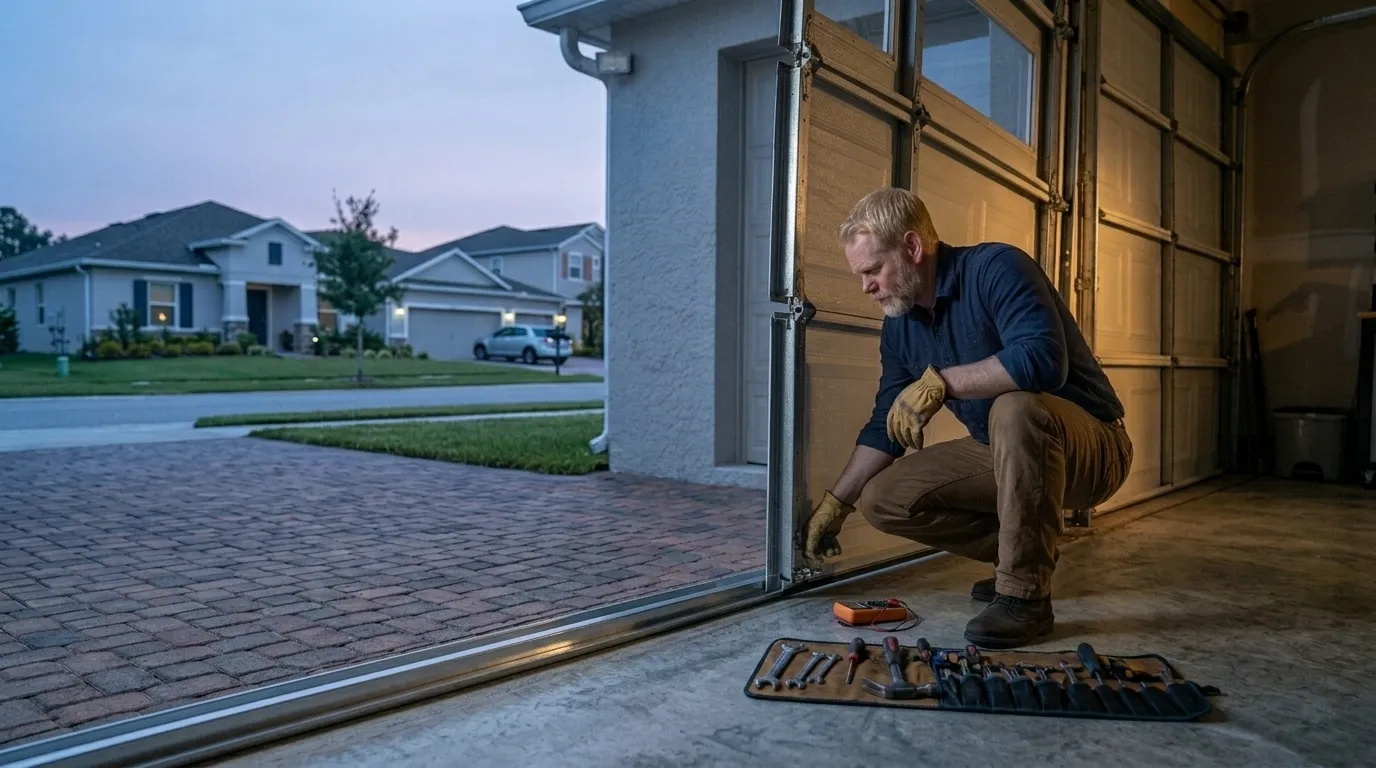
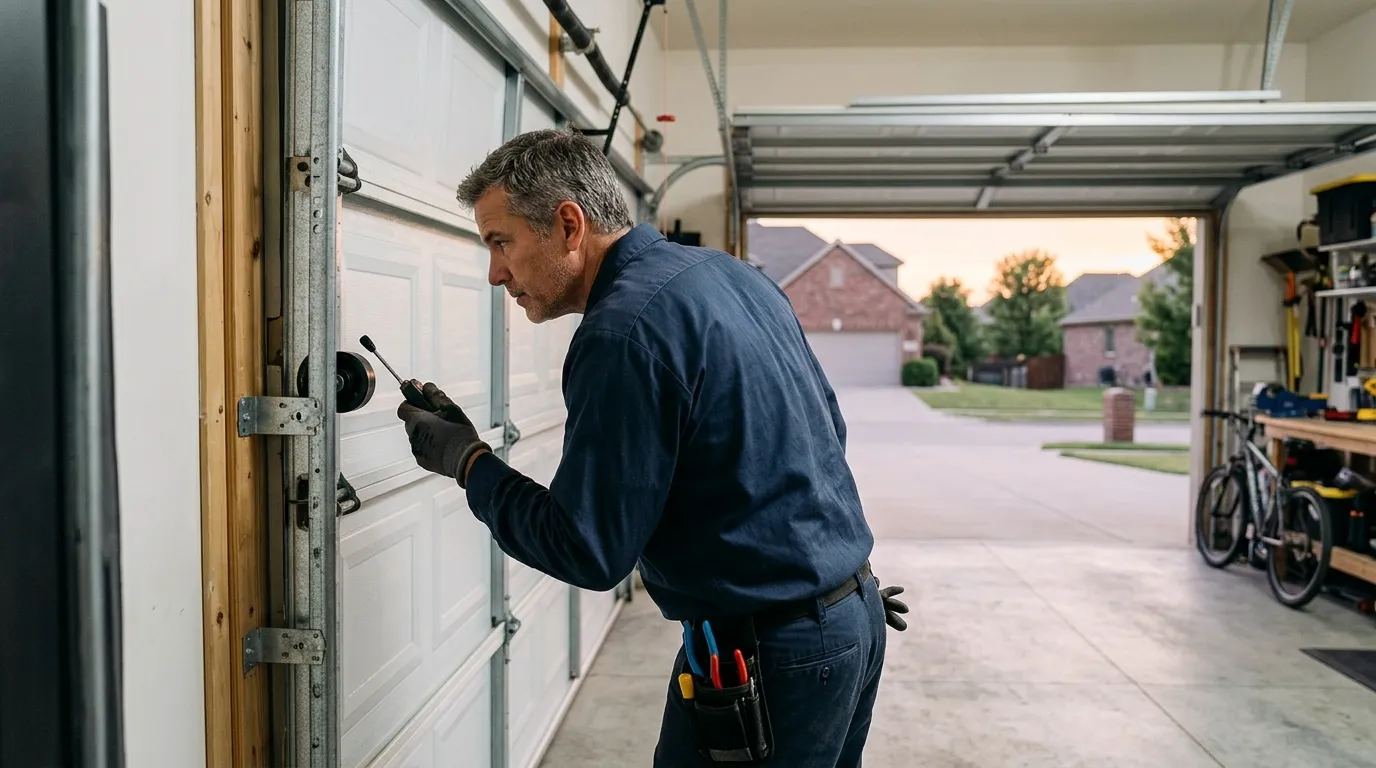
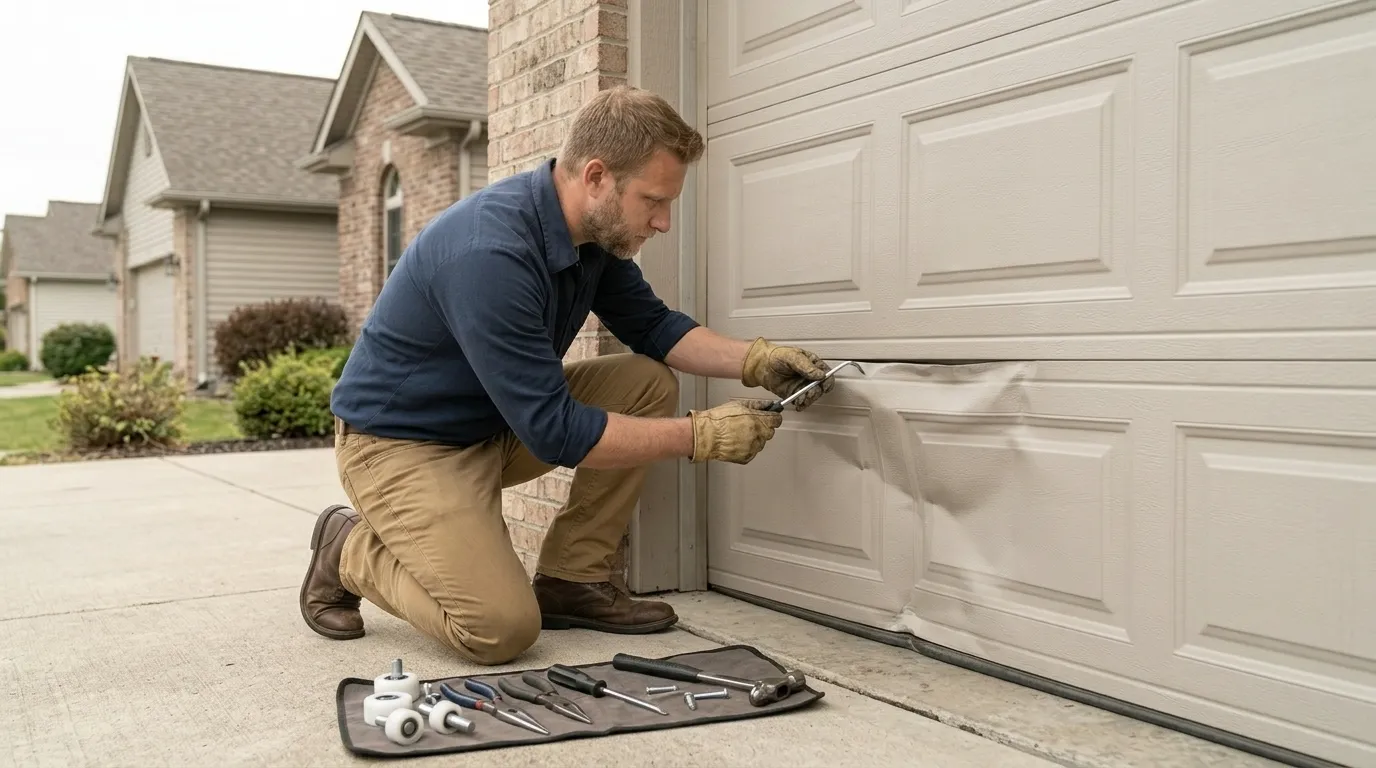
On a house built around 1970, the tell is usually the door itself before it's the opener: faded or peeling steel skin, a bottom panel that's rusted through at the seam, or a single-panel door that's warped enough to bind in the track. Newer opener motors bolted onto that old hardware tend to strain and burn out early because they're pulling against springs and tracks that were never matched to them. If your door groans, drags, or the opener light blinks through a cycle without the door moving cleanly, that's usually old hardware fighting new electronics, not one single broken part.
Getting It Booked In
We run the Running Springs job from our Hesperia base, about 18 miles out, so we schedule it as a full-day run rather than a drop-in - book ahead rather than expecting a same-day slot. Tell us the door's rough age and whether you know the spring size or opener brand; if not, we'll bring a set of common torsion sizes and confirm on site. For a full replacement, we'll ask about the opening's width and whether there's a window pattern you want matched, since custom glass inserts add lead time on top of the drive out.
Time on the Job
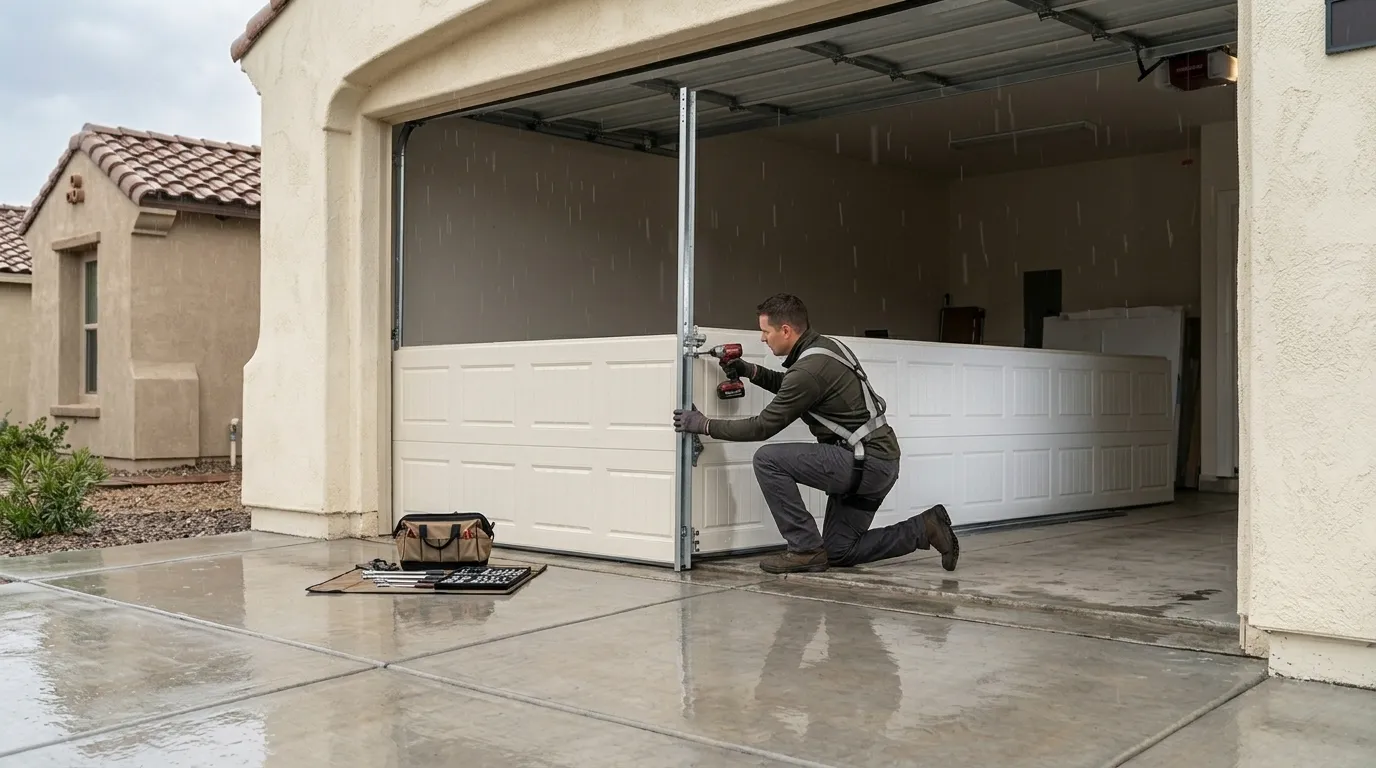
A straight opener swap or spring replacement on an existing door usually runs a few hours once we're on site. A full door replacement - pulling the old panels, resetting track and header hardware, hanging new panels, and setting the opener - takes most of a working day, longer if the framing needs shimming to square up an opening that's shifted with age, which isn't unusual on a house from around 1970. We build the Hesperia-to-Running Springs drive into the appointment window, so the quoted arrival time already accounts for the 18 miles.