The Cost of This Job
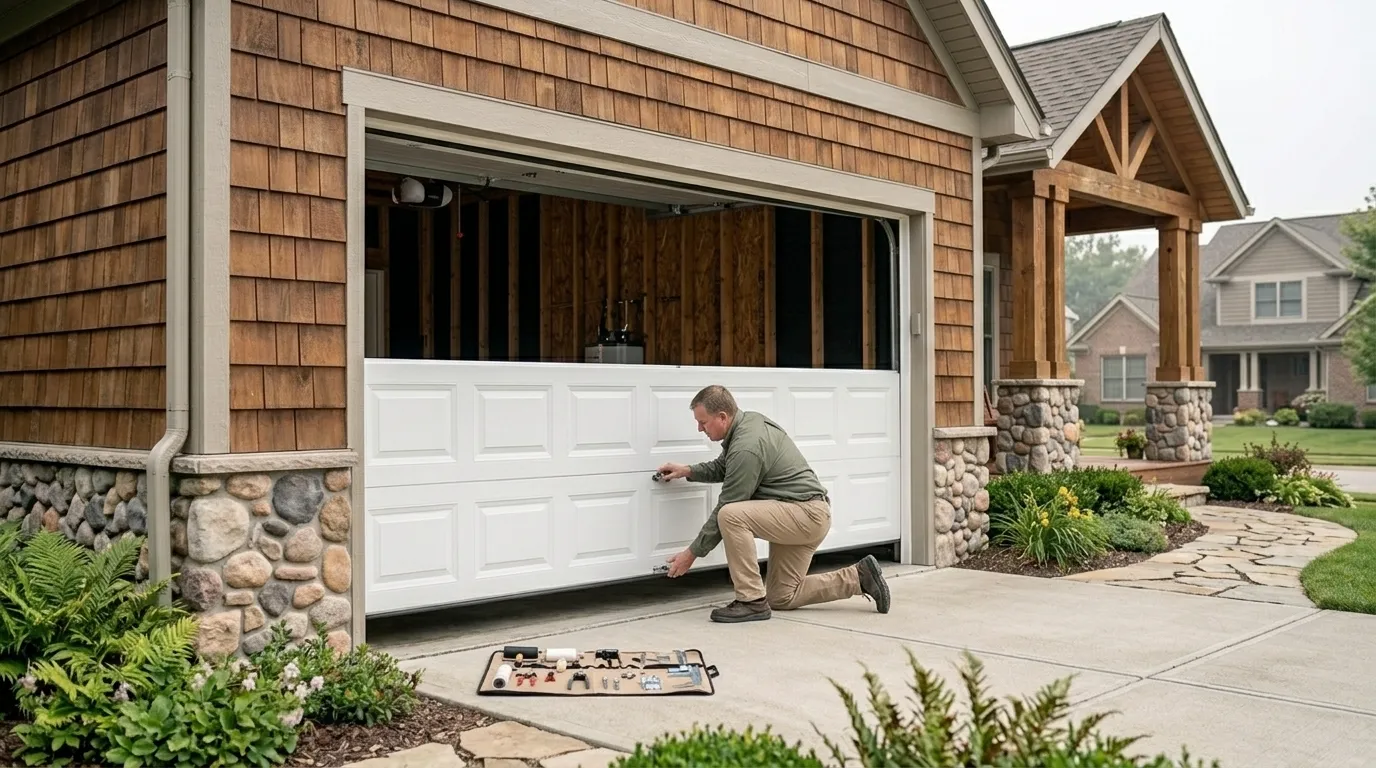
What drives the bill up here isn't the drive into the mountains, it's the age of what's already hanging in the opening. The median house in Lake Arrowhead went up around 1977, close to a decade ahead of the 1986 median for the rest of the area we cover out of Hesperia. That gap matters because a door and its hardware from the late '70s has usually been through one full spring replacement already, sometimes two, and whatever track or roller setup is left is the older, heavier kind that doesn't share parts with anything sold today. With 4,461 households in this community and a median income of $88,147 - well above the $79,378 median across the wider service area - most jobs here are repair or partial hardware swap rather than full-unit replacement, because the doors themselves, once you get past the springs and rollers, are often still square and worth keeping. We don't quote a number without seeing the door; too much depends on whether the track is bent or just worn.
One honest limit: if the panel itself is warped or rusted through from age, no amount of hardware work fixes that, and we'll tell you straight when replacement makes more sense than another repair on a 40-plus-year-old door.
Getting It Booked In
We run out of Hesperia, and Lake Arrowhead sits about 13 miles up from there, which we factor into how a visit gets scheduled rather than treat as an afterthought. There's no local branch or drop-in counter here - every job gets planned as a drive, so we ask what's happening with the door up front (won't open, spring snapped, opener grinding) so the truck that comes out has the right parts for a door of this town's era rather than guessing. If you're not sure what's wrong, that's fine; a lot of Lake Arrowhead calls start with 'it just stopped' and end with a fatigued torsion spring that's been due for years.
What Causes It Around Here
This area falls in a moderate heat climate band, and moderate still means real daily swings, especially for hardware sitting in an unconditioned garage through decades of summers. Steel track and springs expand and contract with those swings year after year, and on a door old enough to have gone through 40-plus cycles of that, the metal fatigue shows up as a spring that finally lets go rather than one that gradually loosens. It's the accumulation, not any one event, that gets blamed for the sudden failure. Combine that with a housing stock that's mostly original hardware from the late '70s and early '80s, and the pattern we see on repeat visits to this town is consistent: age-driven fatigue on parts that were installed once and never touched again.
What Can Go Wrong
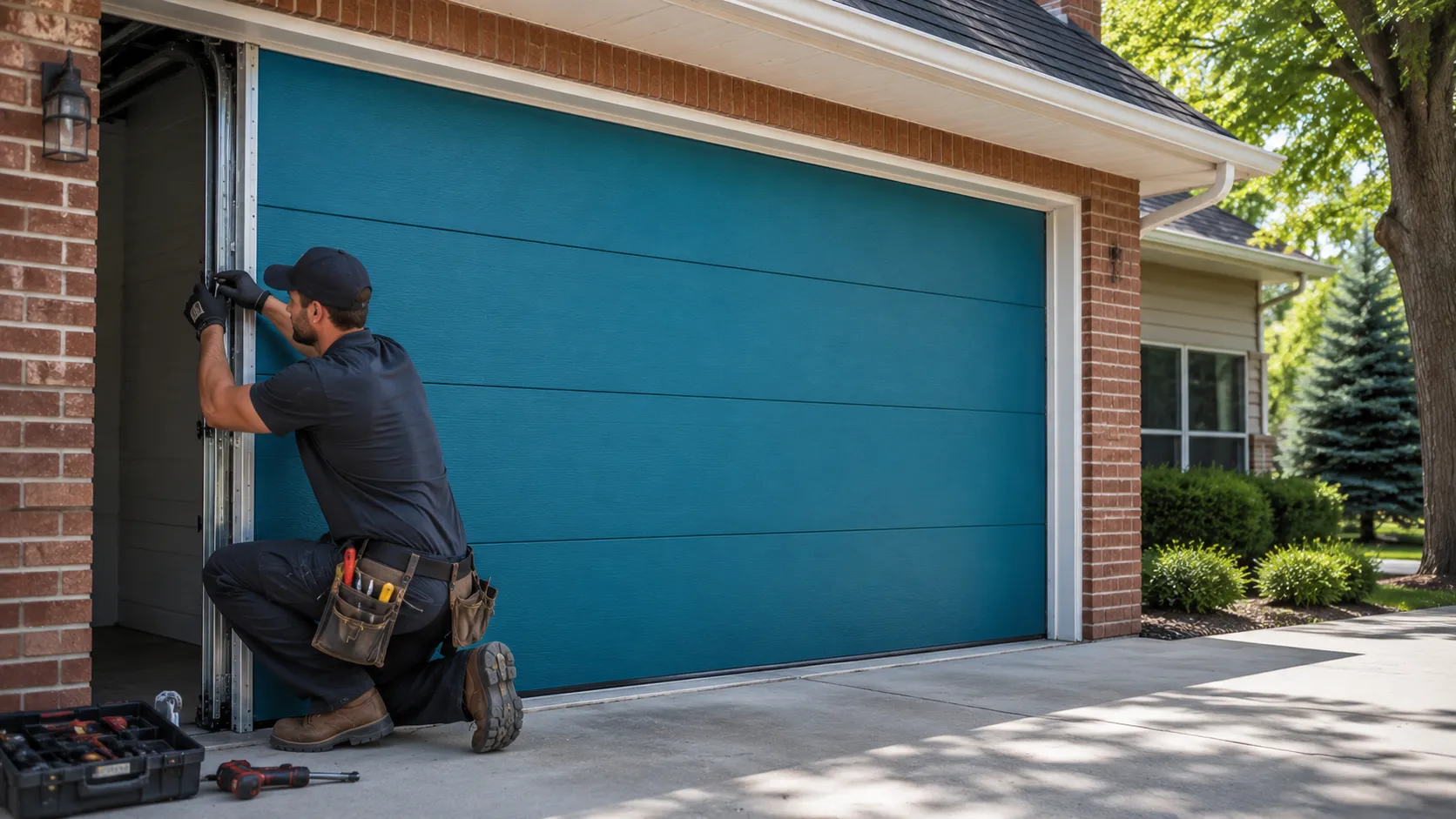
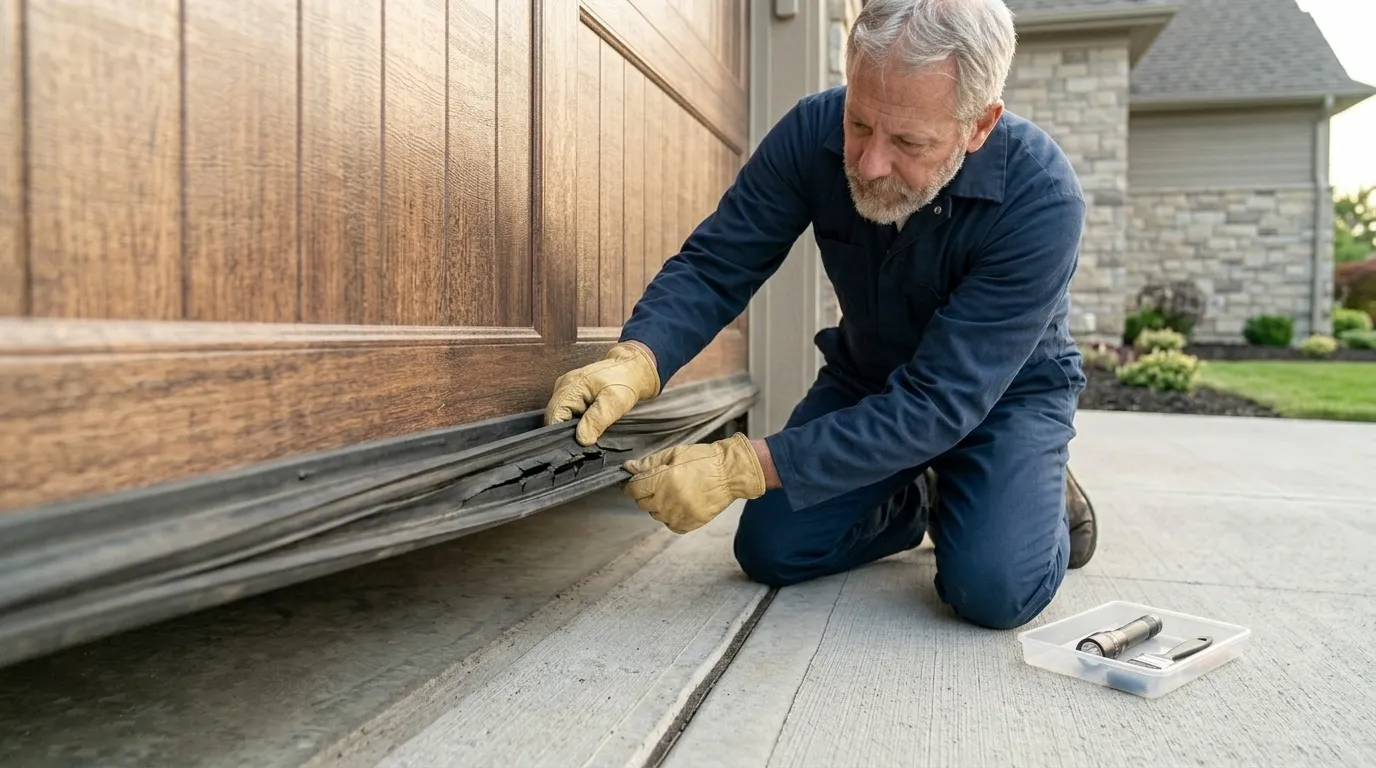
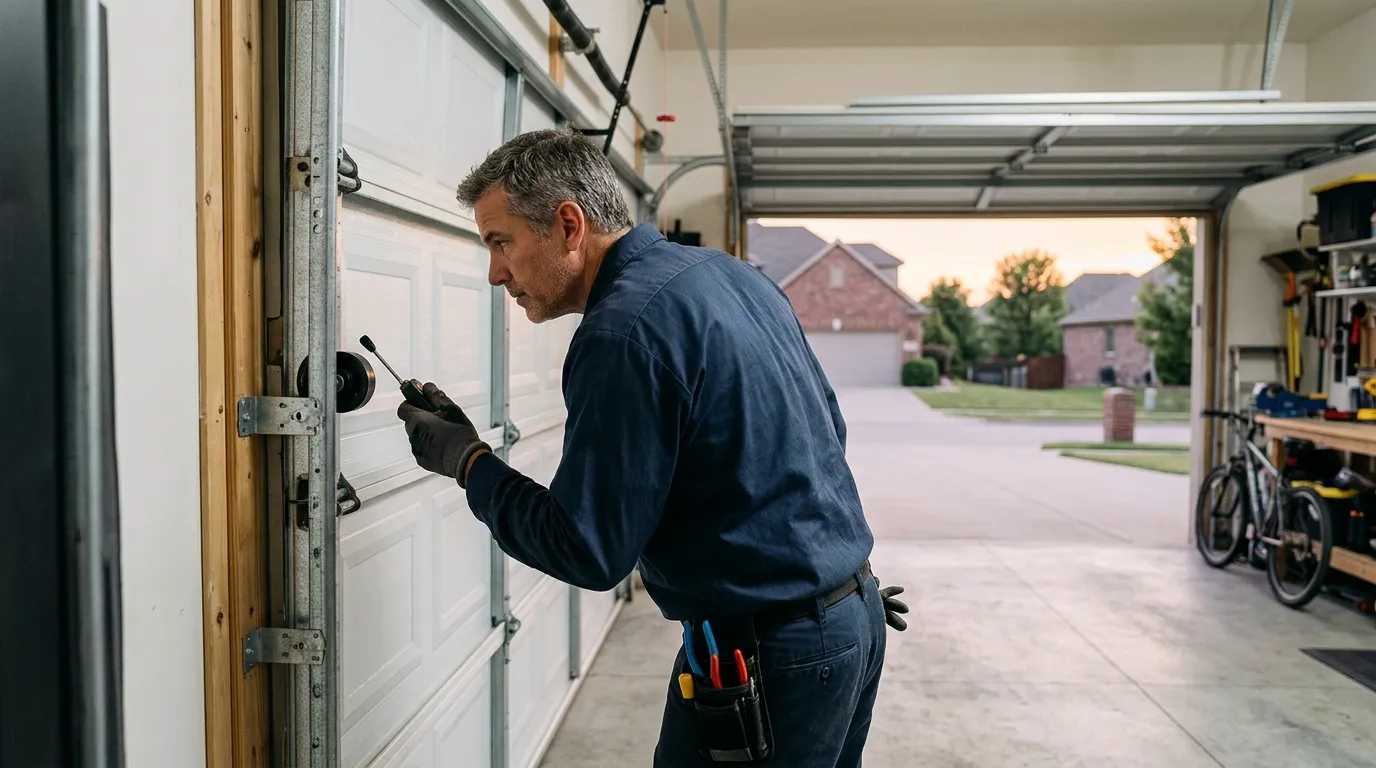
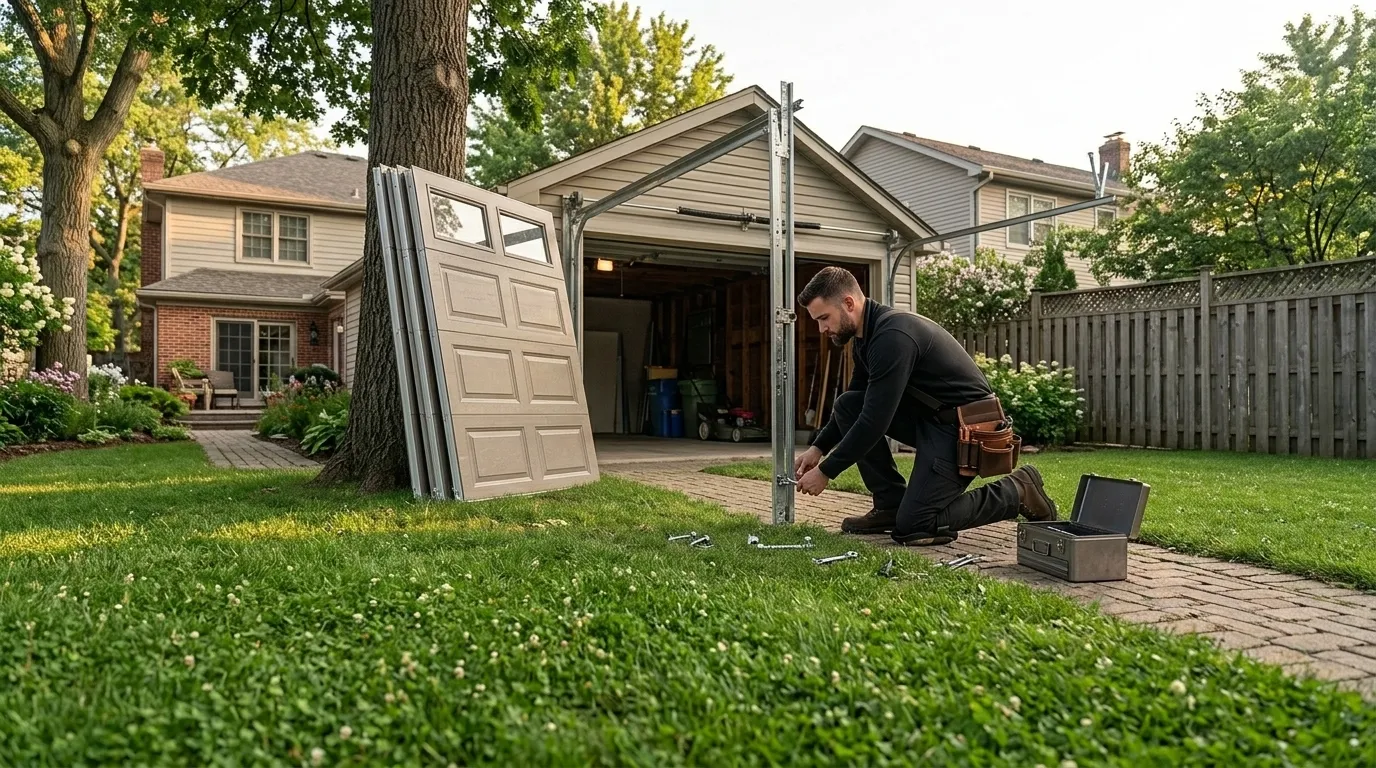
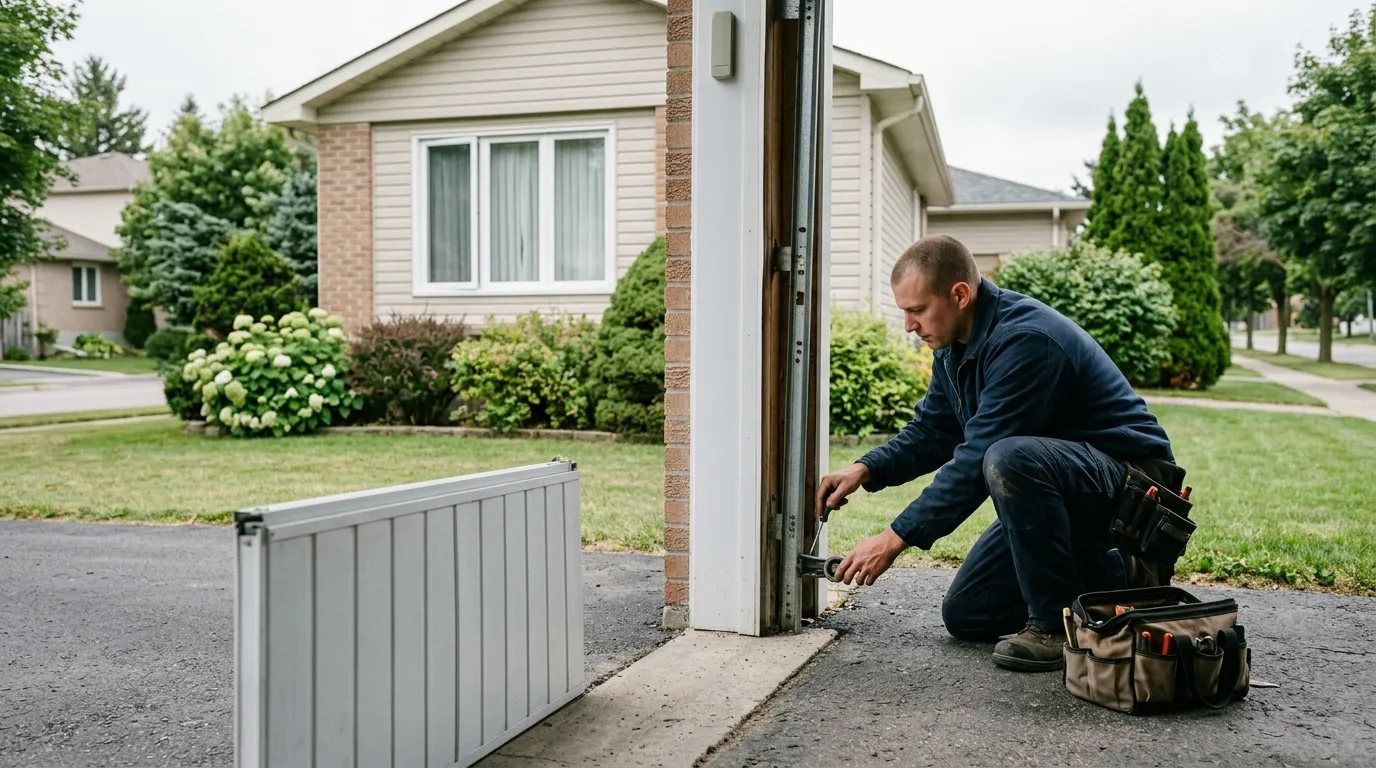
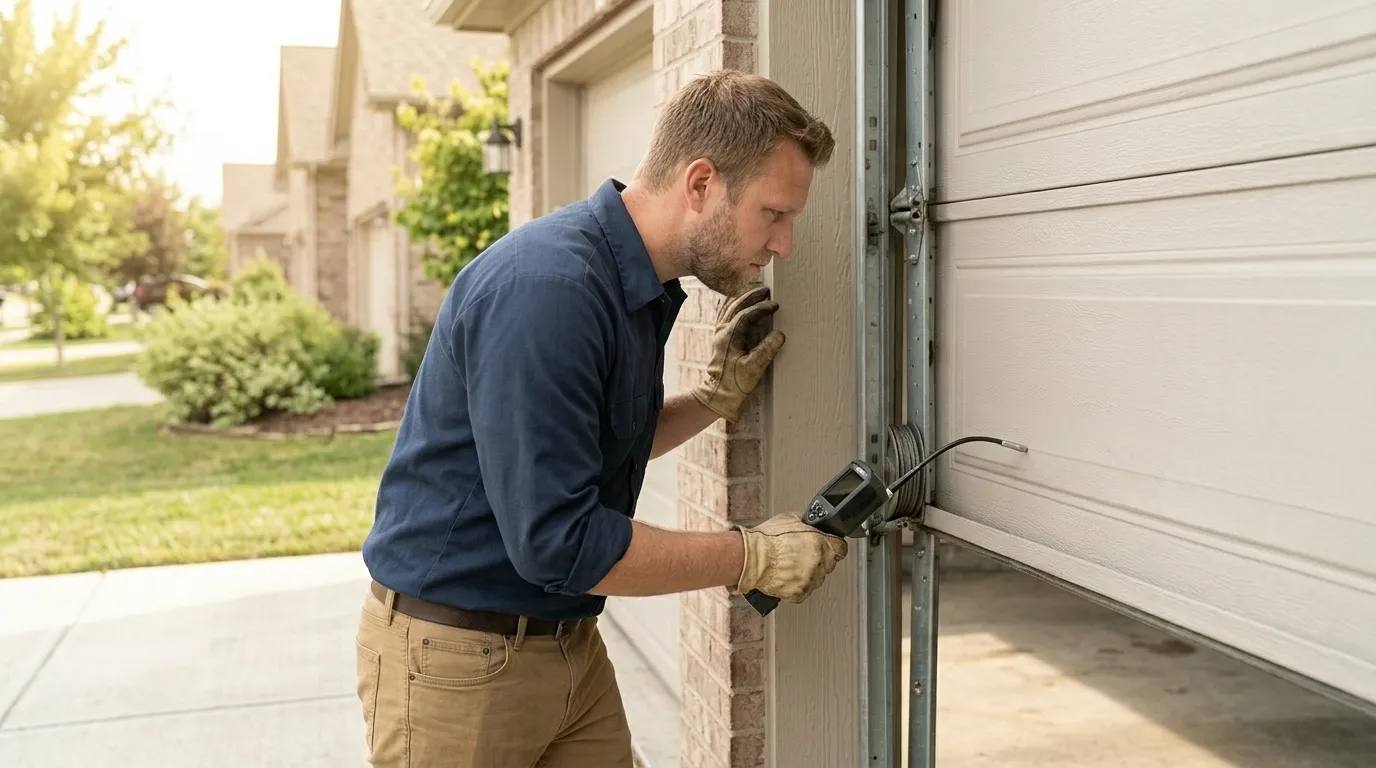
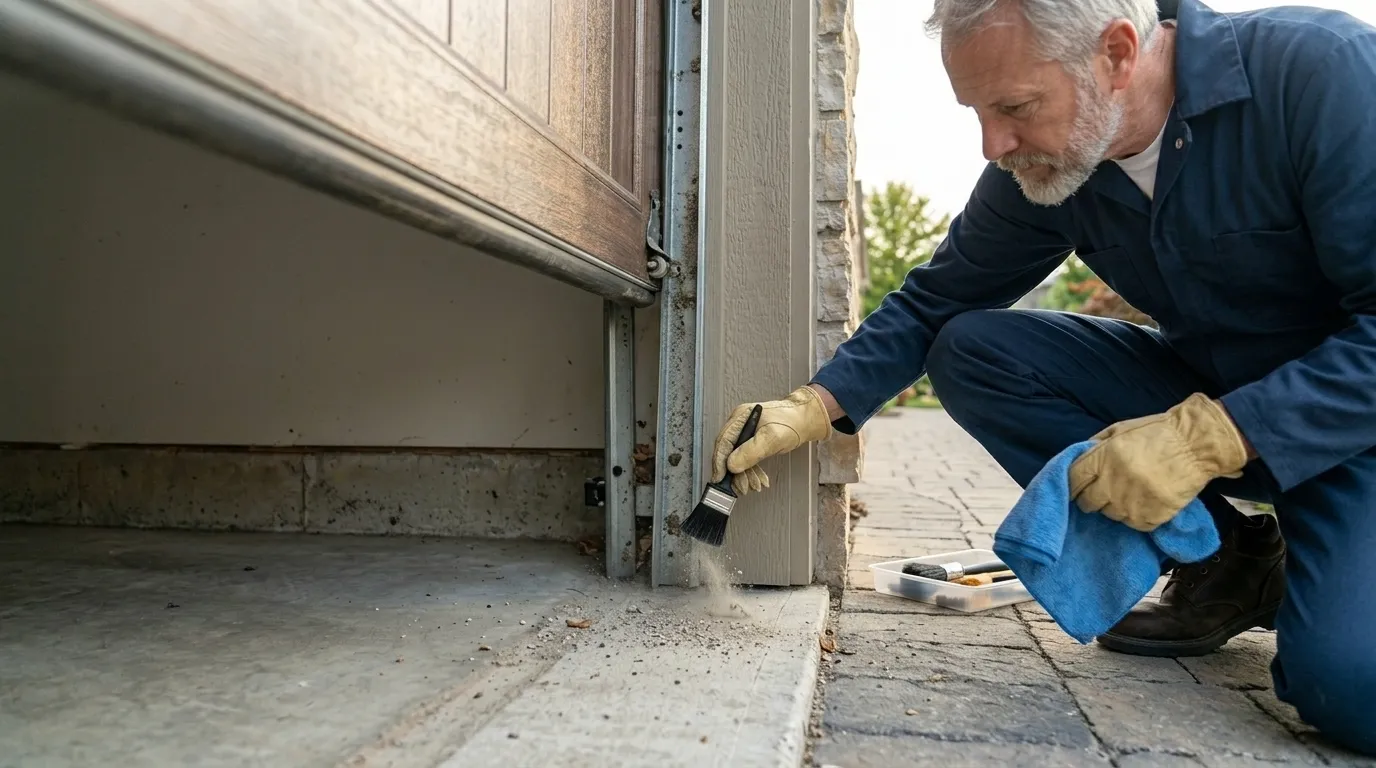
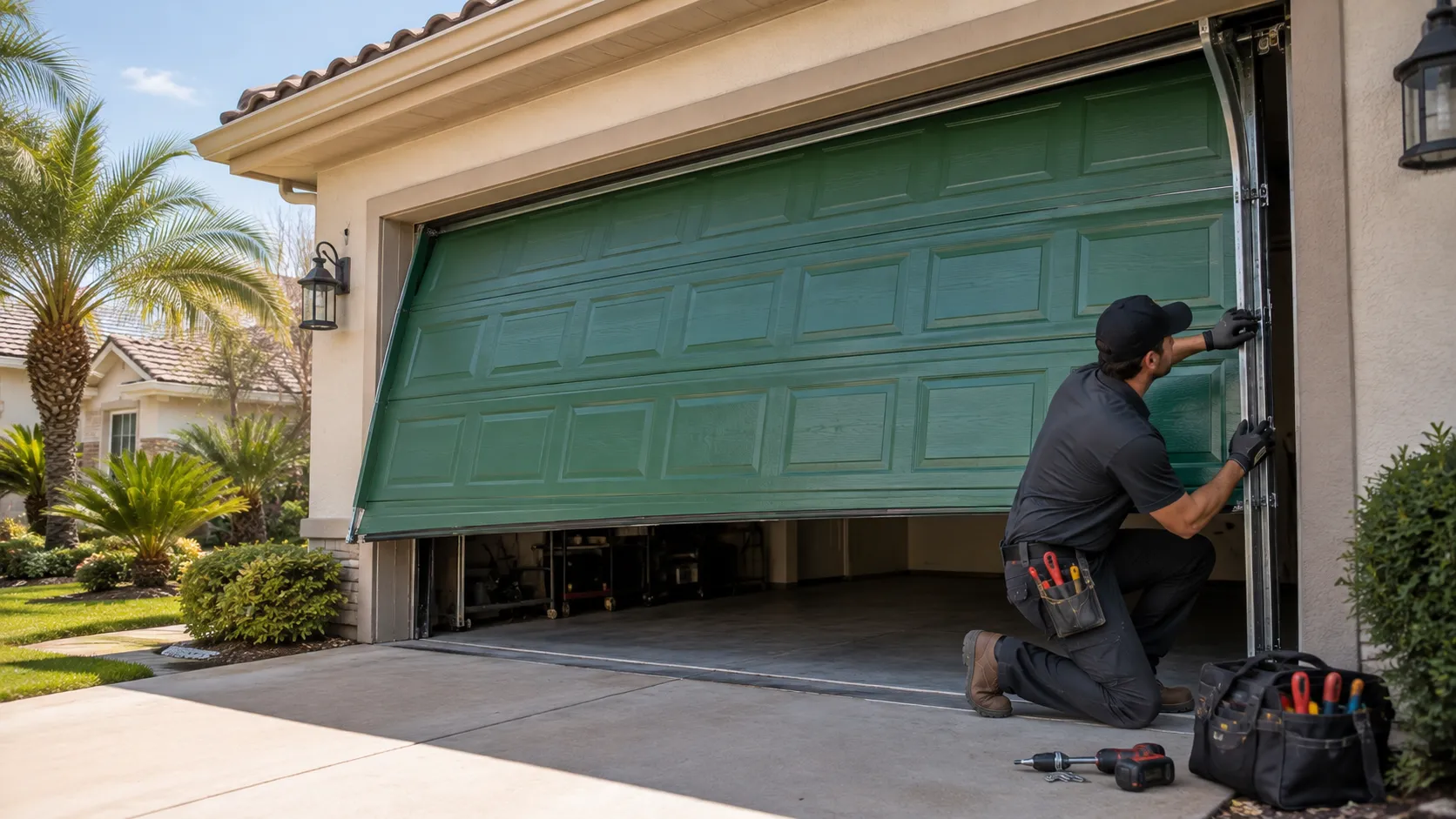
The failure that brings most calls in is a snapped torsion spring on a double door - it's loud, the door drops or won't budge, and it's not something to force by hand or by opener. Past that, we see cables that have frayed enough to jump the drum, rollers that have worn down to the point they're binding in the track instead of rolling in it, and on the oldest doors in town, hinges that have stretched their mounting holes after decades of the same panel flexing through them. None of these are unusual for a door this age; they're just what eventually happens to hardware installed once in 1977 and never replaced since.