The Cost of This Job
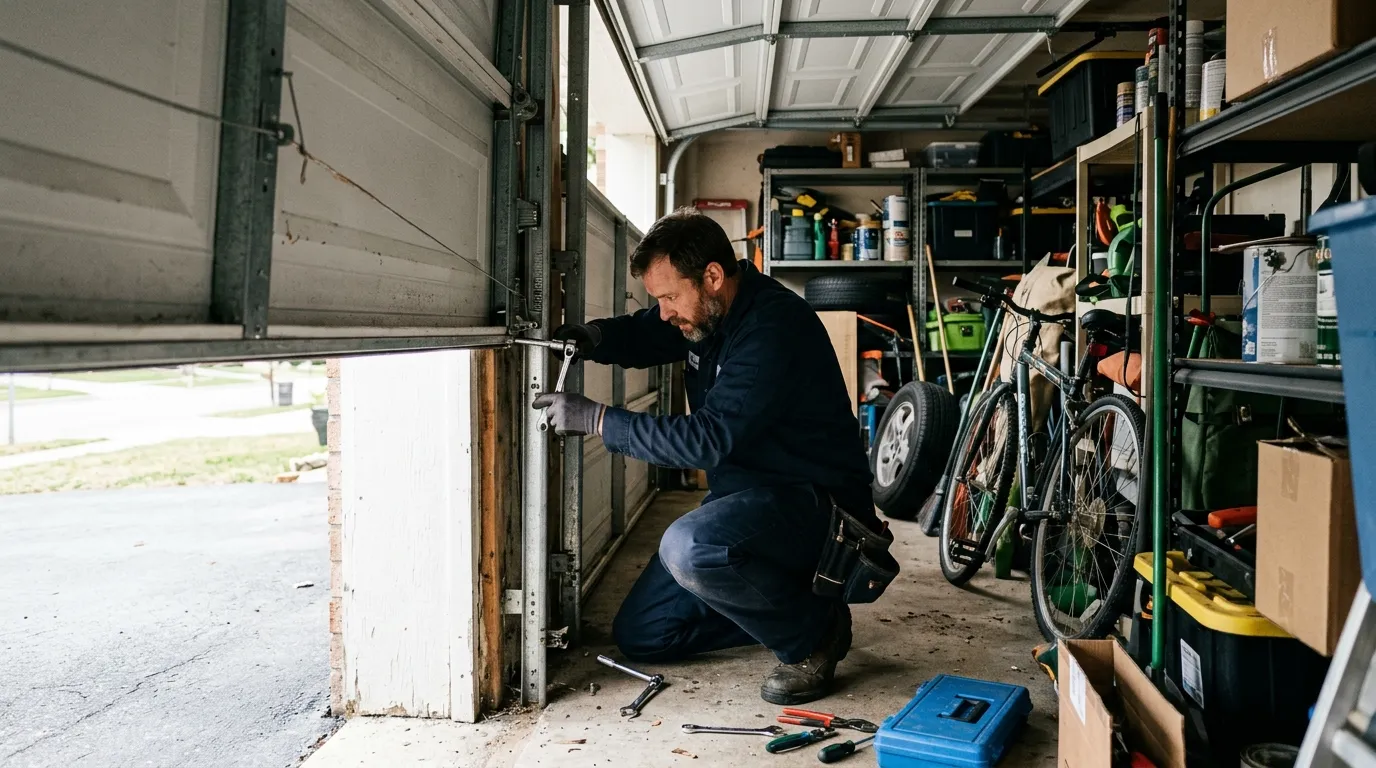
We don't quote a flat number for off-track repair sight unseen, and we won't pretend to here. What we can tell you is what drives the cost in Lake Arrowhead specifically: this is a 13-mile run from our Hesperia shop, and the truck's fuel and time are part of every ticket regardless of the fix. On top of that, Lake Arrowhead's housing stock centers on 1977, a decade earlier than the median build year across the wider service area (1986). That older stock often carries original track brackets and roller hardware that isn't stocked on the truck the way newer parts are, so if the fix needs an odd-length track section or a bracket pattern nobody makes anymore, that's a return trip, not a same-visit repair. A door that's simply popped a roller off a bent section is a quick job. A door where the track itself has pulled away from the framing because the lag screws let go in 40-plus-year-old wood is a different job entirely, and it costs more because it takes longer and sometimes needs a helper on site. We'll tell you which one you've got before we start, not after.
Getting It Booked In
Because we're coming from Hesperia, a Lake Arrowhead call gets scheduled as a dedicated trip rather than a stop we make on the way to somewhere else. That's worth knowing when you're picking a time: we're not going to be five minutes out the way we might be for a job closer to the shop. Tell us on the phone whether the door is stuck open, stuck closed, or still moving but grinding off one side, because that changes what we load on the truck before we drive out. With roughly 4,461 households up here, we're not doing daily loops through the area the way we might in a denser part of the service area, so a clear description up front saves a second trip more here than it would somewhere five minutes from the shop. If you can safely get a photo of the wheel or track that's out of place, send it. It often tells us more than a phone description does.
What Causes It Around Here
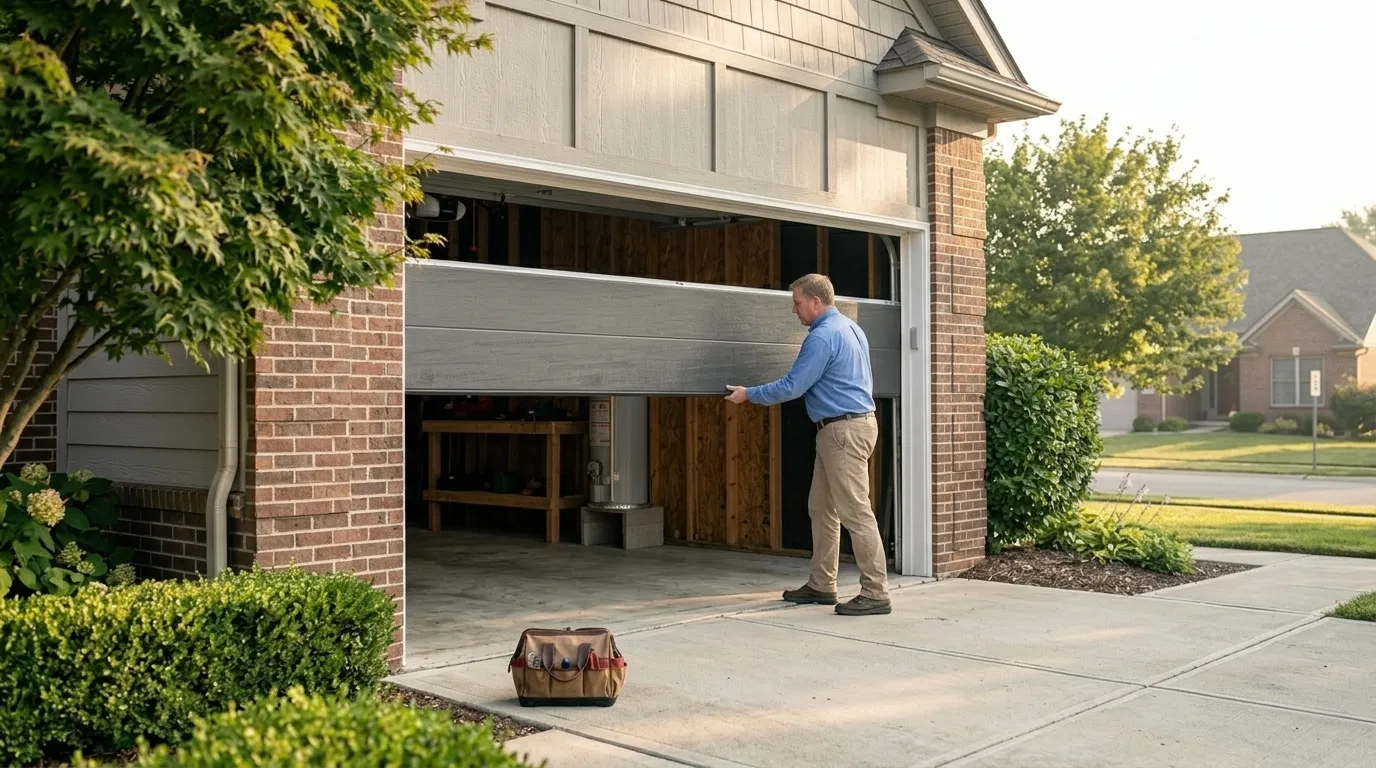
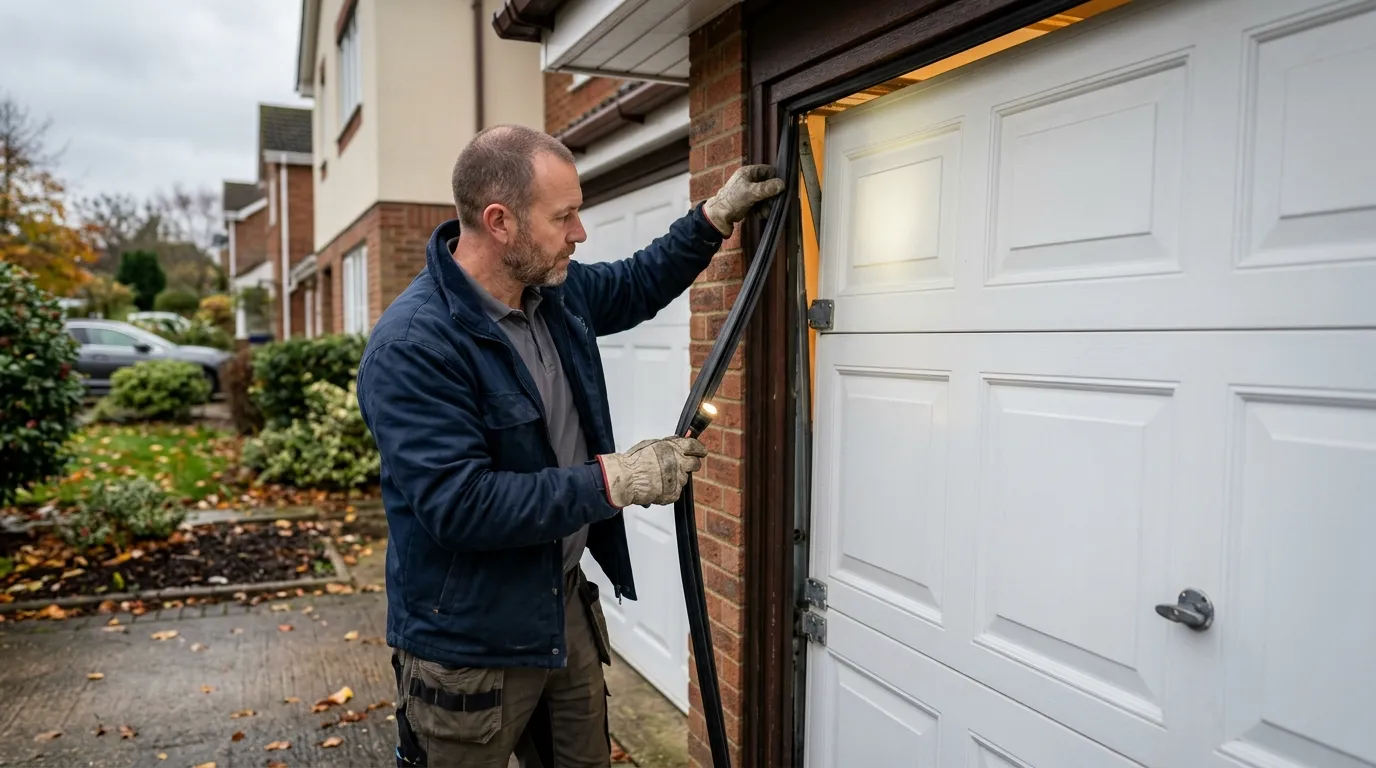
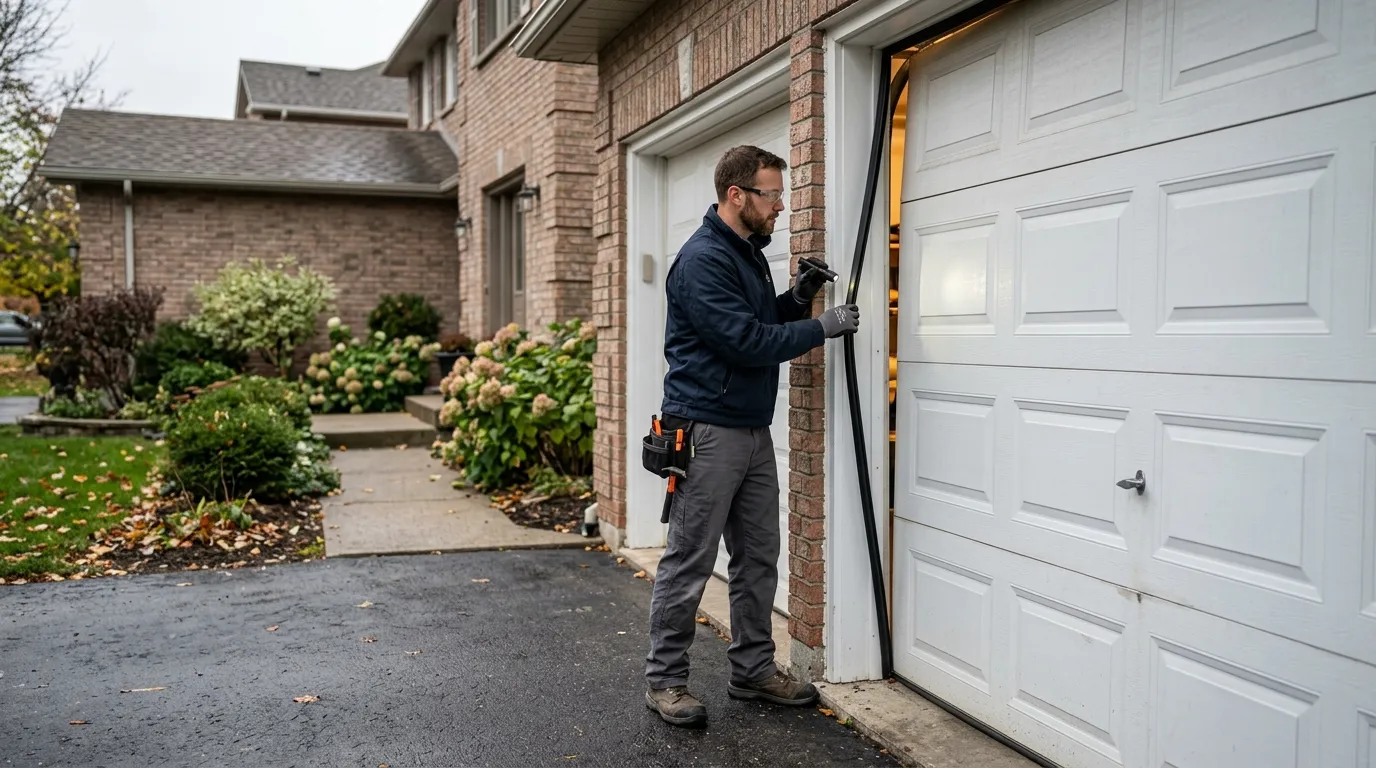
With most Lake Arrowhead homes built around 1977, the garage doors we see coming off-track up here tend to be working against original or early-replacement hardware, not the galvanized rollers and adjustable track brackets that show up in homes built in the 80s and 90s elsewhere in the service area. Steel track sections from that era were mounted with hardware sized for lighter doors than what often gets installed today, and decades of small impacts, a bumped car mirror, a bike leaned against the door, a rock kicked up by a mower, gradually work a bracket loose until one hard jolt knocks the roller clean out of the rail. A bent track from one bad hit is the single most common cause we find. Loose vertical track bolts, from age rather than a single event, are the second. We don't have local weather data specific enough to tie this to seasonal patterns, so we're not going to claim one, but age of the hardware itself is the pattern we can point to with confidence.
What Can Go Wrong
The honest limitation first: if the track is bent badly enough that the metal itself is kinked rather than just knocked loose, we replace the section rather than trying to straighten it back into alignment, and that's not always a same-visit fix if the section is a length we don't carry on the truck. Beyond that, forcing an off-track door with the opener is what turns a $150 problem into a $600 one. Running the motor against a jammed track can strip the opener's gear, bend the top panel where the roller bracket tears loose from the door face, or snap a cable that was already under uneven tension because the door was hanging crooked. On a two-car door, an off-track condition on one side puts the entire weight of the door onto the opposite track and hinges, which is exactly the kind of stress that turns one bad roller into a cracked panel. We'll always tell you honestly if a repair isn't worth it compared to replacing the section or, in some cases, the door.