24/7 Emergency Service Open 7 days · 7am–8pm Serving Hesperia, CA & nearby
(442) 206-8960
Hesperia, CA

When the Power Goes Out on a Hesperia Garage Door Opener

How Hesperia's 1980s-era garage door openers hold up to power cuts and summer heat, what to check yourself, and when the board is done for good.

When the Power Goes Out on a Hesperia Garage Door Opener

The Situation

Most houses in this part of the High Desert went up between 1958 and 1997, and the bulk of that stock - across the neighborhoods out toward Oak Hills and Mountain View Acres - dates to the 1980s and 90s. That's the exact stretch when garage door openers moved from basic chain-drive motors to circuit boards, and it's why so many calls we get start with "the power came back on but the door won't move." A power cut doesn't just stop the motor. On an opener from that era, it can reset the logic board, wipe the travel limits, or leave the safety sensors out of alignment when the unit powers back up. Newer openers handle a cut cleanly. A 30-year-old board sometimes doesn't, and there's no way to know which kind you have until it happens. If your opener has never been swapped since the house was built, treat any power interruption as a reason to check it, not just wait for it to work itself out.

The Cost of This Job

We don't have a set price to give you here without seeing the unit, so we won't invent one. What we can tell you is how the decision usually breaks down. If the opener lost its programming in a power cut but the motor still runs and the gears are fine, that's a reset - cheap and quick. If the board itself got fried, or the capacitor's gone, you're looking at a repair that starts to compete with just replacing the opener outright, especially on a unit that's already 20-plus years old given when most of this housing stock was built. Chain-drive motors from the 80s and 90s are mechanically simple and often still fine; it's the electronics that fail first. The honest answer: if the motor's original to a house built in that window, we'll tell you straight when a new opener makes more sense than chasing a dying board.

Checking It Yourself

Before you call anyone, there are a few things worth looking at. Unplug the opener at the outlet, wait about thirty seconds, and plug it back in - this forces a clean restart and fixes a surprising number of post-outage lockouts on older units. Check the wall control and the remote both; sometimes only one lost its code. Look at the safety sensors near the floor on each side of the track - the small eyes with the tiny lights. If either light is off or blinking, a power cut has likely knocked one out of alignment, and the opener won't run the door until it's fixed. On houses from the 80s and 90s stock common around here, these sensors are often original and slightly loose in their brackets, so a light bump is enough to throw them off after any jolt to the door or garage wall. If the lights are steady and the door still won't move, that's past a DIY reset.

What the Weather Here Does to It

Hesperia sits in a moderate-heat climate band, which doesn't sound dramatic next to true desert extremes, but it still means the opener's circuit board and the metal door itself spend long summer stretches absorbing heat with no shade break. A board that's already stressed from age runs hotter and fails faster under that load, and it's common for opener problems to cluster in the hottest part of the year - not because the power cuts more often, but because heat is what finally kills a board that a cooler climate would have let limp along another year or two. If your opener struggles more in summer than winter, that's the pattern, not a coincidence. Keeping the garage itself a little cooler, even just cracking a vent, takes some of that load off the unit and the door hardware both.
How it works

From “it’s stuck” to “it’s fixed”

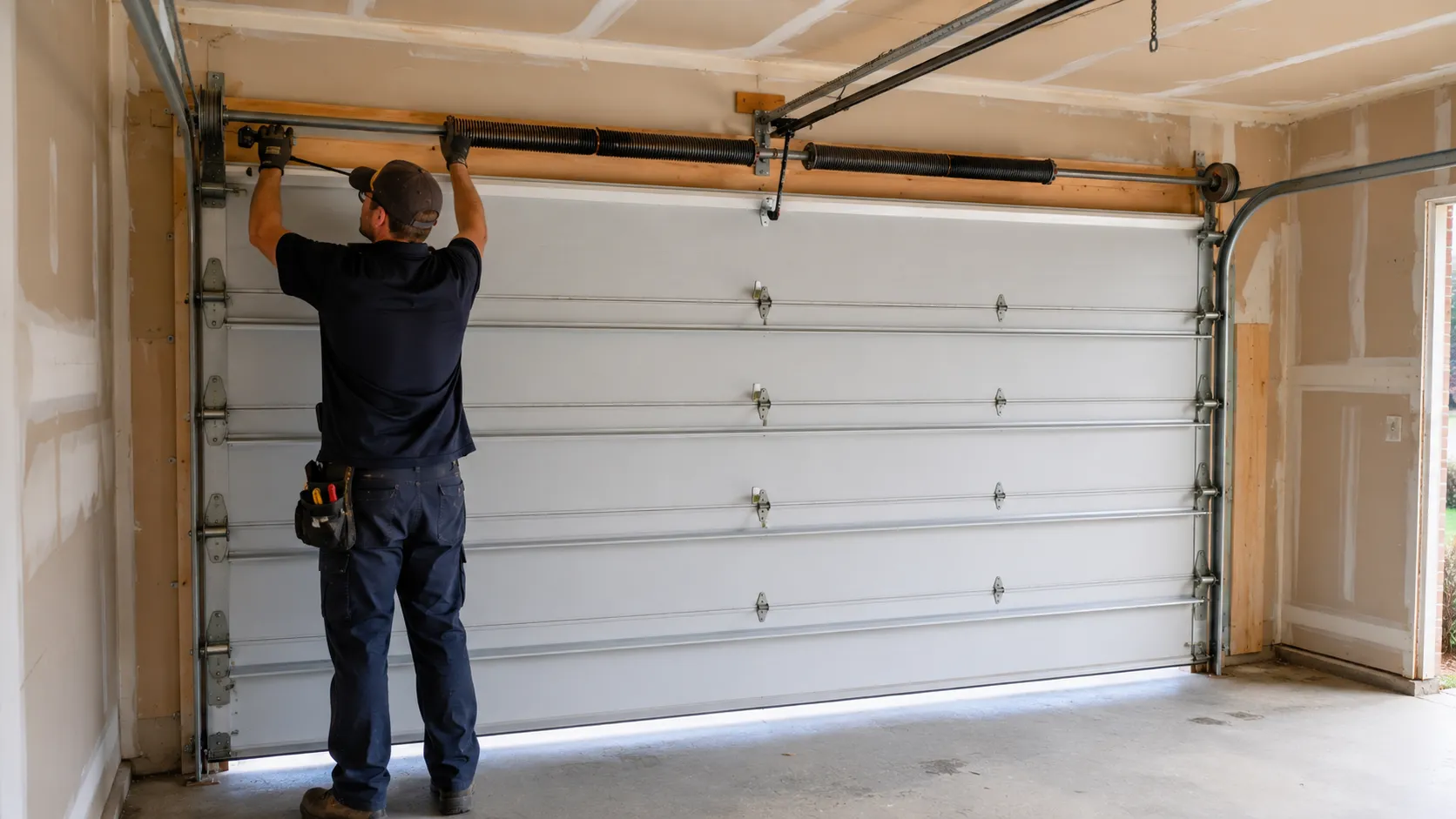
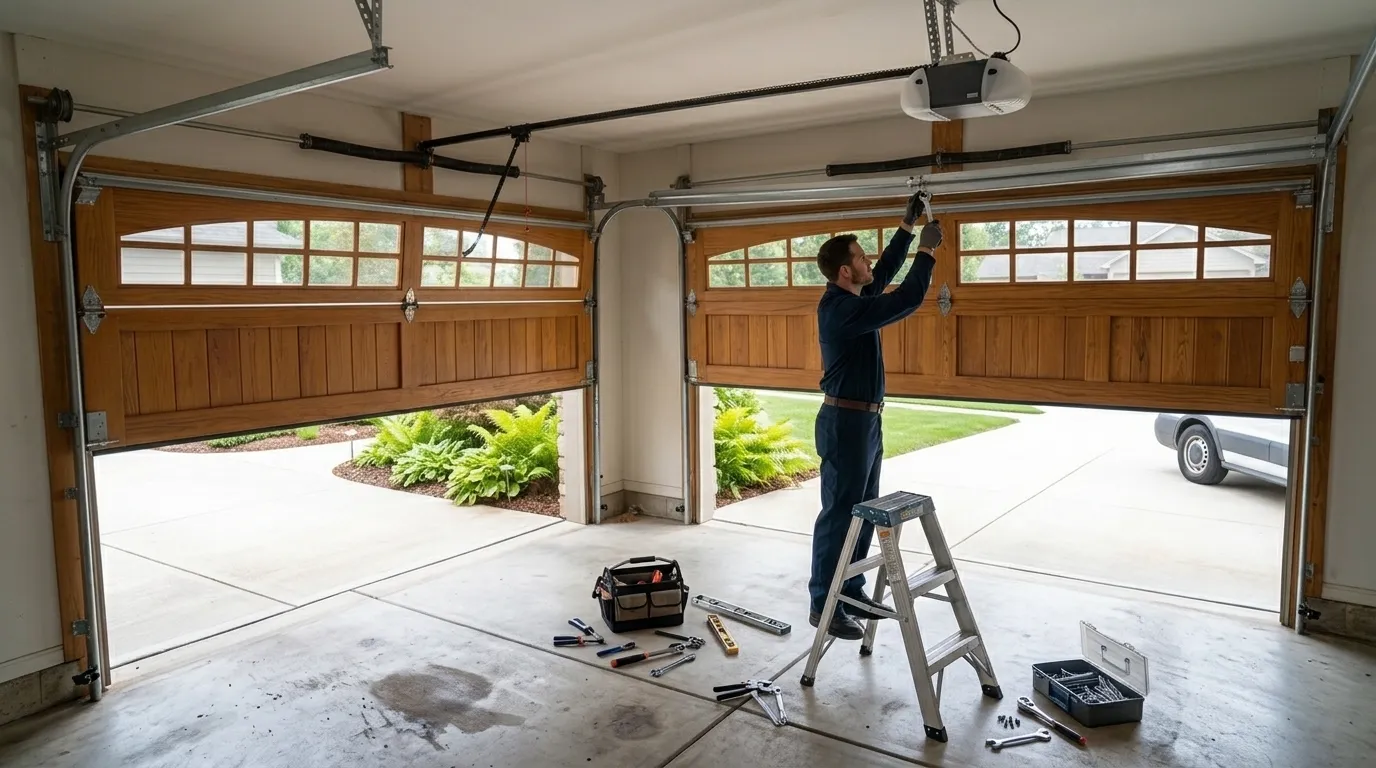
Tell us what’s wrong - Hesperia garage door service

Tell us what’s wrong

Describe the symptom - won’t open, loud bang, opener runs but the door won’t move.

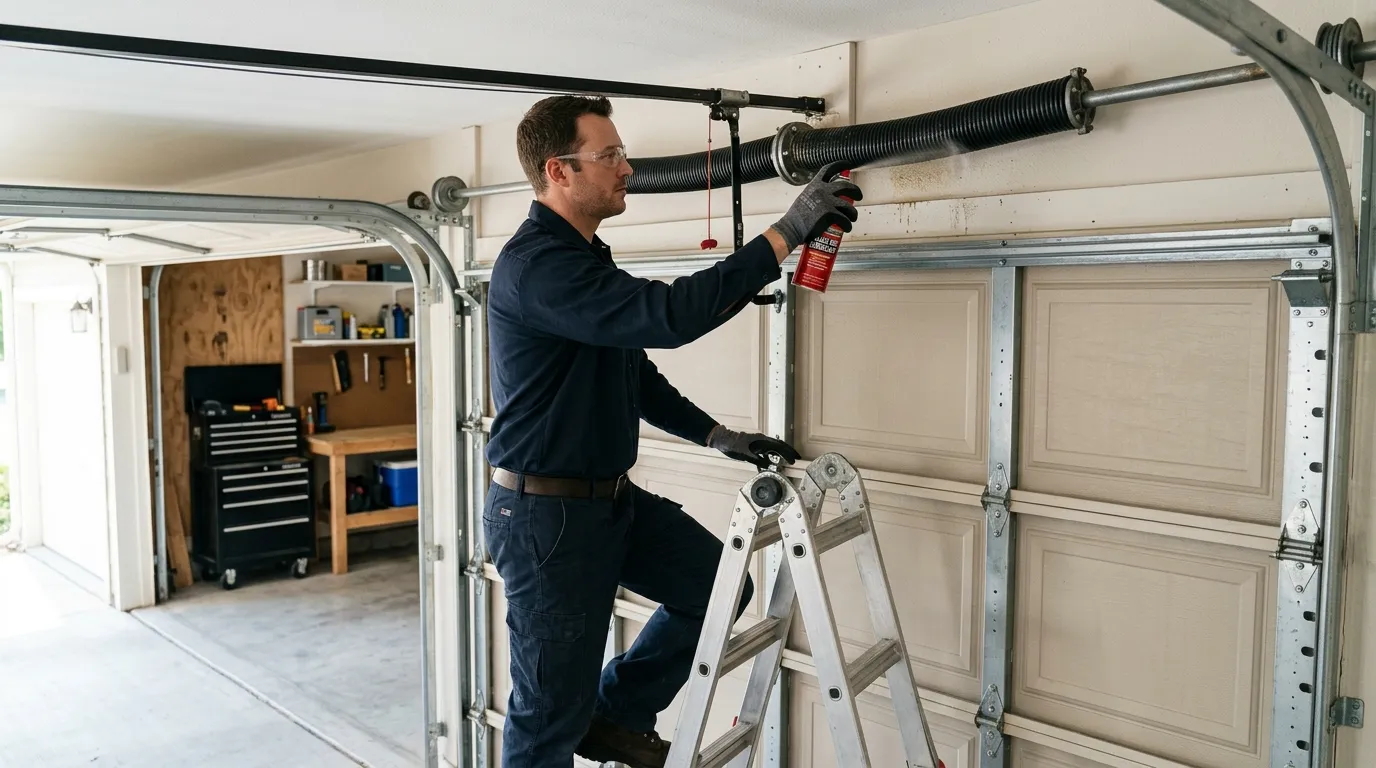
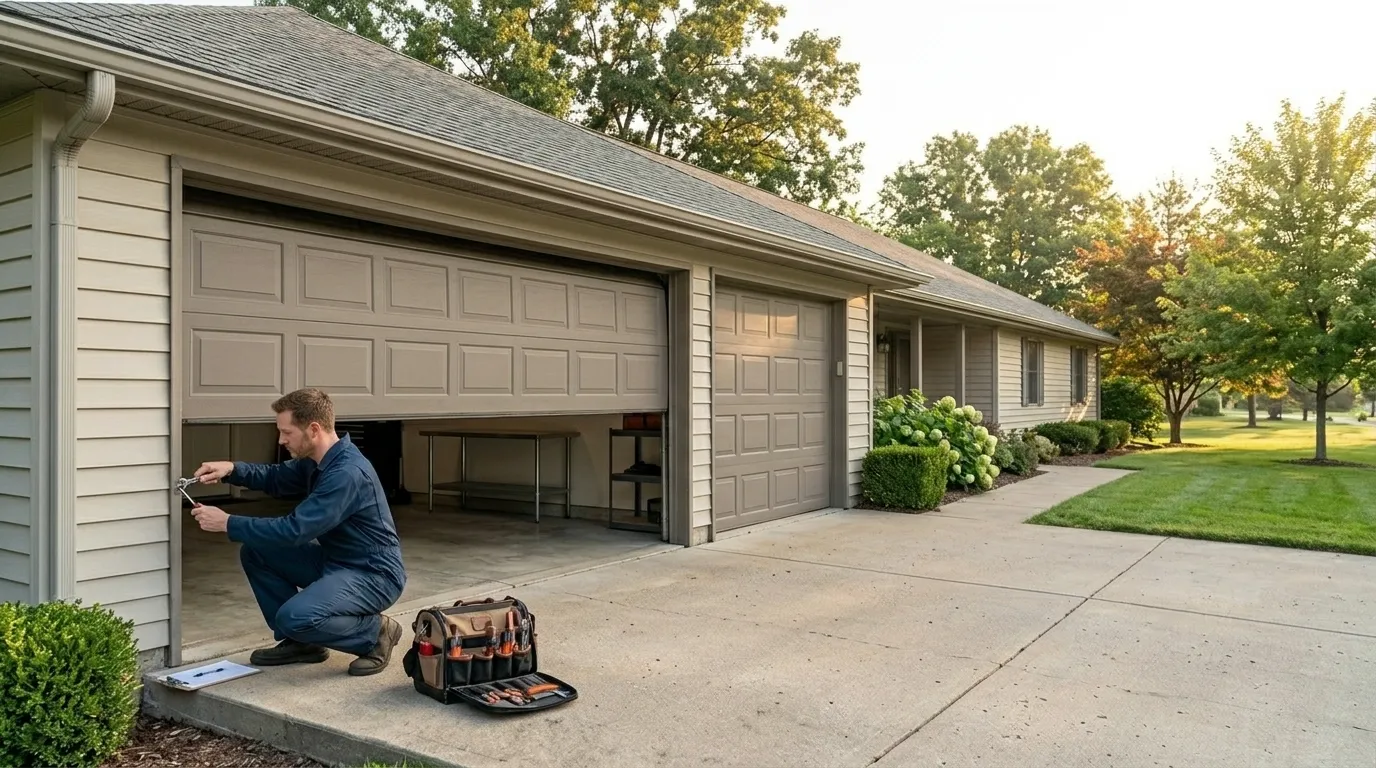
On-site diagnosis - Hesperia garage door service

On-site diagnosis

A technician tests the door under power and by hand and finds what actually failed.

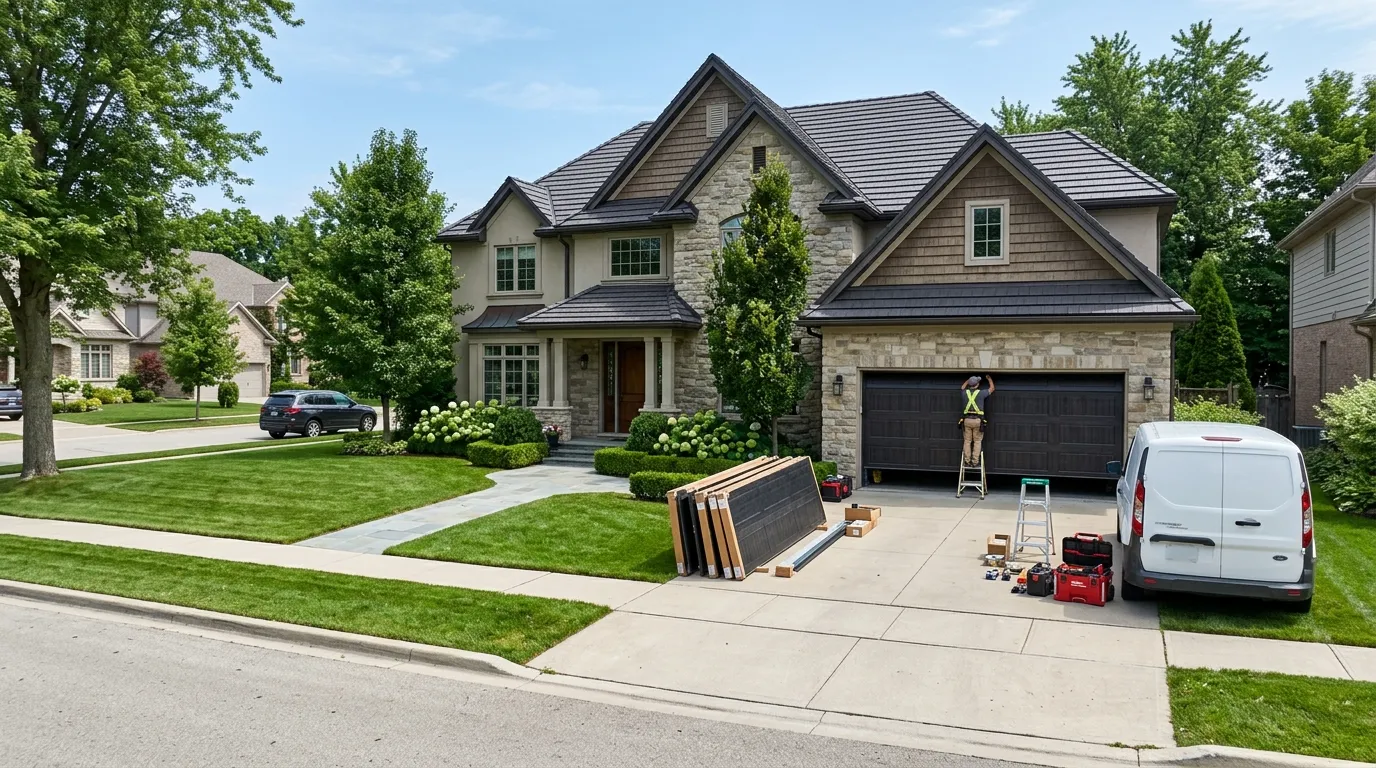
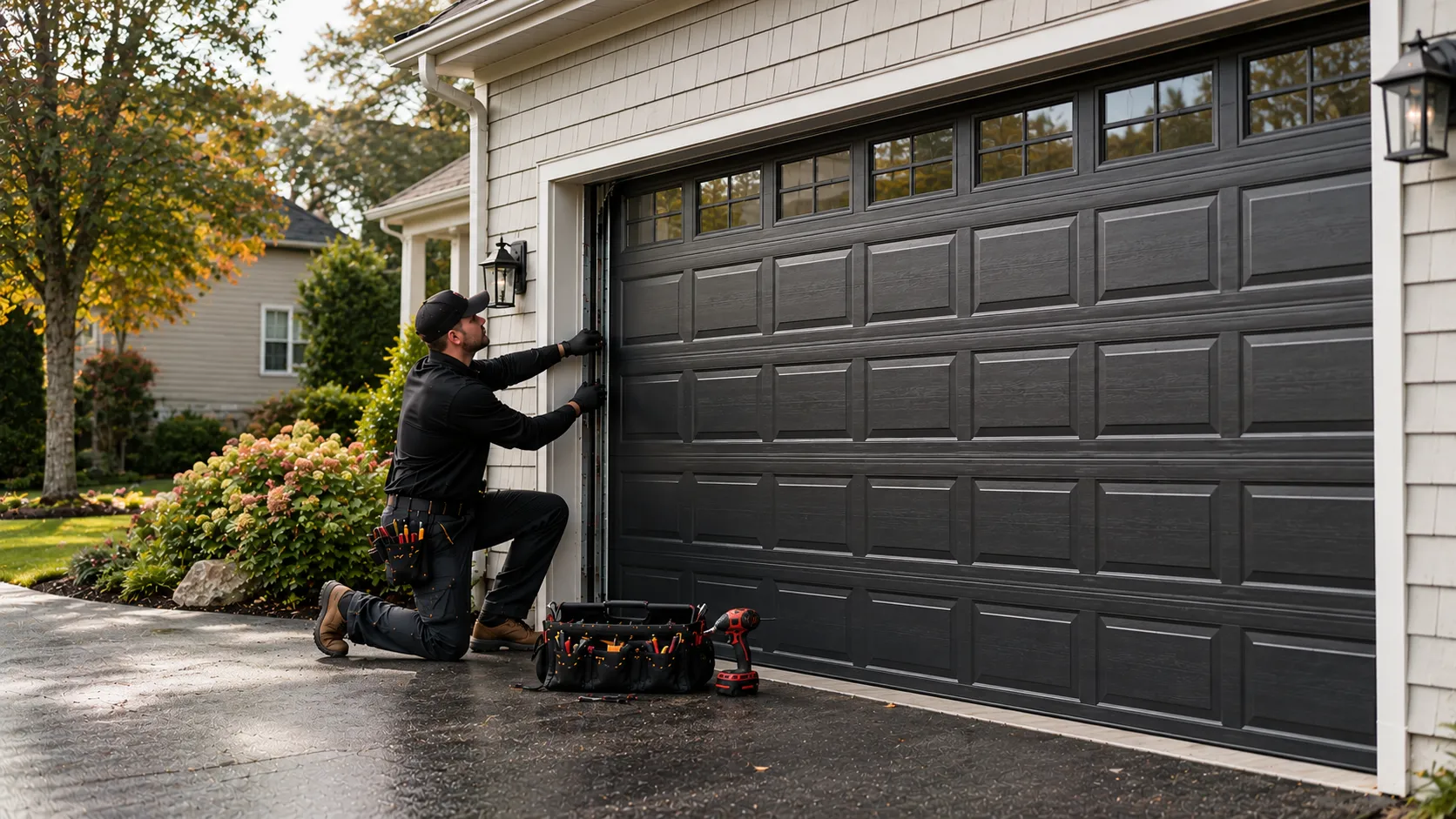
Clear, up-front plan - Hesperia garage door service

Clear, up-front plan

You get the fix that’s needed and what drives the cost - before any work starts.

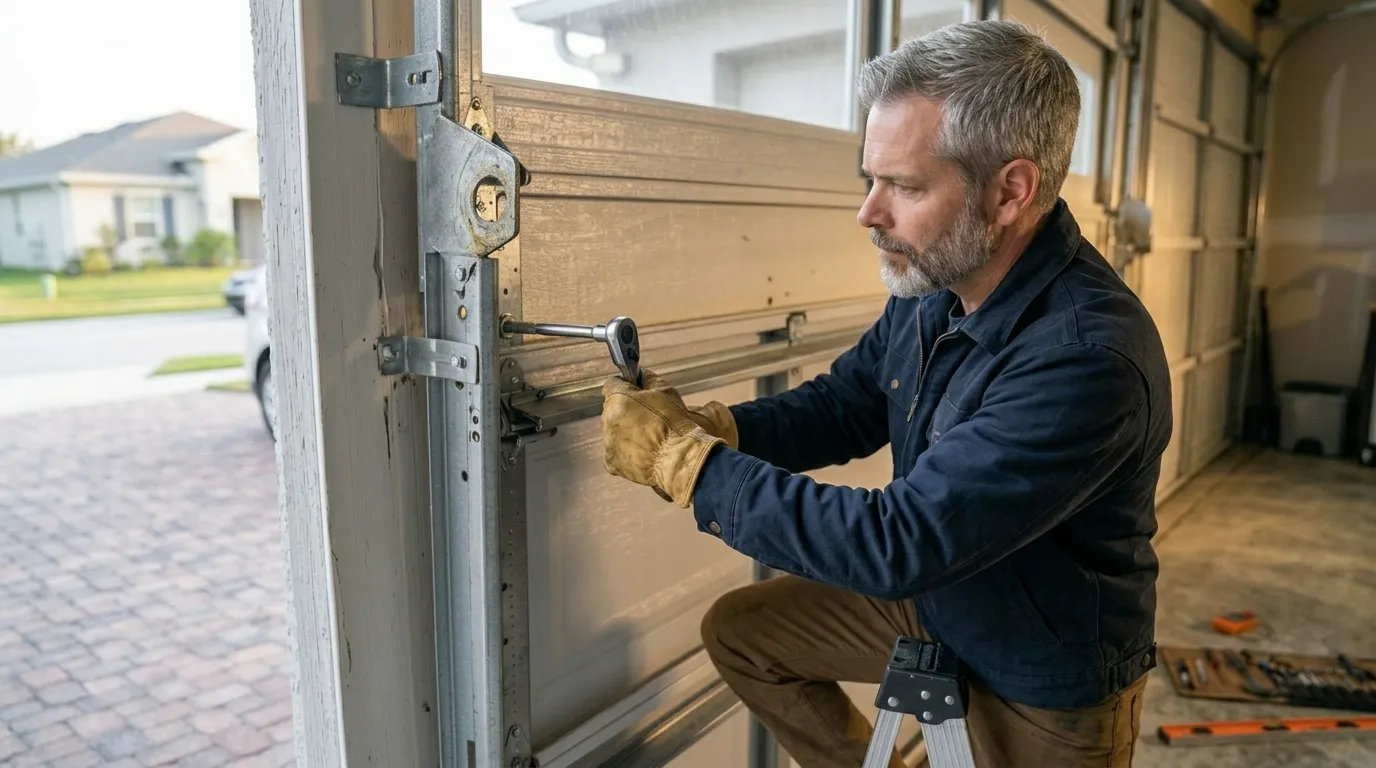
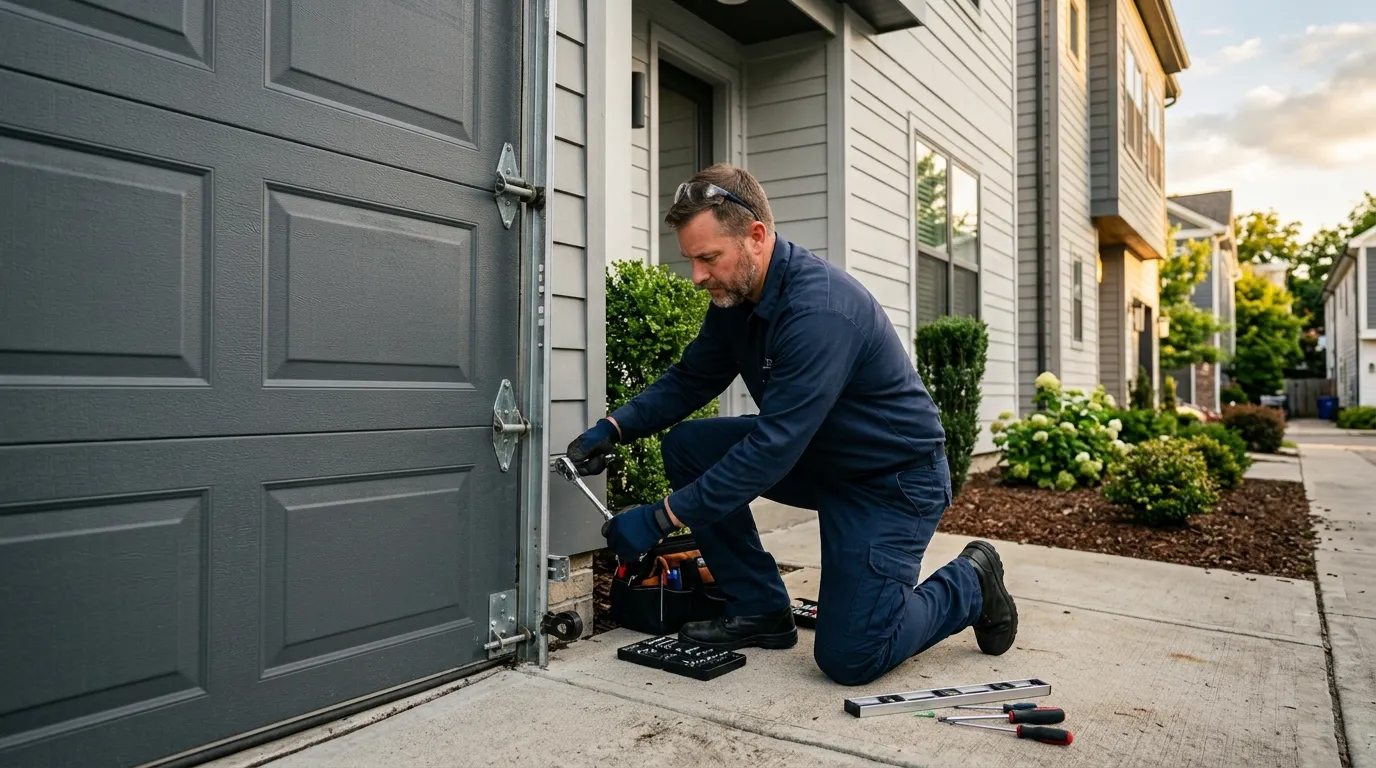
Repaired & tested - Hesperia garage door service

Repaired & tested

The repair is done, the door is set true and tested, and the work area left clean.

Serving Hesperia, CA - tell us what your door’s doing and we’ll take it from there.

How we work

What to expect

Diagnosis firstEvery visit starts by finding what actually failed - not a pre-written parts list.
The right part for the doorSprings and openers matched to the door’s weight and age, so the fix holds up.
Straight answersWhen a repair makes more sense than a replacement - or the reverse - you hear it plainly.
Clean, careful workTension released safely, hardware set true, the door tested under power before we leave.
Questions

Frequently asked

Straight answers about garage door repair in Hesperia. Still unsure? Ask us directly.

Why does my opener stop working after the power comes back on, not during the outage?

Older opener boards, common in Hesperia's 1980s-90s housing stock, sometimes reset their travel limits or lose their program during a power cut. The failure shows up when power returns and the door won't run through its normal open-close cycle, not while the power is actually off.

Is my opener too old to be worth fixing?

If the motor is original to a house built in that 1958-1997 window and the board has failed, repair costs start to close in on replacement cost. We'll look at the specific unit before saying either way - we're not going to quote a number without seeing it.

Does the heat here actually damage the opener?

Hesperia's moderate-heat climate band puts real thermal stress on an opener's circuit board and sensors over a full summer, especially on older units. It doesn't cause sudden failure on its own, but it does shorten the life of a board that's already aging.

My safety sensor light is blinking - what does that mean?

A blinking or dark sensor light usually means the two sensors near the floor track are misaligned, often from a bump or jolt. The opener won't run the door until they're realigned and both lights show steady. It's a common issue on original hardware from older Hesperia homes.

Ready to get your garage door sorted?

Tell us what it’s doing and where you are in Hesperia - we’ll take it from there.

4Services offered
13Areas covered
Diagnosisfirst, then the fix
Request a QuoteCall